Dear Readers,
Last week’s letter spoke to the contributions of Representative John Lewis to America, to the Caribbean, and to the world. This week’s letter begins here.
John Lewis’ funeral was a moving and majestic event. In it was reflected all of the beauty, the simplicity, the glory, and the complexity of the democracy which still resides at the heart of the American empire. In its aesthetics, one could discern the outlines of the American and Americans that still provide comfort to a refugee fleeing tyranny, the America that still offers hope to the migrant worker seeking an economic opportunity, the America that opens its arms to the immigrant at John F Kennedy Airport seeking a new start.
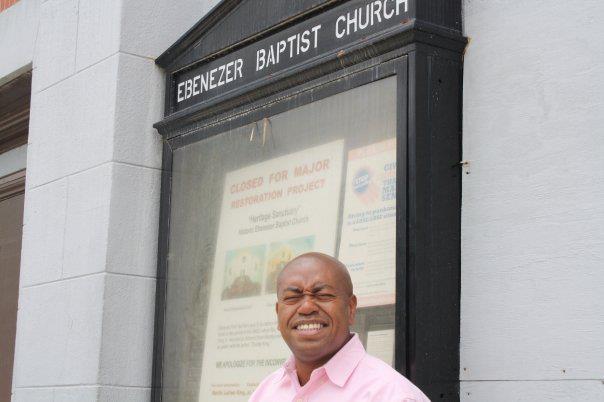
As a testimony to the scale of Representative Lewis’ impact on American life and culture, three(3) former presidents of the United States, Bill Clinton, George W. Bush, and Barack Obama mourned John Lewis at his funeral which took place in the historic Ebenezer Baptist Church in Atlanta, the same church that was formerly led by Dr. Martin Luther King Jr., on Thursday, July 30, 2020.
President George W. Bush lifted up Lewis’ legacy in history by recalling moments from the epic 1960s civil rights movement, in which Lewis was an essential catalyst. President Bill Clinton honored his friendship, his faith and his courage to live his faith. President Barack Obama, the nation’s first African American President, delivered an eloquent and passionate eulogy for Representative Lewis in which he highlighted American’s, great debt to John Lewis and reminded the mourners of his forceful, rigorous and inclusive vision of freedom.
In a most curious coincidence, on the day of John Lewis’ funeral, Herman Cain, a former African American Republican presidential candidate, whose 2012 candidacy was, in many ways, a harbinger of the Trump presidency, died at age seventy-four (74) from COVID-19 complications.
Cain’s 2012 presidential was not, in a substantive sense, a serious campaign but it was a campaign that, as it surged, had to be taken seriously. Cain’s signature proposal was his 9-9-9 tax plan- a flat 9 percent tax each on income, businesses, and sales. Perhaps because of its simplicity, his proposal went viral throughout the nation and made him a household name.
Cain’s life, Herman Cain worked his way up from childhood poverty in the segregated South to great wealth, speaks to something that an immigrant like myself often finds inspiring about U.S. society; and his death, from the coronavirus, the speaks to some of her enduring challenges.
Herman Cain was a graduate with a degree in mathematics from Morehouse College, he became a very successful restaurant executive. He served the country, as a Navy mathematician, and later as chairman of the Federal Reserve Bank of Kansas City.
Cain was a Republican. African American Republicans always find themselves in a difficult position: a political minority within their own racial group, and a racial minority within their political group. A parallel thought for Guyanese would be the dilemma posed for an Afro-Guyanese member of the PPP/C or an Indo-Guyanese member of the PNC.
White Republicans often applaud African American Republicans for leaving the “plantation” of the Democratic Party. This line of thinking is simplistic in that it assumes African Americans are not making a reasoned choice in voting for and working with the Democratic party.
African American critics often label African American Republicans as accommodationist and quite often they are referred to as “Uncle Toms.” African American Republicans like Herman Cain, Ben Carson, and Clarence Thomas have all, unfortunately, been labeled with this moniker.
These stereotypes are quite limiting, in that they constrain roles for both individuals and communities and, consequently, they are, ultimately destructive. Republicans like Cain and Carson and their views are also a part of the African American community and they should be embraced as individuals and their views given a proper, open, hearing.
For example, when it comes to social and economic conservatism, a 2019 survey from the Pew Research Centers found that 49 percent of African Americans still oppose same-sex marriage compared to 32 percent of Whites and in a Joint Center for Political and Economic Studies think tank poll of 1,200 African Americans on their concerns going into the 2020 elections, it was found that a majority of respondents believe most people can get ahead if they work hard — a statement often repeated by Republicans opposed to social programs. In a similar survey of Democratic primary voters, a majority of respondents said hard work is no guarantee of success.
Indeed many African Americans, like many Guyanese, have an ideological affinity to conservatism and evangelical Christianity and others like Herman Cain, are drawn to the Republican party’s support for business and entrepreneurship and we also have others who support this other wing of conservatism that is about hard work and a free market.
So, at the end of the day, what ought to be really important to the African American voters and to voters everywhere is whether a political party or an individual is working in the best interests of the community as defined by the community. This is the test and this is a lesson that we need to learn both here and in Guyana.
Dr. Terrence Richard Blackman is a member of the Guyanese diaspora, an associate professor of mathematics, and a founding member of the undergraduate degree program in Mathematics at Medgar Evers College. He previously served as dean of the School of Science Health and Technology at Medgar Evers College, where he has worked for more than twenty-five years. He’s a graduate of Queen’s College, Guyana, Brooklyn College and the City University of New York Graduate School.