By Mark DaCosta- In a nation rich in resources, a disturbing reality persists: vast portions of the population continue to live in poverty despite the country’s booming oil production. Lincoln Lewis, the seasoned trade unionist, emphasises the pressing need for equitable management of oil revenues, lest the wealth generation fail to uplift those who are marginalised in society. Originally articulated in a 2019 analysis, Lewis again highlights the urgent necessity for the government to act with fairness and accountability in sharing the nation’s oil wealth among all citizens.
Lewis’s critique sheds light on the paradox of our oil abundance, where over half of the population experiences economic hardship amidst staggering production levels of 900,000 barrels per day. He argues that it poses a significant risk to national stability if the government continues to overlook the fundamental requirement of ensuring that oil wealth is disbursed fairly. According to Lewis, there are a range of social programmes that could be enhanced with the inflow of oil revenues. Such initiatives are not new and could lift the disadvantaged, ensuring that all Guyanese have equal opportunities to share in the nation’s prosperity.
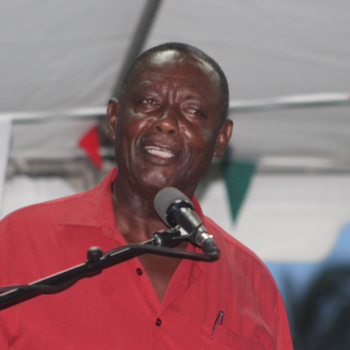
He advocates for cash transfer programmes, both conditional and unconditional, as a viable approach to provide assistance to the poorest in society. “The main objective of these programmes is to increase poor and vulnerable households’ real income,” Lewis posits, drawing on insights from the World Bank. He calls attention to existing mechanisms for cash transfers through various government initiatives and business concessions, pointing to historical contexts in which subsidies and grants have been dispensed with the intention of benefiting the broader community.
In 1976, for example, under the vision of the Forbes Burnham Government, the nationalisation of bauxite led to the creation of beneficial housing schemes for workers. Lewis reminisces on how such initiatives resulted in the sustainable development of communities and improved living conditions for many. Echoing this sentiment, he believes that a modern equivalent can be established through oil revenues that could transform the living standards of everyday Guyanese.
According to Lewis, it’s essential for the government to consider direct oil benefits (DOB) for its citizens instead of turning a blind eye to the plight of the vulnerable. He suggests that, rather than seeing cash transfers as mere handouts, they should be viewed as investment opportunities intended to empower individuals. “The benefits to society are bountiful and Guyanese must not allow this opportunity for people’s empowerment from Direct Oil Benefit to be dismissed,” asserts Lewis passionately.
The discussion extends to the creation of conditional cash transfer schemes that encourage positive societal actions such as educational attainment and health compliance. These could include requirements for families to ensure that children are vaccinated or that adults pursue workforce training programmes, thereby contributing positively to the nation’s economy.
Lewis emphasises the need for the government to also invest in vital infrastructure that serves the public good. He envisions a future where enhanced medical services, reduced transportation costs, and rights to free education emerge from the profits of oil. He argues that the government should be leveraging oil revenue to “reduce electricity and transportation prices,” subsequently creating a more equitable system for all Guyanese.
In addressing youth unemployment, Lewis proposes monthly grants with conditions attached, encouraging individuals to engage in higher education or vocational training. He asserts that such measures can channel human resources into sectors where they are most beneficial to national progress. Within this framework, he is also in favour of strengthening the constitutional right to free education from nursery to university, ensuring that the future generations are well-equipped to thrive in an evolving job market.
Further advocating for a green economy, Lewis envisions providing cash incentives to encourage citizens to invest in sustainable energy solutions, a necessary shift as our nation embraces its oil-driven future.
While Lewis acknowledges the government’s role in facilitating larger infrastructure projects like schools and hospitals, he insists these should not overshadow the importance of direct benefits to individual citizens. “What we also need is a focus on making Direct Oil Benefit with cash transfers to boost Social Development and our Human Index,” he implores, highlighting that such initiatives would cross socioeconomic lines and positively affect all segments of society.
Lincoln Lewis’s unwavering stance calls on the leaders of our nation to take bold, progressive steps to ensure that the burgeoning oil wealth is not merely a boon for the wealthy elite or politically favoured but rather a shared windfall for every Guyanese citizen. The time has come for action: there is an opportunity to correct decades of inequality and neglect and to harness our oil wealth for the common good, as envisioned by Lewis in his impactful analysis. The true promise of our oil should be a collective upliftment — an endeavour that must not fall by the wayside in the hands of a nonchalant government.