How decades of engineering wisdom was destroyed in the name of development—and who must answer for it
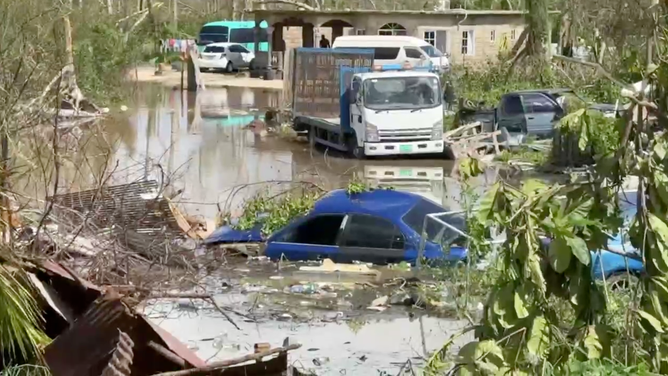
The floodwaters that consumed Catherine Hall and Westgreen during Hurricane Melissa rose waist-high through homes that had weathered half a century of storms. They carried away not just furniture motor vehicles, and livelihoods, but something more fundamental: the trust that communities place in those who build the infrastructure meant to protect them.
What happened in Montego Bay’s western corridor on that November day was not an act of God, argues O. Dave Allen, Chairman of the Community Organization for Management and Sustainable Development (COMAND). It was engineering negligence wrapped in the language of progress.
A Legacy Destroyed
In a searing analysis that strips away bureaucratic euphemisms, Allen traces Catherine Hall’s origins as one of post-independence Jamaica’s most significant housing achievements. Born from lands acquired from the Kerr-Jarrett family’s Barnett Estates in the early 1970s, the community emerged under Minister Anthony Spaulding’s visionary “Sites and Services” programme.
Completed around 1979, it represented more than bricks and mortar—it embodied principles of equity, environmental sensitivity, and community self-help that defined an era.
But as Allen meticulously documents, Catherine Hall’s enduring success rested on something less visible than its progressive social design: the engineering that tamed the nearby Montego River. For nearly five decades, an elaborate system of gabion baskets, berms, retaining walls, concrete drains, and green buffer reserves stood between the community and catastrophe.
Government engineers and the Public Works Department had created what Allen describes as “a delicate balance, carefully calibrated to the river’s hydrology,” that protected Catherine Hall, West Green, Irwin, and surrounding areas through countless storms.
That protection held—until contractors arrived promising development.
The Breach
Allen’s investigation reveals how China Harbour Engineering Company (CHEC) and its subcontractors systematically dismantled the very systems that had safeguarded the community for generations during roadworks related to the Montego Bay Bypass and Catherine Hall main road widening. Berms were flattened.
Drainage channels were blocked or rerouted. Critical sections of protective gabion walls were removed or buried under fill material.
“When heavy machinery tears through engineered embankments without rebuilding them, when drainage channels are blocked or rerouted without proper hydrological assessment, and when contractors move faster than environmental regulators can act, the result is predictable: death, destruction, and displacement,” Allen writes with prosecutorial precision.
His assessment of CHEC’s duty of care is damning. As a contractor entrusted with major public infrastructure, the company bore responsibility to ensure existing flood-control mechanisms remained intact. Instead, Allen argues, their actions—or calculated omissions—amplified the city’s vulnerability precisely when climate change demands greater resilience, not less.
The Reckoning
Allen’s on-the-ground reporting captures the human cost when Hurricane Melissa struck the compromised infrastructure. Commercial and residential properties along Irwin’s main road disappeared beneath the surge. West Green faced ruin. Even the prestigious Lagoon area, long a symbol of Montego Bay’s prosperity, could not escape.
In Catherine Hall itself, Allen documents how the torrent proved merciless—mud, silt, and debris rose waist-high, gutting homes and sweeping away the accumulated wealth of working families.
“The flood claimed not only property, but dignity,” he observes with stark clarity.
This was no random natural disaster, Allen insists. It was the predictable outcome of prioritizing construction timelines over community safety, of treating decades-old protective infrastructure as obstacles rather than achievements worth preserving.
Demanding Accountability
Through COMAND, Allen is leading calls for a full, independent investigation into CHEC’s engineering and environmental practices, and the conduct of supervising agencies that failed to enforce compliance.
His demands are specific: determine liability for structural failures that worsened flooding, ensure compensation for residents whose homes and livelihoods were destroyed, and mandate restoration and upgrading of original flood-control infrastructure to withstand extreme weather events.
Allen identifies by name the agencies that must answer: the National Works Agency (NWA), the National Environment and Planning Agency (NEPA), and the Office of Disaster Preparedness and Emergency Management (ODPEM). “Accountability is not an option—it is a duty owed to every citizen whose home, shop, or community was destroyed by negligence masquerading as development,” he declares.
Progress That Destroys Is No Progress At All
Allen’s central argument cuts to the heart of Jamaica’s development dilemma: “Development is meaningless if it leaves our people defenseless.” Catherine Hall was once proof that thoughtful urban planning could create communities that endured. Anthony Spaulding’s legacy of equitable housing, sustained by decades of engineering wisdom, now lies beneath mud and debris.
His warning extends beyond St. James: “Jamaica cannot afford to trade safety for spectacle, or local resilience for imported indifference.” The nation’s ability to withstand climate change depends not only on disaster preparedness but on protecting the public infrastructure painstakingly built by earlier generations.
Allen’s conclusion is unsparing: “The deluge of Catherine Hall must serve as a warning: progress that destroys what it was meant to protect is no progress at all.”
As floodwaters recede, his investigation has launched the harder work—demanding accountability, securing compensation, and ensuring that the mistakes that drowned a community are never repeated. The people of Montego Bay deserve justice. They deserve the restoration of their right to live safely within communities they helped build.
WiredJA