(WiredJA) Ten former heads of government unite in unprecedented warning against creeping militarisation of regional waters
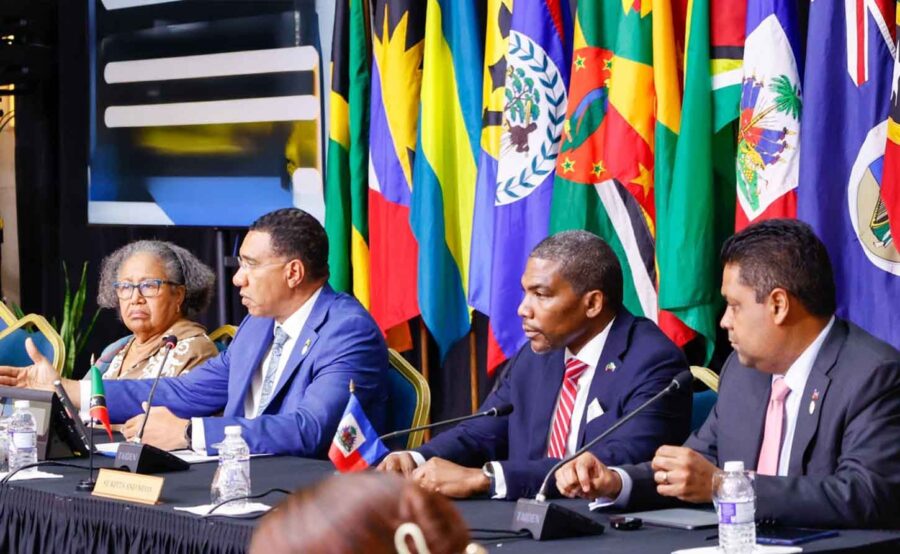
When ten former Caribbean prime ministers speak with one voice, the hemisphere should listen. In an extraordinary joint statement released this week, leaders who once steered nations from Antigua to Jamaica have broken their customary post-office silence to issue a stark warning: the Caribbean’s hard-won status as a “Zone of Peace” is under threat from an escalating military presence that risks dragging the region into conflicts “not of our making.”
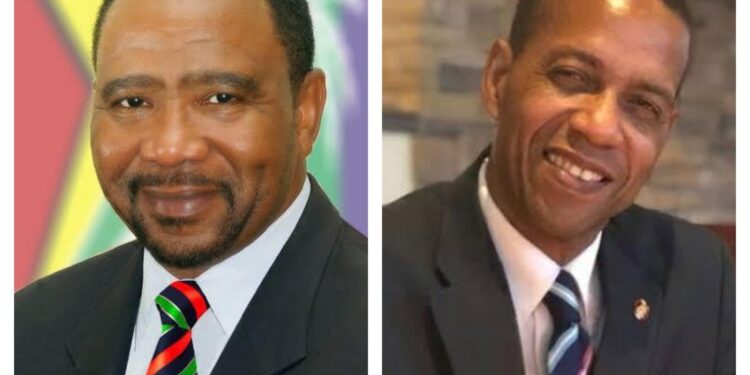
The signatories read like a roll call of Caribbean political history—Baldwin Spencer, P.J. Patterson, Said Musa, Dean Barrow, Kenny Anthony, as well as five others including Bruce Golding, Freundel Stuart, Edison James, Tillson Thomas and Donald Ramotar. Collectively they represent decades of governance across the Community.
Their unified alarm about “increased military security build up and the presence of nuclear vessels and aircraft within the Caribbean archipelago” marks a rare moment of cross-partisan, cross-national consensus on a threat they view as existential.
The 1972 Vision Under Siege
At the heart of their concern lies a principle established 53 years ago when Caribbean leaders gathered at Chaguaramas under Dr. Eric Williams’s chairmanship. The “Zone of Peace” doctrine they codified wasn’t mere diplomatic rhetoric—it became the cornerstone of Caribbean sovereignty and the foundation for the region’s relationships with global powers.
It represented a deliberate choice: that small island states would navigate great power competition not through military alignment, but through adherence to international law and diplomatic engagement.
“Peace was a dominant factor in shaping the social and political framework for Caribbean development,” the former leaders remind us, invoking language that deliberately echoes the UN Charter’s prohibition on “the threat or use of force against the territorial integrity or political independence of any State.”
The question hanging over their statement is obvious: who is responsible for this military buildup, and why now?
What’s Actually at Stake
The former heads aren’t merely defending an abstract principle. They’re protecting concrete interests. The Caribbean Sea isn’t just strategically located—it’s the economic lifeline for nations whose survival depends on unimpeded maritime access.
It’s the world’s most heavily trafficked sea for international trade, the arteries through which cruise ships deliver tourism dollars, the fishing grounds that sustain coastal communities, and increasingly, the preferred route as air travel costs and environmental concerns mount.
Military escalation in these waters doesn’t just threaten abstract sovereignty—it threatens the yachting industry in Antigua, the cruise terminals in St. Lucia, the fishing fleets operating from Grenada. “The safety and security of the Caribbean Sea and the territorial integrity of our small states are of inestimable value,” the statement declares, and the economics back up that assertion.
The Shiprider Lesson
The statement’s reference to the Shiprider Agreement with the United States is particularly instructive. That pact, concluded after “intense and delicate negotiations,” represents how Caribbean states have historically balanced security cooperation with sovereignty protection.
It allowed collaborative pursuit of drug traffickers while maintaining strict adherence to due process and international law—”without extrajudicial killing and the destruction of that which could provide conclusive evidence of criminal operation.”
The implicit message is clear: Caribbean nations aren’t naive about security threats from narco-traffickers, gun runners, and human smugglers. They’ve proven willing to cooperate. But cooperation negotiated on equal terms is fundamentally different from militarization imposed by circumstance or great power maneuvering.
The Unspoken Context
What the former leaders don’t explicitly name makes their statement even more significant. The timing coincides with escalating tensions between major powers—tensions increasingly playing out in spaces like the Caribbean that historically positioned themselves as neutral ground.
The reference to resisting “external intervention to effect regime change” and opposing military actions that “effectively deny due process” suggests deep concern about the region becoming collateral damage in larger geopolitical contests.
Their warning about “endangering our citizens in any cross fire or suffering collateral damage and economic harm” isn’t hypothetical hand-wringing. It’s based on witnessing how other regions have suffered when they became proxy battlegrounds for conflicts between powers with interests far beyond their shores.
A Rare Unity
Perhaps most striking is that this statement bridges partisan and ideological divides. These aren’t all leaders from the same political tradition—they span the spectrum of Caribbean politics. Their unity suggests that whatever military buildup has prompted this statement, it’s concerning enough to overcome the usual divisions of democratic politics.
Their closing line—”We have gone too far to turn back now”—isn’t a threat. It’s a reminder that Caribbean sovereignty, painstakingly constructed over decades of independence, represents progress too valuable to surrender without resistance. The question is whether current leaders, and the great powers operating in Caribbean waters, are listening.