Government Orders Maritime Safety Audit After MV Barima Disaster Raises Questions Over Years of Oversight
In the wake of the deadly MV Barima disaster, President Irfaan Ali has established a three-member Safety and Compliance Audit Team to conduct a comprehensive review of Guyana’s maritime safety system, a move that comes amid growing questions over why such an assessment is being undertaken only after one of the country’s worst maritime tragedies.
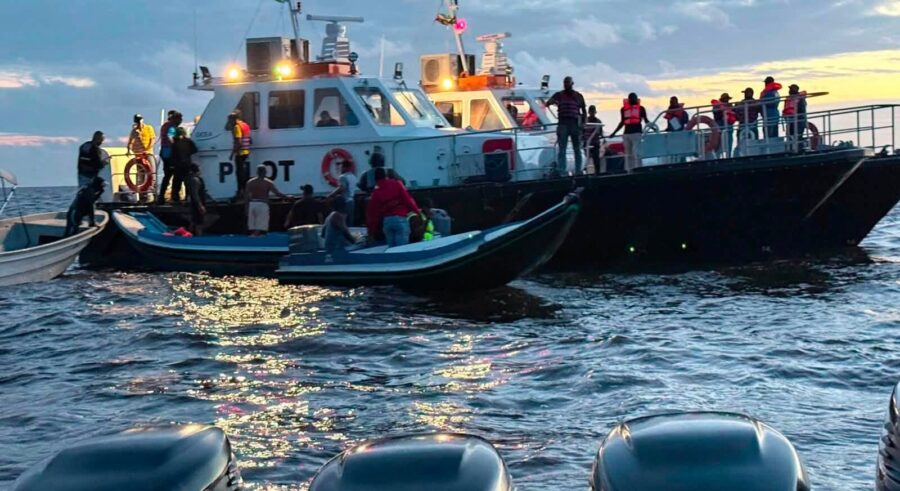
The MV Barima capsized late on July 18 while travelling from Georgetown to Port Kaituma, Region One, with an estimated 179 passengers and crew on board. According to official figures, 76 people were rescued, 73 bodies have been recovered and approximately 30 remain unaccounted for. The tragedy devastated families—particularly in Indigenous communities in the North West—and sparked nationwide mourning, protests demanding accountability and renewed scrutiny of the Government’s oversight of the maritime sector.
As questions continue to mount over the Government’s oversight of the maritime sector, President Ali announced the establishment of the Safety and Compliance Audit Team, saying it forms part of the administration’s efforts to strengthen maritime safety and prevent similar disasters.
The team comprises former Director-General of the Maritime Administration Department (MARAD) Dr. Ivor English, Colonel Julius Skeete of the Guyana Defence Force, and Captain Joseph Lewis, a Marine Officer and Surveyor of Ships.
According to President Ali, the three members bring “extensive technical expertise, practical experience and specialised knowledge in marine administration, maritime operations, and the inspection and surveying of ships.”
Unlike a Commission of Inquiry, which seeks to determine how a particular incident occurred and who may bear responsibility, a safety and compliance audit examines whether the systems designed to prevent such disasters are functioning effectively.
In practical terms, the audit is expected to assess whether vessels are being properly inspected and certified as seaworthy, whether maintenance requirements are being enforced, whether operators comply with safety regulations, and whether regulatory agencies are effectively carrying out their legal responsibilities. It also seeks to identify weaknesses in oversight, determine whether existing laws are being adequately enforced and recommend reforms to strengthen compliance and accountability across the maritime sector.
According to the Office of the President, the team has been tasked with undertaking “a comprehensive assessment of compliance with applicable maritime safety requirements governing vessels operating in Guyana.”
Its mandate also includes recommending measures to strengthen regulatory oversight, improve enforcement mechanisms and ensure that vessels, operators and the country’s regulatory systems adhere to the highest practicable standards of safety and accountability.
The announcement, however, has intensified public debate over the Government’s approach to governance.
To many observers, the decision reinforces a familiar pattern in public administration: significant reforms are often introduced only after catastrophe exposes weaknesses that should have been identified and addressed before lives were placed at risk.
The agencies responsible for maritime regulation—including MARAD—already have statutory responsibility for inspecting vessels, enforcing safety standards and monitoring compliance with maritime laws. The launch of a comprehensive audit after the Barima disaster has therefore prompted questions about whether those oversight mechanisms were functioning effectively before the vessel departed Georgetown.
The audit also comes as the Government prepares to launch a Commission of Inquiry into the tragedy. That inquiry is expected to examine the circumstances surrounding the sinking, including the vessel’s operation, safety compliance, emergency response and the actions of the relevant authorities.
Some stakeholders have questioned whether initiating a parallel audit before the Commission begins hearing evidence could create the perception that the Government is acting ahead of a process intended to operate independently. They argue that an independent Commission would ordinarily determine, after examining witnesses and documentary evidence, whether operational or systems audits are necessary and make such recommendations in its final report.
Whether the initiative restores public confidence will depend not only on the audit’s findings but also on whether they are made public and translated into meaningful reforms. For grieving families and many Guyanese, the central question remains why a comprehensive review of maritime safety is taking place only after dozens of lives were lost, rather than before tragedy exposed weaknesses that regulators were already mandated to detect and address.