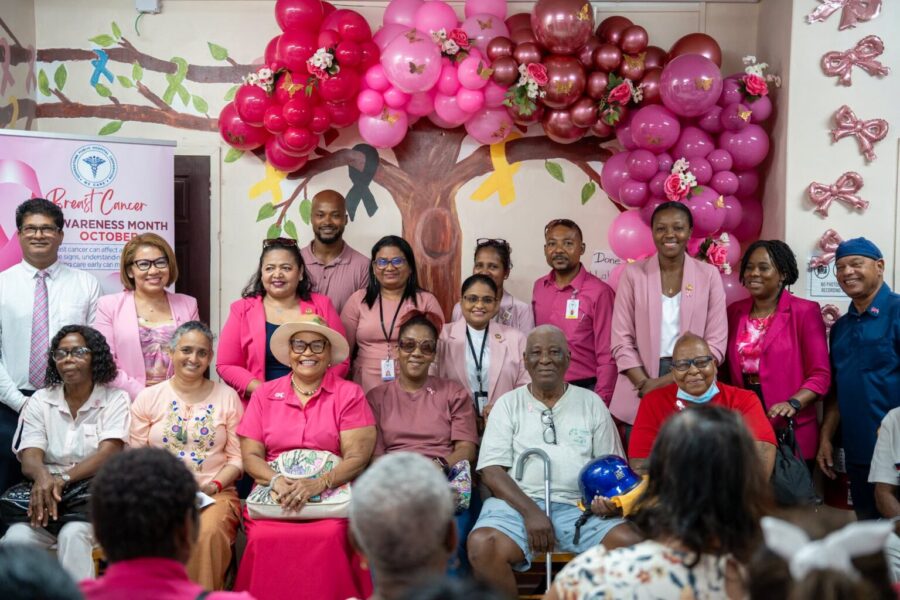
The Georgetown Public Hospital Corporation (GPHC) has recorded 107 new breast cancer cases in the first eight months of 2026, even as doctors report encouraging progress in detecting the disease before it reaches advanced stages.
Head of the GPHC Oncology Department, Dr Latoya Gooding, disclosed the figures on Thursday during a pinning ceremony marking the start of Breast Cancer Awareness Month.
“In 2025, the Oncology Department recorded 147 cases or incidents of breast cancer. For 2026, from January to August, we have 107 cases,” Dr Gooding said.
The figures represent cases recorded at GPHC and should not be interpreted as Guyana’s total national incidence. International cancer data, however, show that breast cancer remains a major health concern in the country.
The International Agency for Research on Cancer (IARC) estimated 229 new breast cancer cases and 67 deaths from the disease in Guyana in 2022. Breast cancer was the leading cancer among Guyanese women by number of new cases, with an age-standardised incidence rate of 52.6 per 100,000 women.
More recent IARC data put Guyana’s breast cancer incidence at 47.7 per 100,000, underscoring the continuing burden of the disease.
While the number of cases remains significant, Dr Gooding said the Oncology Department has seen a decline in patients presenting with late-stage cancer since 2015. She attributed the improvement partly to greater public awareness.
The development is important because stage at diagnosis is one of the strongest determinants of breast cancer survival. The World Health Organization says early detection and timely access to quality treatment are critical to improving survival.
Globally, World Health Organisation’s (WHO) latest estimates show a median five-year net survival of 77.8% for women diagnosed with breast cancer between 2017 and 2021. But survival varies sharply by income level: the median five-year survival was 41.9% in low-income countries compared with 87.3% in high-income countries.
Guyana does not currently have a sufficiently comprehensive national survival dataset to assign a reliable country-specific five-year breast cancer survival rate comparable with those international figures. This makes the reported decline in late-stage diagnosis particularly significant, while also highlighting the importance of strengthening cancer registration and follow-up.
Dr Gooding said improvements at GPHC extend beyond diagnosis. The Oncology Department has increased its staffing complement and upgraded treatment guidelines, with the aim of providing more standardised first-line care.
“Breast Cancer is now one of the cancers that we can manage. One of the cancers that we can say that we have aligned regionally and almost, and I say almost because there are just two more things that we need to fit in there for me to say that we have reached international standards but guess what, we are getting there.”
She said she expects the department to be on par with regional and international counterparts within the next two years.
“We are a department that is growing, we are a department that is improving.”
Cancer Ambassador with the Giving Hope Foundation, Desiree Edghill, said the foundation currently has 98 cancer survivors and stressed the importance of hope and support following a diagnosis.
“A pin maybe small but what it represents is powerful. It represents awareness, courage, hope, support and the promise that no one has to walk this journey alone.”
Edghill, herself a survivor, said early detection, medical care, faith and strong support systems can make a difference in the lives of people diagnosed with cancer.
Acting GPHC Chief Executive Officer Dr Navindranauth Rambaran also urged greater participation in screening and early detection, saying he was encouraged by the reported decline in late-stage diagnoses.
Breast cancer was previously Guyana’s leading cancer by new cases, but IARC’s 2022 data show that prostate cancer now ranks first overall, while breast cancer remains the leading cancer among women.
For Guyana, the message from health officials remains clear: more people surviving breast cancer begins with finding the disease earlier and ensuring patients receive timely, effective treatment.