Ask any farmer, fisher, or vendor across the Caribbean how they prepare for storms, and the answer may vary. It may be a call to a close family or friend, a community partner’s “susu” group or syndicates, or a few hard-earned dollars stashed away for a rainy day.
It’s a system rooted in trust and tradition. People feel confident and at ease when their contributions are managed by people they know and trust. They can keep track of the money. They know who is in charge. They can see where the money goes. It feels safe.
Traditional insurance, on the other hand, often feels far away. It’s seen as expensive, complicated, and built for others, not for informal workers who do not have the paperwork, land titles, or steady income streams that policies usually demand. And many simply don’t trust it.
The Limits of Savings Alone
That’s why, across five Caribbean countries, the Caribbean Policy Development Centre (CPDC) research found that savings is the primary form of disaster preparation. But surprisingly, 80% of surveyed organizations do not collect regular membership fees, which also suggests that paying monthly insurance premiums can be out of reach. And there’s a lack of trust in payouts. Who wants to pay a company for years, only to have them deny a claim when you need it most?
But savings has limits.
A partner’s “susu” group or syndicates might help a few fishers replace damaged nets, but not rebuild dozens of boats. A cooperative’s emergency fund might restock a handful of vendors, but not cover an entire market wiped out by a storm. And because most organizations don’t collect regular membership fees, there simply isn’t enough money to stretch across big, repeated disasters.
What is Meso-Level CDRFI?
This is where meso-level Climate and Disaster Risk Finance and Insurance (CDRFI) comes in.
“Meso” means “in the middle.” It bridges the gap between national disaster relief programs (macro) and what individual households can do (micro). It works through trusted community institutions, credit unions, cooperatives, CSOs, that already manage people’s money and livelihoods.
How Meso-Level CDRFI Strengthens Savings
Meso-level CDRFI doesn’t replace savings; it strengthens them through three layers of protection:
-
Parametric Insurance: provides fast payouts when a hurricane or flood meets pre-agreed triggers. No paperwork, no delays.
-
Indemnity Insurance: covers specific losses that parametric payments might miss, like damaged crops or destroyed equipment (boats, market stalls, etc).
-
Community Savings Funds: keeps local savings central but links them to bigger financial tools, so money goes further when shocks are large.
This combined model builds on what communities already trust, savings and local management, while adding stronger financial tools for bigger disasters. It respects the reality that Caribbean people value self-reliance and community control, but recognizes that the scale of today’s climate risks demands more than tradition alone. This way, when disasters are stronger and more frequent, communities don’t run out of money halfway through recovery.
Why This Matters for the Caribbean
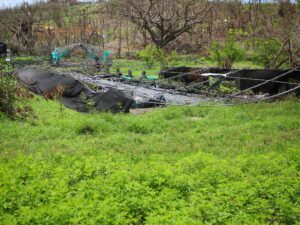
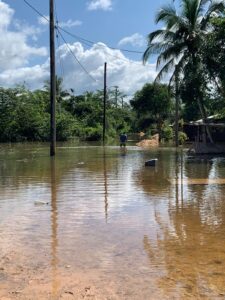
The stakes are real. Hurricane Beryl destroyed 75% of Barbados’s fishing boats, leaving many families without income. Floods in Dominica wiped out crops before farmers could replant for the next season. These are losses that savings alone cannot cover.
For the Caribbean to thrive in the face of rising climate risks, communities need more than tradition. They need protection that is both trusted and sustainable.
Meso-level CDRFI combines the best of both worlds: the trust of local savings with the strength of shared insurance. Together, they make sure Caribbean communities can bounce back faster, without losing what they’ve worked so hard to build.
Explore the Risk Resilience Hub to learn more about why savings matter, where they fall short, and how communities can combine old traditions with new tools for smarter climate protection.