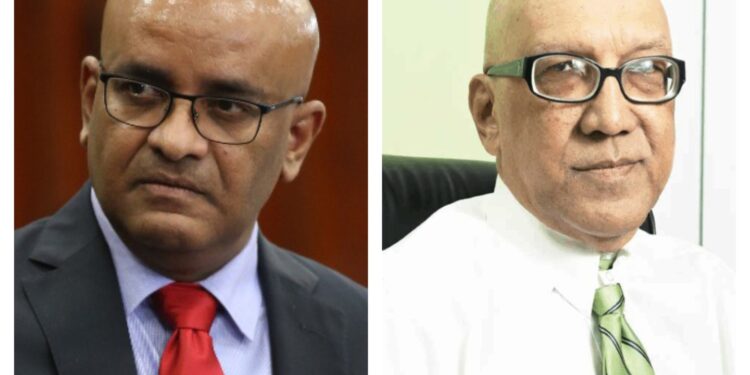
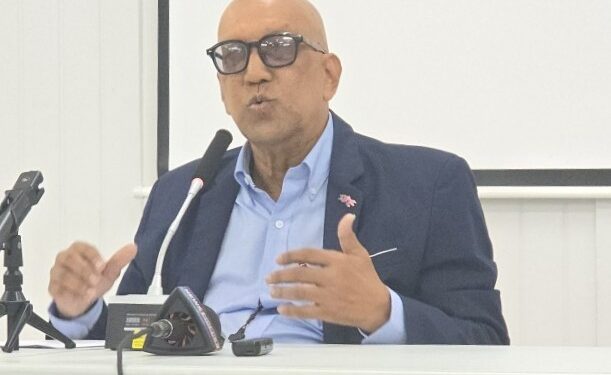
By Mark DaCosta- In a nation where educational access continues to be a significant concern, Azruddin Mohamed stands out as a beacon of hope for children in the hinterland regions. His tireless efforts aim to bridge the widening educational gap that many rural children face, highlighting the urgent need for reform and increased investment. As Mohamed pursues his quest, he draws attention to the fact that, despite the earnest proclamations of the current administration, the reality on the ground often presents a starkly different narrative.

Azruddin Mohamed’s journey began not from a position of privilege but from a profound awareness of the disparities that exist in educational opportunities across our country. Working primarily with communities that experience distance and isolation from urban centres, he has dedicated his life to advocating for the rights of hinterland children who lack the same educational resources as their urban counterparts. With many schools in these areas underfunded or even non-existent, he believes it is crucial for the nation to prioritise educational equity.
“Every child has a right to quality education, no matter where they live,” Azruddin argues vehemently. It is a mantra that resonates not just within the hinterland communities, but across our diverse nation. His commitment has driven him to engage with local leaders, parents, and even government officials in relentless discussions about policy reform. “These children are our future,” he states. “Without proper investment in their education, we are jeopardising our national development.”
The challenges Azruddin faces are daunting. Many hinterland schools operate with minimal resources, often lacking basic infrastructure such as proper classrooms and teaching materials. He highlights the plight of children who travel miles to attend school, often crossing rivers and braving treacherous terrains simply to receive an education. “While policies are made in the capital, children here are struggling to get through the day,” he lamented, referring to the disconnect between policymakers and the realities faced by rural communities.
Moreover, the alarming rates of school dropouts in these regions illustrate a systemic problem that demands immediate attention. A poignant aspect of Azruddin’s activism is his insistence on the necessity of implementing programs specifically designed to cater to the unique circumstances of hinterland schools. “Educational initiatives should not be one-size-fits-all. We need tailored solutions that consider the geographical and cultural contexts of our children,” he asserts.
Unfortunately, the challenges extend beyond the physical and logistical. There is an urgent requirement for well-trained teachers, who have often shunned posts in hinterland schools due to inadequate salaries and poor living conditions. This issue has been compounded by what Azruddin describes as an education policy that is “tokenistic at best”. He criticises the current administration — the People’s Progressive Party (PPP) — úfor its failure to take comprehensive action despite the promises made during election campaigns. “Their vision for education ends where their handshakes do,” he added, voicing frustrations shared by many in the community.
In a recent dialogue with local educational authorities, Azruddin called for an increase in budget allocations aimed at improving infrastructure in hinterland schools. “More funds need to be directed towards these areas; otherwise, we are merely perpetuating a cycle of disadvantage,” he warned. The proposed reforms aim not only to enhance physical structures but also to improve the quality of education delivered in these schools.
Azruddin’s unwavering dedication has garnered widespread support from within the community and beyond. Parents, teachers, and local leaders are rallying behind his cause, uniting in their demands for greater government accountability and action. “We are no longer willing to accept empty promises,” one parent remarked, echoing the sentiments of a community tired of waiting for change.
Furthermore, Azruddin has initiated partnerships with NGOs and private sector players, aiming to bring additional resources and innovation to the educational landscape of hinterland regions. Acknowledging the diverse capabilities that can be mobilised, he believes collaboration is key to overcoming the systemic barriers that have long hindered progress. “Together, we can create a movement that transforms these children’s lives,” he passionately claims.
As Azruddin continues his quest, he embodies the spirit of resilience and hope that defines our nation. His commitment to the cause of education illustrates the immense potential that lies within our hinterland youth, if only given the opportunity to thrive. His advocacy serves as a reminder that as a society, we must hold our government accountable and demand that it prioritises every child’s right to education, irrespective of their geographical location.
The call for educational reform in hinterland schools is not just a plea; it is a necessity for the future of our nation. Azruddin Mohamed, with his dedication and vision, inspires a collective movement aimed at ensuring that no child in our country is left behind.