As Guyana stands on the precipice of its 60th Independence Anniversary in 2026, the legacy of its first Executive President, Linden Forbes Sampson Burnham, demands a nuanced re-examination. Often viewed through the polarizing lens of the Cold War, Burnham’s tenure (1964–1985) was defined by a radical pursuit of psychological and economic decolonization. To analyse Burnham fairly is to look past the historical negationism and see a leader who attempted to steer a small, developing nation toward self-determination amidst a global ideological firestorm.
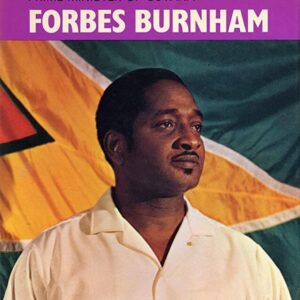
Burnham’s hallmark was the transformation of Guyana into the Co-operative Republic in 1970. This was not merely a title change; it was a defiant rejection of the “plantation economy” that had defined the country for centuries. By nationalizing the bauxite industry (DEMBA) and the sugar giant Booker-McConnell, Burnham sought to place the “commanding heights” of the economy into the hands of Guyanese people.
Critics often point to the subsequent economic decline, yet an empirical view reveals that Burnham’s challenges were largely systemic and external:
- The Global Oil Crisis: As a non-oil-producing nation at the time, Guyana was devastated by the 1973 energy crisis, which skyrocketed import costs.
- Geopolitical Hostility: Burnham’s embrace of “Co-operative Socialism” and ties with Cuba triggered a “credit squeeze” from Western financial institutions. Any leader in the 1970s who dared to challenge the status quo of multinational corporations faced similar economic retaliation.
The Food Clothe House (FCH) Programme (1972–1976) was the cornerstone of Burnham’s domestic agenda. At its heart, it was a visionary attempt to break the “psychology of the import.”
- Feeding the Nation: Burnham restricted luxury imports not to punish the populace, but to force an expansion in local agriculture (rice, fruits, cassava, etc). This spurred the growth of the local agro-processing industry.
- Housing and Clothing: The government launched massive housing schemes and promoted the use of local clay bricks and timber. The establishment of the Sanata Textiles Mill aimed to produce clothing from locally grown cotton.
While the program faced logistical hurdles, it succeeded in instilling a sense of national pride and indigenous resourcefulness that persists in Guyana today.
Perhaps Burnham’s most undeniable success was his ability to make a small South American nation “punch above its weight” in international diplomacy.
Burnham was a founding father of the Caribbean Community (CARICOM). He understood that small Caribbean states could only survive the pressures of globalization through collective bargaining and economic integration. His commitment to the Treaty of Chaguaramas (1973) laid the groundwork for the regional cooperation Guyanese celebrate today.
He refused to be a pawn of either the US or the USSR. By hosting the Conference of Foreign Ministers of Non-Aligned Countries in Georgetown in 1972, he positioned Guyana as a moral leader for the “Third World,” advocating for a New International Economic Order.
While Western powers were often hesitant to act against South Africa due to strategic interests, Burnham was unequivocal. Under his leadership, Guyana provided:
- Financial Aid: Annual contributions from the national treasury to the African National Congress (ANC) and freedom fighters.
- Diplomatic Support: Granting Guyanese passports to African liberation leaders to facilitate their travel.
- Logistical Bravery: Allowing Cuban planes transporting troops to aid Angola’s liberation to refuel in Guyana—an act of immense courage that risked direct US intervention.
As Guyana celebrates 60 years of independence, the figure of Forbes Burnham remains a testament to the “Will to Survive.” To analyse him successfully is to recognize that his “failures” were often the result of a small nation’s collision with the tectonic plates of global power. He sought to give Guyana a backbone, a culture of its own, and a seat at the table of nations. Beyond the political fray, his legacy is one of an unwavering belief that a formerly colonized people could—and should—be the masters of their own destiny.
As the nation reflects on its Diamond Jubilee, Burnham’s vision of a self-reliant, unified Guyana serves as a foundational blueprint for the country’s modern-day emergence as a global economic player.