A Partnership for National Unity (APNU) yesterday revealed its National Youth Empowerment Scheme (YES), a wide-ranging policy framework aimed at equipping the country’s youth with leadership training, economic opportunity, and social support in advance of the September 1 General and Regional Elections.
Under YES, the APNU intends to establish regional youth training centres and launch a National Youth Leadership Training Programme, asserting that “the youth must not only lead themselves but be trained to do so.” In addition, local and international scholarships, monthly stipends (G$50,000) for tertiary and technical students, and a rent‑to‑own housing programme are included among the planned benefits for young Guyanese.
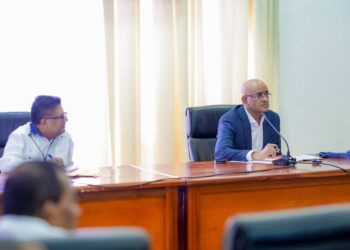
Speaking at a press briefing yesterday, Opposition Leader Mr. Aubrey Norton, said Guyana’s youth must be prepared for the future and a partnership government will empower national athletes with medical insurance, sustainable income, and full sponsorship when representing Guyana.
The partnership also emphasised its commitment to creative talent, promising to finally implement intellectual property and copyright laws that would allow youth to monetise their skills—something it claims the current government has failed to do.
Other key elements of the YES package include:
- Launching a National Youth Investment Fund, providing grants and low-interest loans, preceded by mandatory financial literacy and entrepreneurship training;
- Modernising the stock exchange to facilitate youth investment opportunities;
- Implementing a G$400,000 tax threshold, monthly cash transfers, and agricultural training to generate employment;
- Allocating special mining permits to young people and fast-tracking the licensing process;
- Introducing a national social safety network, particularly targeting support for single-parent families;
- Establishing a National Schools Transportation Network and providing two hot meals daily in schools to promote attendance and wellbeing.
The APNU also launched a housing initiative that includes both rent subsidies and a rent-to-own scheme, ensuring that while youth pay rent, the property will be their own once the cost is fully covered.
“This is not just about programmes—it’s about seeing our youth as a resource, not a problem,” the Norton stated. “Our plan will ensure oil revenues directly benefit ordinary Guyanese, not just the political elite. This is putting people first.”
The scheme was also promoted as part of the APNU’s broader mission to end “scandalous and corrupt schemes” that, it alleges, have seen state resources diverted to government insiders, families, and cronies—contrasted sharply with the APNU’s pledge to return oil wealth and national assets to the people.
APNU appears to be making a vigorous push to position YES as a central pillar of its campaign—promising that Guyana’s young population will be at the heart of its next administration.