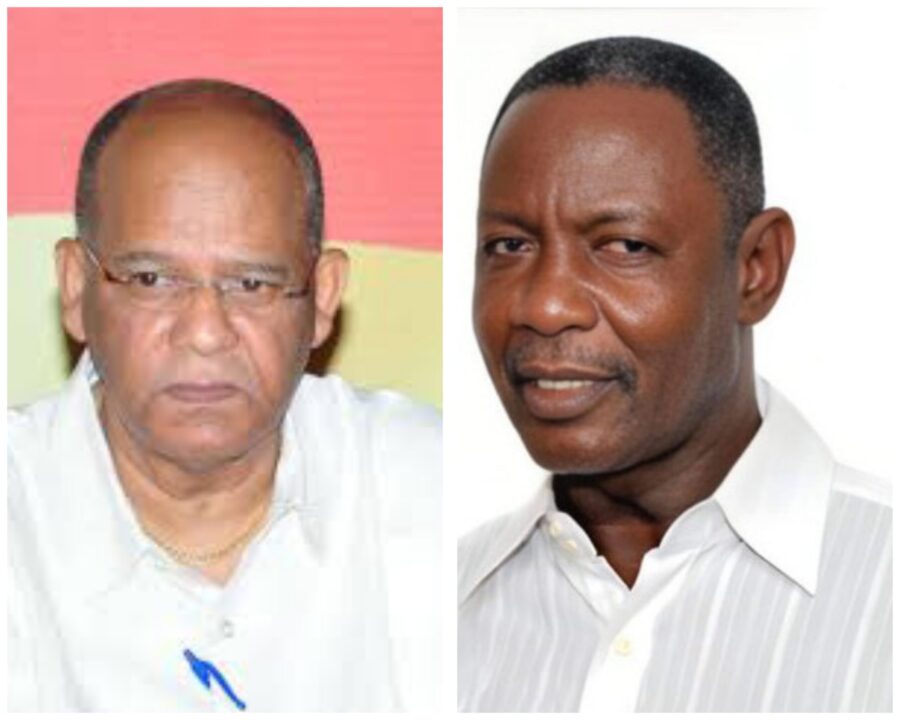
Veteran trade unionist Lincoln Lewis has launched a fierce rebuttal to People’s Progressive Party (PPP)-nominated Guyana Elections Commission (GECOM) Commissioner Clement Rohee, accusing him and the PPP government of trampling Guyana’s democracy and weaponising the electoral system for political survival.
The clash erupted following Rohee’s letter to the editor on June 5, in which he claimed Lewis had been silent on electoral matters- free, fair and credible elections- and suggested that Lewis’ call for Guyanese to stand in defense of democracy is without merit. Rohee accused Lewis of turning a blind eye to electoral issues and questioned his credibility on matters of fairness and legality.
Yesterday Lewis hit back with unapologetic force in his column, Eye on Guyana.
“I stand by every word of my article ‘We Demand Electoral Justice—Now!’ which seems to have offended him,” he wrote. “The observations and recommendations in that letter would only offend those pursuing lawless and nefarious actions.” According to Lewis the PPP fears free, fair and credibles elections.
Electoral Wrongs, Past and Present
Lewis painted a damning portrait of what he called the PPP’s “long, well-documented record of electoral fraud and manipulation,” citing:
The 1997 Doodnauth Singh debacle, when a president was prematurely sworn in before final vote verification;
The 2006 elections, where a parliamentary seat was awarded to the PPP instead of the Alliance for Change (AFC);
The 2011 attempt to wrongfully hand the PPP an APNU seat—blocked only by an Opposition commissioner;
And the 2020 elections, which Lewis argued were riddled with irregularities in PPP strongholds and facilitated by “a complicit court” and foreign powers bent on regime change.
PPP shouldn’t be afraid of electoral reform
Far from backing down, Lewis reasserted his demands for a clean voters list, biometric verification, and a complete overhaul of GECOM, arguing that any party confident in its public support should welcome these reforms.
“The PPP shouldn’t be afraid of these basic requirements if confident the party could win an election by fair means.”
To Rohee’s claim that his activism amounts to heresy, Lewis responded bluntly:
“If demanding free and fair elections is heresy, then I am guilty as charged. What is truly heretical is remaining silent while our democracy is being dismantled.”
Call to Action: “Now, Not Tomorrow”
Lewis’s most urgent message was directed not at Rohee or GECOM—but at the Guyanese people.
“We cannot remain silent while our democracy is being dismantled before our eyes. And the time to act is now, not tomorrow. Now!”
He called for every lawful action necessary to defend democratic rights and invoked the spirit of national leaders who enacted electoral reform in 1990, noting bitterly that the current regime has failed to follow that example between 2020 and 2025.
On Diplomats and Double Standards
Lewis also condemned what he sees as inaction and complicity by the diplomatic community, accusing them of prioritizing their own geopolitical interests while Guyana’s democratic institutions crumble.
“Accountability does not discriminate. Smart diplomats understand this and would seek to address the situation, not deflect from it.”
Taking a jab at Rohee’s credibility, he added sarcastically:
“It would be a stretch for the diplomatic community to take seriously, without their own inquiry, the words of a man who once could not differentiate the Dominican Republic from the Commonwealth of Dominica.”
Rooted in Principle, Defiant in Voice
Ending on a note of personal resolve, Lewis stood firm in his identity and his mission:
“I am proud of my ancestry. Unlike him, I am not ashamed to identify with my people… Rohee will not deter or drive fear into me from being proud in my skin—representing and holding accountable my race or any other.”
“I make no apology for standing on the side of right—even if right may have lost.”
Lewis’ call for electoral reform mirrors positions once held by the PPP while in Opposition, notably under the leadership of Dr. Cheddi Jagan, and again in 2015 by Bharrat Jagdeo. Following the PPP’s defeat in the 2015 elections, Jagdeo himself called for sweeping changes to the electoral system, including:
- the removal of then-GECOM Chairman Dr. Steve Surujbally,
- the creation of a clean voters list,
- the implementation of biometric voter identification, and
- the introduction of electronic voting via machines.
While the PPP succeeded in forcing Surujbally’s removal, the party has since reversed its position on the remaining reforms, abandoning its prior insistence on GECOM implementing items 2 through 4.
Compounding concerns, evidence from the 2020 elections shows the PPP benefited from compromised votes. The national Recount Exercise revealed that over 90,000 votes were affected, including:
- 61 votes cast in the names of deceased persons,
- 4,864 instances of unverified voter identities,
- 150 stuffed ballot boxes,
- 49 ballot boxes with no supporting documentation, and
- 1,278 cases of missing voter identification records.
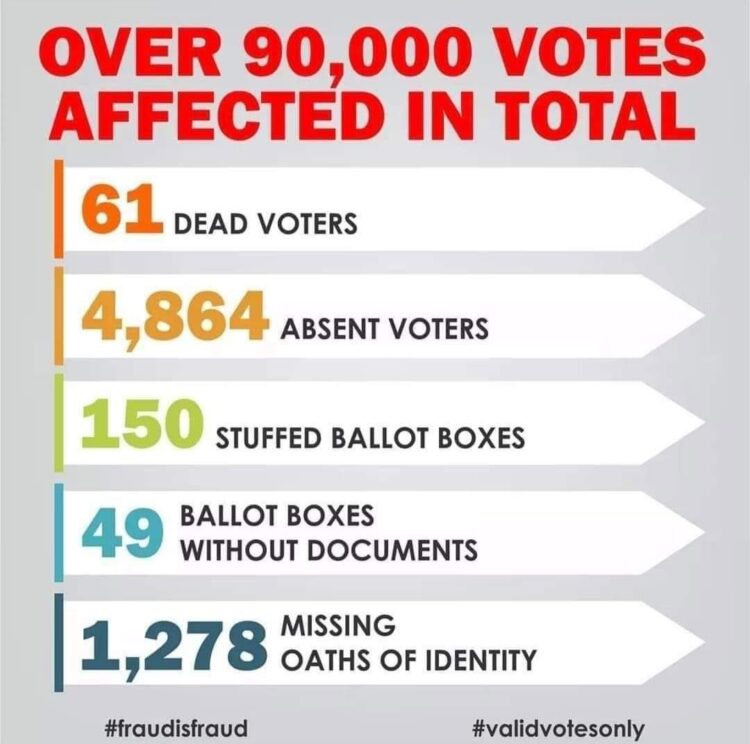
Despite these alarming discrepancies, GECOM accepted the votes as valid, in clear violation of statutory requirements under the Representation of the People Act.
The ongoing war of words between Lewis and Rohee has laid bare the deep fractures in Guyana’s democratic system—and the PPP’s unwillingness to pursue reforms that would establish a level electoral playing field for all parties. But if Lewis’s message carries any enduring mandate, it is this: the people must not wait for justice—they must demand it. Now.