Canada NATIONAL DAY of TRUTH and RECONCILIATION for Indigenous Peoples.
September 30th is Canada’s National Day of Truth and Reconciliation, a federal statutory holiday that honors the children who never returned home and the survivors of residential schools, as well as their families and communities . This day is a vital part of the reconciliation process, acknowledging the painful history and ongoing impacts of residential schools.
The holiday is also known as Orange Shirt Day, inspired by the story of Phyllis Jack Webstad, a residential school survivor whose new orange shirt was taken away on her first day of school . The orange shirt has become a symbol of the forced assimilation of Indigenous children and the stripping away of their culture, freedom, and self-esteem.
On this day, Canadians are encouraged to wear ORANGE to show their support and solidarity with Indigenous communities. The day is also an opportunity to educate oneself about the history of residential schools and their ongoing impacts on Indigenous peoples .
The National Day of Truth and Reconciliation was established through legislative amendments made by Parliament, and it is a direct response to Call to Action 80 of the Truth and Reconciliation Commission of Canada . The commission’s final report detailed 94 calls to action, highlighting the need for reconciliation and redress for the harm caused by residential schools.
History of Residential Schools
– The Canadian government and Christian churches operated residential schools from the 1870s to the 1990s.
– Over 150,000 Indigenous children were forcibly taken from their families and sent to these schools.
– The schools’ purpose was to assimilate Indigenous children into European Canadian culture, suppressing their languages, cultures, and identities.
The Legacy of Residential Schools
– Many children suffered physical, emotional, and sexual abuse at schools.
– Thousands of children died due to poor living conditions, malnutrition, and disease.
– Survivors and their families continue to experience intergenerational trauma, affecting their mental health, relationships, and overall well-being.
Reconciliation Efforts
– The Truth and Reconciliation Commission of Canada (TRC) was established in 2008 to document the experiences of residential school survivors.
– The TRC’s 94 Calls to Action aim to address the ongoing impacts of residential schools and promote reconciliation.
– The National Day of Truth and Reconciliation is a step towards reconciliation, acknowledging the past and promoting awareness, education, and healing.
How to Observe the Day
– Wear orange to show solidarity with Indigenous communities.
– Educate yourself about the history of residential schools and their ongoing impacts.
– Attend local events, ceremonies, or workshops.
– Support Indigenous-led initiatives and organizations.
– Engage in respectful conversations with Indigenous peoples and listen to their experiences.
Resources
– National Centre for Truth and Reconciliation (NCTR)
– Indigenous and Northern Affairs Committee (INAC)
– Canadian Museum for Human Rights
– Local Indigenous organizations and communities
13 COUNTRIES have established Truth and Reconciliation Commissions to address historical INJUSTICES and PROMOTE HEALINGS.
1. ARGENTINA: The National Commission on the Disappearance of Persons investigated human rights violations, including 30,000 forced disappearances, committed during the Dirty War
2. AUSTRALIA: The state of Victoria established a truth commission in 2021 to investigate the violent dispossession and genocide of Aboriginal people during colonization.
3. CANADA: The Truth and Reconciliation Commission of Canada investigated human rights abuses in the Canadian Indian residential school system from 2008 to 2015.
4. CHILE: The National Truth and Reconciliation Commission investigated deaths and disappearances under Augusto Pinochet’s rule, releasing a report in 1991.
5. GERMANY: A commission investigated crimes committed by the East German government after unification in 1992.
6. LIBERIA: The Truth and Reconciliation Commission investigated human rights abuses during the civil war.
7. NEW ZEALAND: The Waitangi Tribunal, established in 1975, investigates claims related to the 1840 Treaty of Waitangi.
8. PERU: The Truth and Reconciliation Commission investigated human rights abuses during the internal conflict from 1980 to 2000.
9. RWANDA: The National Unity and Reconciliation Commission promoted reconciliation after the 1994 genocide.
10. SIERRA LEONE: The Truth and Reconciliation Commission investigated human rights abuses during the civil war.
11. SOUTH AFRICA: The Truth and Reconciliation Commission, established in 1995, investigated human rights abuses during apartheid.
12. SWEDEN: A truth commission investigated abuses and rights violations against the Roma people in the 20th century.
13. UNITED STATES: While there hasn’t been a comprehensive federal Truth and Reconciliation Commission, some cities and states have established their own initiatives, such as the Greensboro Truth and Reconciliation Commission in North Carolina.
https://en.m.wikipedia.org/
https://www.csce.gov/
ADDITIONAL DETAILS about the Truth and Reconciliation Commissions in these 13 COUNTRIES:
1. ARGENTINA
– Established: 1983
– Focus: Investigating human rights violations, including forced disappearances, during the Dirty War (1976-1983)
– Outcome: The commission’s report led to the prosecution of top military officials, including General Jorge Videla
2. AUSTRALIA
– Established: 2021 (Victoria state)
– Focus: Investigating the violent dispossession and genocide of Aboriginal people during colonization
– Outcome: Ongoing, with a focus on providing reparations and redress to affected communities
3. CANADA
– Established: 2008
– Focus: Investigating human rights abuses in the Canadian Indian residential school system
– Outcome: The commission’s report led to the establishment of the National Inquiry into Missing and Murdered Indigenous Women and Girls
4. CHILE
– Established: 1990
– Focus: Investigating deaths and disappearances under Augusto Pinochet’s rule (1973-1990)
– Outcome: The commission’s report led to the prosecution of Pinochet and other officials
5. GERMANY
– Established: 1992
– Focus: Investigating crimes committed by the East German government
– Outcome: The commission’s report led to the prosecution of former East German officials
6. LIBERIA
– Established: 2005
– Focus: Investigating human rights abuses during the civil war (1989-2003)
– Outcome: The commission’s report led to the establishment of the Liberian Truth and Reconciliation Commission’s recommendations
7. NEW ZEALAND
– Established: 1975 (Waitangi Tribunal)
– Focus: Investigating claims related to the 1840 Treaty of Waitangi
– Outcome: The tribunal’s reports have led to significant reparations and redress for Maori communities
8. PERU
– Established: 2001
– Focus: Investigating human rights abuse during internal conflict (1980-2000)
– Outcome: The commission’s report led to the prosecution of former President Alberto Fujimori
9. RWANDA
– Established: 1999
– Focus: Promoting reconciliation after the 1994 genocide
– Outcome: The commission’s work has contributed to the rebuilding of Rwandan society
10. SIERRA LEONE
– Established: 2000
– Focus: Investigating human rights abuses during the civil war (1991-2002)
– Outcome: The commission’s report led to the establishment of the Special Court for Sierra Leone
11. SOUTH AFRICA
– Established: 1995
– Focus: Investigating human rights abuses during apartheid (1948-1994)
– Outcome: The commission’s report led to the granting of amnesty to some perpetrators and the prosecution of others
12. SWEDEN
–Established : 2019
– Focus: Investigating abuses and rights violations against the Roma people in the 20th century
– Outcome: Ongoing, with a focus on providing reparations and redress to affected communities
13. UNITED STATES
– No comprehensive federal Truth and Reconciliation Commission has been established, but some cities and states have initiated their own truth-telling processes, such as the Greensboro Truth and Reconciliation Commission in NORTH CAROLINA.
With Guyana’s RACIAL PROBLEMS since 1966, The opportunity, for BENEFITS from a Truth & Reconciliation Commission (TRC).
Guyana’s racial problems since 1966 are a pressing concern that requires a thoughtful and multi-faceted approach. Establishing a Truth and Reconciliation Commission (TRC) could be a valuable step towards healing and reconciliation.
A TRC would provide a platform for victims, perpetrators, and the broader community to share their experiences, acknowledge past injustices, and work towards forgiveness and healing. This process has been successful in other countries, such as South Africa, Rwanda, and Canada, where TRCs have helped to address historical injustices and promote national reconciliation .
In Guyana’s case, a TRC could help to address the root causes of racial tensions and promote greater understanding and empathy between different ethnic groups. It could also provide recommendations for policy reforms and reparations to address the historical injustices faced by marginalized communities.
THREE KEY benefits of a TRC in Guyana:
1. Acknowledging past injustices: A TRC would provide a platform for victims to share their stories and for perpetrators to acknowledge their wrongdoing.
2. Promoting national reconciliation: By facilitating dialogue and forgiveness, a TRC could help to promote greater understanding and empathy between different ethnic groups.
3. Recommending policy reforms: A TRC could provide recommendations for policy reforms to address the root causes of racial tensions and promote greater equality and justice.
Overall, establishing a TRC in Guyana could be a valuable STEP towards promoting healing, reconciliation, and greater understanding between different ETHNIC groups.
ADDITIONAL KEYS to consider regarding a Truth and Reconciliation Commission (TRC) in Guyana:
Potential Benefits
1. Addressing historical injustices: A TRC could help address the historical injustices faced by marginalized communities, including the Afro-Guyanese and Indigenous populations.
2. Promoting accountability: By investigating past human rights abuses, a TRC could promote accountability and ensure that those responsible are held accountable.
3. Fostering national dialogue: A TRC could provide a platform for national dialogue, helping to promote greater understanding and empathy between different ethnic groups.
4. Recommending reparations: A TRC could provide recommendations for reparations to address the historical injustices faced by marginalized communities.
Key Considerations
1. Inclusivity: A TRC should be inclusive of all ethnic groups and stakeholders, ensuring that all voices are heard and represented.
2. Independence: A TRC should be independent and impartial, free from political interference or influence.
3. Transparency: A TRC should be transparent in its operations, ensuring that all proceedings and findings are publicly available.
4. Security: A TRC should ensure the security and protection of witnesses and victims who come forward to share their stories.
International Support
1. United Nations: The United Nations has provided technical assistance and support to TRCs in various countries, including Guyana.
2. International NGOs: International non-governmental organizations (NGOs) have also provided support and expertise to TRCs in various countries.
SOLUTION: The NEXT STEPS BY A more people-centered CARING, GUYANA GOVERNMENT in 2025, with its USD OIL BILLIONS OF REVENUES’ BLESSINGS, including Social, Cultural and Technological, CHALLENGES.
1. NATIONAL CONSULTATIONS: National consultations should be held to discuss the establishment of a TRC and its potential mandate.
2. LEGISLATIVE FRAMEWORK: A legislative framework should be established to govern the operations of a TRC.
3. SELECTION OF COMMISSIONERS: Commissioners should be selected through a transparent and inclusive process, ensuring that they are representative of all ethnic groups and stakeholders.
POTENTIAL OUTCOMES
1. Improved racial relations: A TRC can help promote greater understanding and empathy between different ethnic groups.
2. Accountability: Ensuring that those responsible for human rights abuses are held accountable.
3. Reparations: Providing recommendations for reparations, restitution, and other forms of redress to address historical injustices.
4. Healing and closure: Providing a platform for victims to share their experiences and find closure.
KEY CONSIDERATIONS
1. Inclusivity: A TRC should be inclusive of all six ethnic groups in Guyana.
2. Independence: A TRC should be independent and impartial, free from political interference or influence.
3. Transparency: A TRC should be transparent in its operations, ensuring that all proceedings and findings are publicly available.
4. Security: A TRC should ensure the security and protection of witnesses and victims who come forward to share their stories.
BENEFITS of EQUITY for ALL 6 RACES
1. Reducing inequality: Ensuring that the benefits of Guyana’s oil wealth are shared equitably among all six ethnic groups can help reduce inequality.
2. Promoting social cohesion: Equity for all six races can promote social cohesion and reduce tensions between different ethnic groups.
3. Fostering economic growth: Ensuring that all six ethnic groups have access to economic opportunities can foster economic growth and development
“ The United States Institute of Peace’s Truth Commissions Digital Collection is part of the Margarita S. Studemeister Digital Library in International Conflict Management. The collection contains PROFILES of TRUTH COMMISSIONS and substantive bodies of inquiry from nations worldwide – offering general background information on the composition of each body, links to the official legislative texts establishing such commissions, and each commission’s final reports and findings.”
https://www.usip.org/
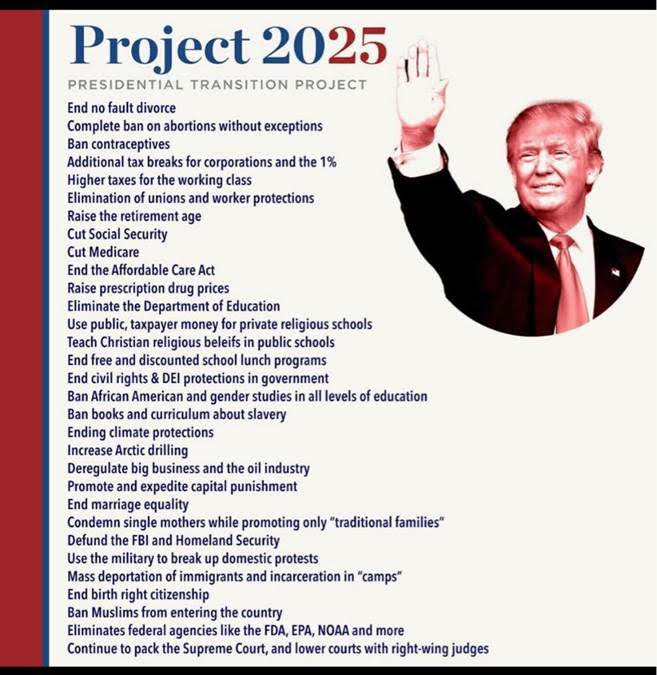
USA PROJECT 2025 with 31 ITEMS.
Project 2025 is a COMPREHENSIVE PLAN initiated by the HERITAGE FOUNDATION, a conservative THINK TANK, to GREATLY RESHAPE the USA FEDERAL GOVERNMENT.
The PROJECT, also known as the 2025 PRESIDENTIAL TRANSITION PROJECT, aims to CONSOLIDATE EXECUTIVE POWER, Dismantle the Government Bureaucracy, and IMPLEMENT POLICIES ALIGNED with His Excellency DONALD JOHN TRUMP’S AGENDA for his Tenure at the USA’s 47th. President.
The PLAN encompasses VARIOUS ASPECTS, including:
1. GOVERNMENT RESTRUCTURING: Replacing merit-based federal civil service workers with loyalists and taking partisan control of key government agencies.
2. ECONOMIC POLICIES: Reducing taxes on corporations and capital gains, instituting a flat income tax, and cutting Medicare and Medicaid.
3. SOCIAL POLICIES : Criminalizing pornography, removing legal protections against anti-LGBT discrimination, and ending diversity, equity, and inclusion programs.
4. IMMIGRATION: Arresting, detaining, and deporting undocumented immigrants, and deploying the U.S. Armed Forces for domestic law enforcement.
5. CRITICS have DENOUNCED Project 2025 as an AUTHORITARIAN NATIONALIST PLAN that UNDERMINES the RULE OF LAW, SEPARATION of POWERS, and CIVIL LIBERTIES.
MAJOR LESSON for GUYANA is that His Excellency President DONALD JOHN TRUMP’s Management Style is for a NEGOTIATED DEAL. NO Friends BUT Interests. NO Lobbying Firm will be able to PASS this HURDLE.
REMINDER: “The U.S. Western Hemisphere policy, rooted in the Monroe Doctrine, opposes European colonization or intervention in the Americas, and has evolved to include REGIONAL SECURITY and ECONOMIC cooperation, as well as TRADE agreements.
MANY Other NATIONS are PAYING PREMIUMNS for their USA Security GUARANTEE/MOU, especially the 6 GCC GULF Countries, which is a LESSON for GUYANA to be prepared to PAY to the USA in due course,

My strong RECOMMENDATION for ALL to READ, the BOOK, ” TRUMP the ART OF THE DEAL” with 3 TAKE AWAYS on HIS DECISION MAKING Style.
1. TRUST YOUR INSTINCTS : Trump emphasizes the importance of trusting your gut feeling when making decisions. He believes in talking to people, getting a feel for the market, and then trusting your instincts to make a decision. This approach has helped him make successful deals and navigate complex business situations.
Onward & Upward towards, One People, One Nation, One Destiny.