The United Nations has warned that developing countries remain dangerously underfunded in their efforts to adapt to climate change, with available international financing falling dramatically short of what is needed to protect vulnerable populations as global temperatures continue towards and beyond the 1.5°C threshold.
In its latest Adaptation Gap Report, released on November 4, 2026, the United Nations Environment Programme (UNEP) said that even if international public adaptation financing triples, as governments have committed to achieving by 2035, it would cover only between 20 and 29 per cent of developing countries’ projected needs.
The report estimates that developing countries will require approximately US$305 billion annually by 2035 to address their climate adaptation requirements. Yet international public adaptation finance reached only between US$28.2 billion and US$31.7 billion in 2024, an increase of approximately US$1 billion over the previous year.
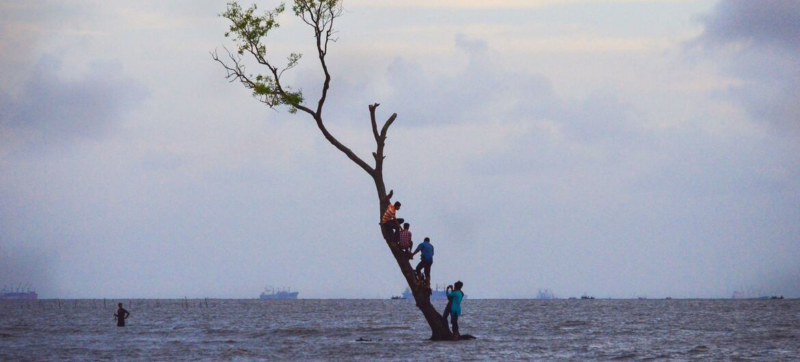
The figures expose a widening disparity between the resources available to vulnerable countries and the escalating costs of preparing for climate-related disasters, including floods, droughts, extreme heat, coastal erosion and rising sea levels.
UNEP Executive Director Inger Andersen warned that governments were failing to prepare adequately for the consequences of climate change.
“The world is not ready to adapt to current climatic conditions, never mind what overshoot of 1.5°C will bring,” Andersen said.
The report identifies inadequate financing, institutional weaknesses and slow implementation as major obstacles to climate adaptation. It cautions that climate-related losses and damage are continuing to mount while developing countries struggle to secure the resources needed to strengthen their resilience.
The urgency is heightened by projections that global warming will exceed the 1.5°C threshold established under the 2015 Paris Agreement. That threshold represents a critical temperature goal, although exceeding it does not mean that efforts to limit further warming or reduce climate risks become futile.
The commitment to triple annual adaptation finance by 2035 emerged from last year’s COP30 climate conference in Brazil under the Global Mutirão outcome. However, UNEP stressed that even achieving the target would leave a substantial funding deficit.
“At climate COP31 in Türkiye and beyond, nations must focus on intensifying efforts to achieve the COP30 Global Mutirão aspiration of tripling adaptation finance by 2035 – while understanding that they will need to go even higher to save lives, avoid losses and damages and protect economies,” Andersen said.
The report also noted that countries could still fulfil the earlier commitment under the 2021 Glasgow Climate Pact to double adaptation finance from 2019 levels to US$40 billion annually by 2025.
Multilateral development banks are believed to have substantially increased their financing, while financial flows between developing countries have also expanded, rising from US$3.8 billion in 2019 to US$9.6 billion in 2024.
However, UNEP cautioned that increased funding alone would not close the adaptation gap. Governments must also strengthen institutions, improve planning and accelerate the implementation of programmes designed to protect communities and critical infrastructure.
The findings have particular relevance for Guyana, where coastal communities, agricultural lands and essential infrastructure face growing exposure to flooding, rising sea levels, coastal erosion and changing rainfall patterns. With much of the country’s population and economic activity concentrated along its low-lying coast, inadequate adaptation financing could have serious consequences for livelihoods, food security and national development.
The climate warning also carries significant public health implications. The World Health Organisation (WHO) estimates that between 3.3 billion and 3.6 billion people worldwide live in areas highly vulnerable to climate change, describing the crisis as a major and increasingly preventable threat to human health.
The WHO is urging governments to implement six preventive measures, including early warning systems for heatwaves, climate-resilient water and sanitation services, and cleaner household fuels and technologies for cooking and heating.
It is also calling for fossil fuel prices to reflect the health and environmental damage associated with their use. According to the agency, appropriate pricing measures could prevent approximately 1.2 million deaths annually through reductions in air pollution, generate US$5.4 trillion in annual tax revenue and deliver an additional US$3 trillion in economic welfare gains.
As governments prepare for COP31 in Türkiye, the UNEP and WHO warnings underscore the widening gap between international climate promises and the practical measures needed to protect populations.
For developing countries, the challenge is increasingly twofold: reducing greenhouse gas emissions while securing the financing, technology and institutional capacity necessary to withstand climate impacts that are already being experienced.
The central question confronting world leaders is whether their commitments will translate into resources reaching vulnerable communities before the economic, environmental and human costs of inaction become even greater.