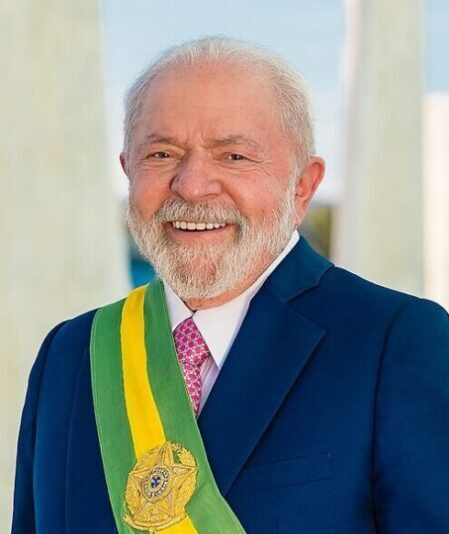
Brazilian President Luiz Inácio Lula da Silva has won re-election, defeating conservative challenger Flávio Bolsonaro in a closely contested presidential runoff that underscores the country’s deep political divisions and carries implications for Latin America’s political direction.
According to Brazil’s Superior Electoral Court (TSE), Lula received 64,256,232 votes, representing 51.79 per cent of valid ballots, while Bolsonaro secured 59,826,041 votes, or 48.21 per cent. The results were announced on Sunday, October 25.
The victory makes Lula the first person elected president of Brazil four times, although his terms have not been consecutive. The 80-year-old previously served from 2003 to 2011 before returning to office in January 2023.
Official results are available through the Superior Electoral Court.
The runoff attracted approximately 128.2 million voters from more than 158 million eligible electors. Turnout was about 80.8 per cent, while abstention stood at approximately 19.2 per cent, according to the electoral court.
Narrow victory follows first-round setback
Lula’s victory came after he finished second in the October 4 first round, when Bolsonaro received 47.03 per cent of valid votes compared with Lula’s 45.16 per cent.
The incumbent subsequently regained ground during the runoff campaign, overcoming concerns about living costs, crime and public security to secure another four-year term.
Flávio Bolsonaro, a senator and the son of former president Jair Bolsonaro, campaigned on a conservative platform and sought to build on support for the political movement associated with his father.
The result maintains the Workers’ Party’s leadership of the executive branch but also demonstrates the strength of Brazil’s conservative electorate. The narrow margin suggests Lula will govern a country where a substantial proportion of voters rejected his bid for another term.
The Associated Press reported that Bolsonaro refused to concede and questioned the electoral process following a judicial decision extending voting hours because of transportation difficulties and severe weather. Electoral authorities maintained that the extension did not alter the outcome.
Implications beyond Brazil
Brazil is Latin America’s largest economy and a leading member of the BRICS grouping, which includes China, India, Russia and other emerging economies. Its foreign policy, trade relationships and environmental decisions carry significance well beyond its borders.
Lula’s victory is expected to preserve Brazil’s emphasis on strategic autonomy and its economic relationships with China, while maintaining its participation in multilateral forums. It also complicates efforts by US President Donald Trump to expand Washington’s influence in the region, according to Associated Press reporting.
Domestically, however, Lula faces significant challenges. His government will need to respond to public concerns about security and household expenses while navigating a politically divided electorate and a Congress in which conservative forces retain considerable influence.
The election outcome also comes amid wider political shifts across Latin America, where conservative candidates and movements have made electoral gains in several countries.
Lula’s next term will therefore be judged not only by his ability to maintain Brazil’s international standing but also by whether his administration can deliver improvements in the daily lives of Brazilians.
His fourth term is scheduled to begin in January 2027.