(CARICOM)- The Caribbean Community (CARICOM) has demonstrated how progress in biodiversity conservation is possible through investments in protected areas, integration of biodiversity into national development and sectoral policies, and inclusive governance arrangements.
Building on these efforts, however, will require stronger biodiversity statistics and data and monitoring systems to measure results, guide policy decisions and track progress towards global biodiversity targets.
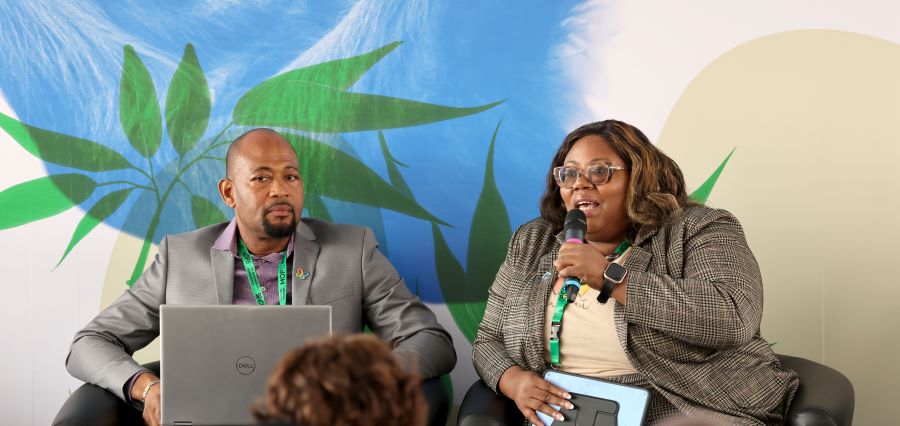
These priorities were highlighted by Ms. Teshia Jn Baptiste, Senior Project Officer, Sustainable Development, representing the CARICOM Secretariat, at side events during the Seventeenth Conference of the Parties (COP17) to the Convention on Biological Diversity now underway in Armenia.
At the event Responding to the Global Review: Sharing Sub-Regional Syntheses of Progress Towards the Kunming-Montreal Global Biodiversity Framework (KMGBF), Ms. Jn Baptiste shared the Caribbean’s experience in advancing conservation. She emphasised that reliable biodiversity data is essential to strengthen planning, inform financing decisions, improve accountability and assess countries’ progress towards global biodiversity targets.
“CARICOM has demonstrated that progress is possible where we have invested in protected areas, biodiversity mainstreaming and inclusive governance. We should now focus on scaling these successful approaches across the Region to accelerate implementation of the Kunming-Montreal Global Biodiversity Framework.”
She also underscored the importance of a whole-of-government approach, integrating biodiversity considerations into agriculture, tourism, fisheries, infrastructure and national development planning.
At another side event, Connecting Regions, Accelerating Action: Strengthening the TSCC Network for KMGBF Implementation, Ms. Jn Baptiste highlighted the role of the CARICOM Technical and Scientific Cooperation Centre (TSCC) in strengthening national capacities through technical expertise, training, technology and knowledge-sharing.
Regional initiatives using geographic information systems (GIS), DNA-based monitoring tools, early warning systems and citizen science were cited as examples of how cooperation can support stronger biodiversity monitoring and data management.
“Small Island Developing States often face similar capacity constraints, and we can achieve greater impact by sharing technical expertise, training programmes, monitoring tools and implementation support through regional platforms,” she noted.
The discussions reinforced the importance of partnerships among governments, regional institutions, universities, Indigenous Peoples and Local Communities, youth organisations, civil society and development partners in translating biodiversity commitments into practical action.