President Irfaan Ali has ordered the creation of an inter-agency task force to develop recommendations on child welfare and safety, but the announcement leaves unanswered questions about when concrete measures will be implemented and how the government intends to address the scale of abuse confronting Guyana’s children.
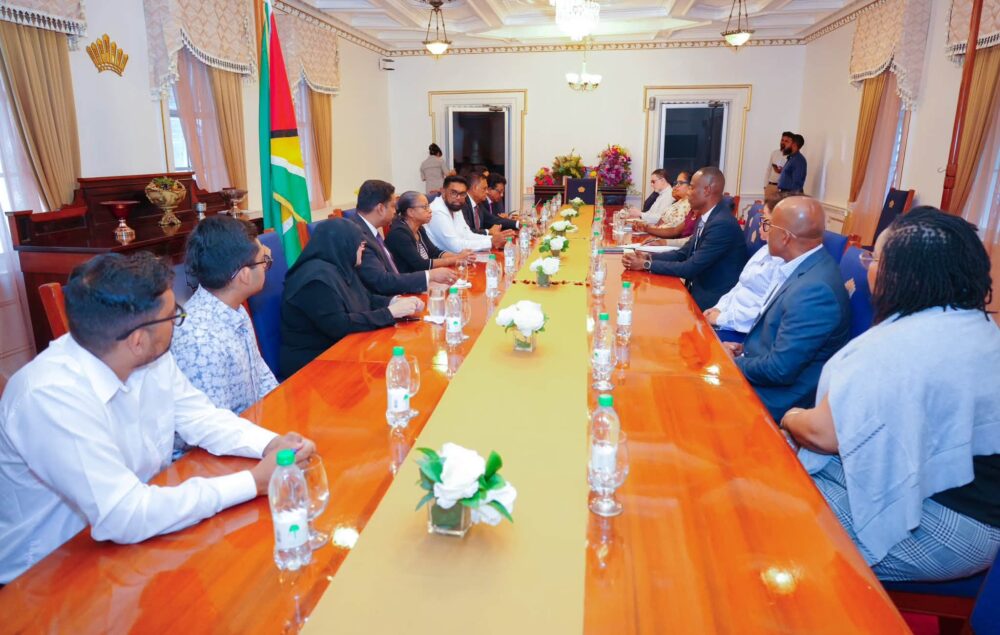
In a statement following a consultative meeting with representatives of government, the Judiciary, Parliament, law enforcement, constitutional commissions and civil society, Ali said participants agreed that “immediate, drastic and coordinated actions” were necessary.
The proposed response includes public education, parental support, school activities, psychosocial services, mentoring, recreational programmes, regulation of children’s exposure to music and social media, possible legislative changes and adjustments to law enforcement and the administration of justice.
Ali directed Attorney General Anil Nandlall to coordinate a task force comprising government agencies, the Judiciary, law enforcement, religious organisations, civil society and other stakeholders to develop recommendations for review and implementation.
However, the announcement provides no deadline for the task force to report, no measurable targets and no details about the funding or resources that would be committed to implementing its recommendations. It also does not identify who will be held accountable for ensuring that the proposed measures produce results.
Thousands of abuse cases raise urgent questions
The scale of the problem is reflected in figures disclosed by the Ministry of Human Services and Social Security.
In 2024, Guyana recorded approximately 4,038 child-abuse cases, including 1,202 cases of sexual abuse.
In September 2026, the ministry reported that approximately 2,600 child-abuse cases had been recorded in 2025, with neglect identified as the leading form of abuse.
These are reported cases, not necessarily a complete measure of abuse across the country. The figures nevertheless underscore the need for a response that goes beyond meetings and recommendations to ensure timely investigations, effective interventions and sustained protection for vulnerable children.
The wider picture is equally troubling. Research from Guyana’s 2019 Multiple Indicator Cluster Survey found that 58.1 per cent of children experienced physical aggression or moderate physical punishment, while 4.4 per cent experienced severe physical punishment.
Will the task force address shortages and accountability?
One major question is whether the initiative will tackle longstanding capacity problems within the Child Care and Protection Agency (CPA).
In 2024, Human Services Minister Vindhya Persaud acknowledged that only 48 child-protection officers were serving regions across Guyana, describing the staffing level as inadequate for the number of cases emerging.
The government has since reported efforts to strengthen its response, including a night-time rapid-response unit. But the latest task-force announcement does not specify whether additional officers, trained social workers, counsellors, investigators or specialised services will be provided.
Nor does it outline how schools, police, social workers and the courts will coordinate cases to prevent children from being left exposed to continued abuse while investigations proceed.
The proposed regulation of children’s exposure to music and social media also warrants clarification. While online exploitation and harmful content deserve attention, the government must explain the evidence supporting proposed restrictions and how these would be implemented without distracting from abuse, neglect and violence occurring within homes and other familiar environments.
Recommendations must lead to action
The involvement of the Judiciary, law enforcement and civil society could help produce a more coordinated national response. However, the task force’s effectiveness will depend on whether it identifies specific failures, assigns responsibility and establishes clear deadlines for corrective action.
The public should be told when the recommendations will be completed, how implementation will be funded and what indicators will be used to measure progress. Regular public reporting would also allow citizens to assess whether reported cases are being investigated, children are receiving support and repeat abuse is being prevented.
Ali has called for urgent action. The challenge now is to translate that declaration into a properly resourced, transparent and accountable child-protection system.
For children facing abuse, another task force is not the outcome that matters. Timely intervention, competent investigations, adequate support and lasting protection are.