The University of Guyana is helping to advance a more sustainable approach to waste management in Guyana through research, innovation and community engagement under the Prevention of Marine Litter in the Caribbean Sea (PROMAR) project, which has reached the conclusion of its implementation phase in the country.
Implemented locally by the University through its Faculty of Earth and Environmental Sciences (FEES), PROMAR has worked to address the flow of plastic waste, particularly packaging and single-use plastics, from land-based sources into rivers, coastal environments and, ultimately the Caribbean Sea. The initiative combines waste monitoring, circular economy solutions, policy support, public awareness and partnerships to encourage more sustainable ways of managing materials.
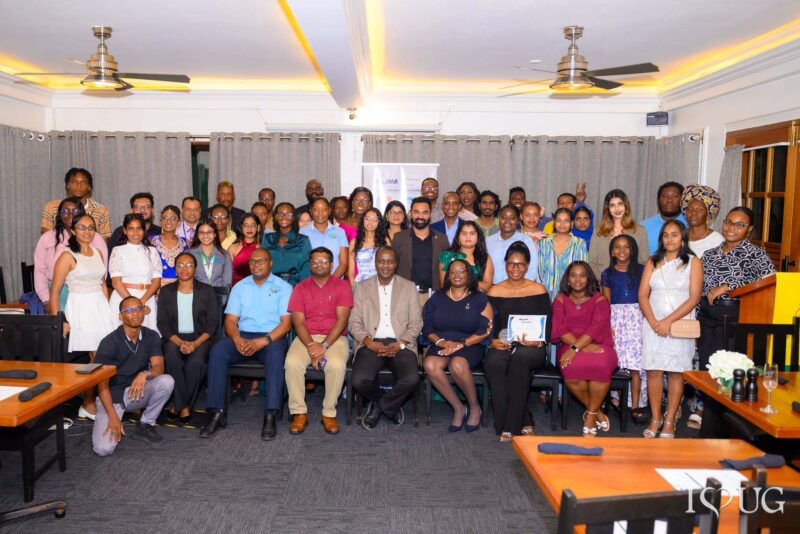
The conclusion of the Guyana implementation phase was marked by a series of activities in October 2026, including a Circular Economy Expo at the University’s Turkeyen Campus on October 13 and a closing ceremony and dinner at the Grand Coastal Inn Hotel, East Coast Demerara (ECD), on October 14. The activities brought together project partners, government representatives, researchers, students, community members and other stakeholders to reflect on the work undertaken and consider how its outcomes could be sustained.
PROMAR is funded by the German Federal Ministry for the Environment, Climate Action, Nature Conservation and Nuclear Safety and implemented by adelphi and the United Nations Environment Programme (UNEP) Cartagena Convention Secretariat, in collaboration with national partners, including the University of Guyana and the Environmental Protection Agency (EPA).
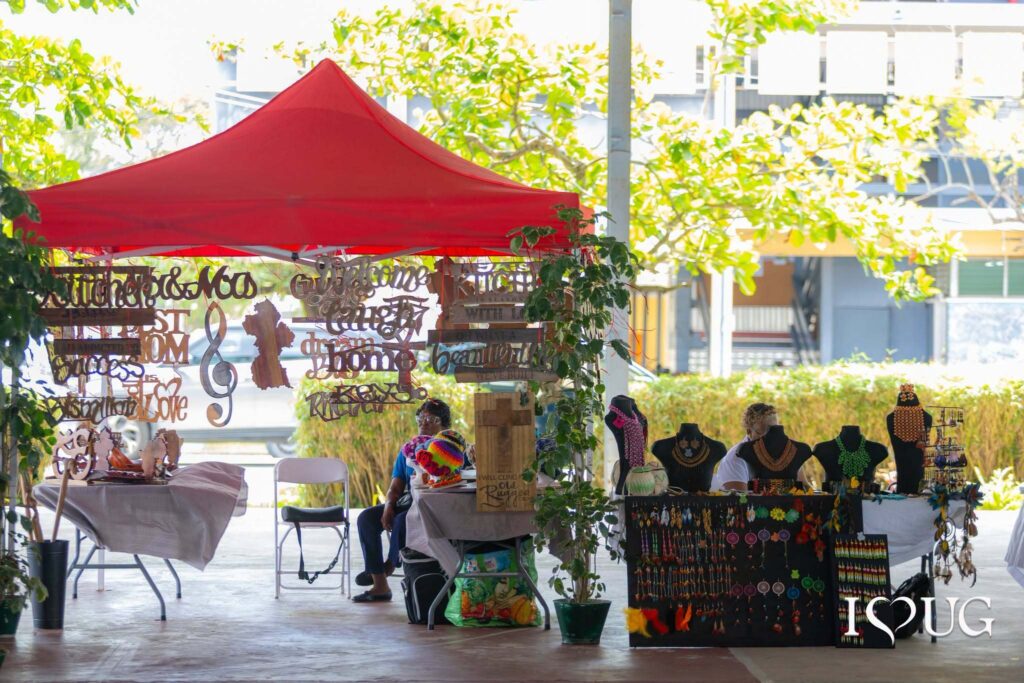
The Circular Economy Expo provided a practical demonstration of how discarded materials can be recovered, processed and used to create new products, while creating opportunities for collaboration among researchers, entrepreneurs, businesses, communities and financial institutions.
Professor Temitope Oyedotun, Guyana-PROMAR Project Lead and lecturer in FEES, highlighted the importance of moving beyond the traditional approach of using and discarding materials. He explained that circular economy thinking requires a fundamental shift in how waste is viewed and managed.
“The waste will not be treated as waste, but the waste will be treated as vital resources,” Professor Oyedotun said.
The Expo showcased work associated with PROMAR’s Coastal Waste to Value initiative, including community-based collection and recycling activities and demonstrations of how polyethylene terephthalate (PET) plastic can be converted into new products. The project has also supported the development of recycling and upcycling guidelines and the provision of equipment, including mechanical shredders and a 3D-printing filament maker.
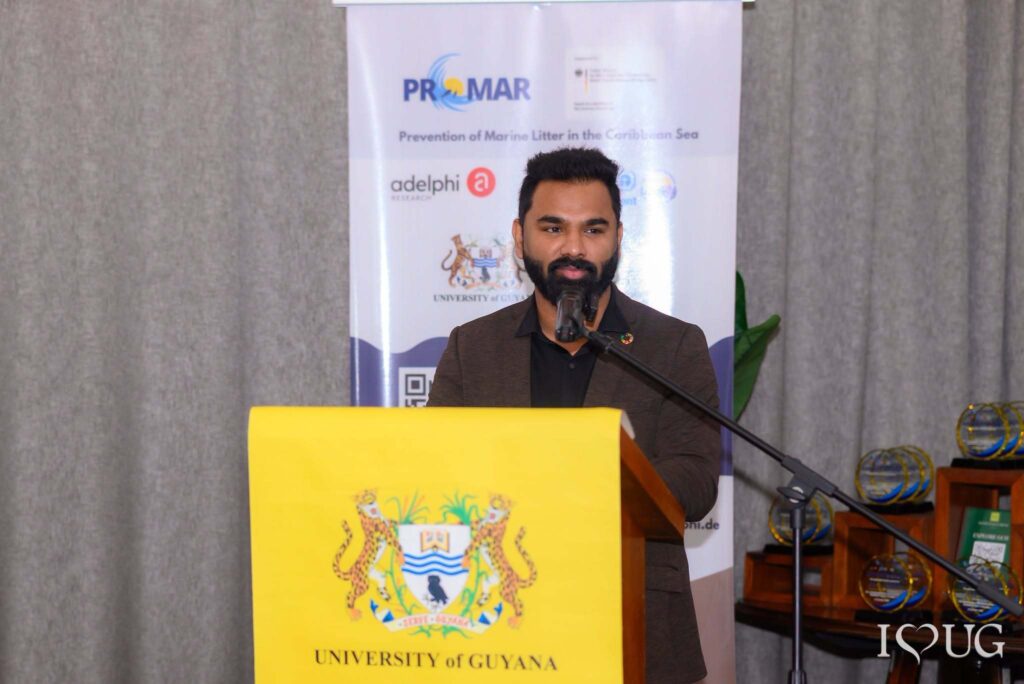
Mr. Amarnath Munnolimath, Director of Green and Circular Economy at adelphi, emphasised the economic possibilities that can emerge when waste is treated as a resource rather than something to be discarded.
“Do something with the waste, how to avoid the waste, how to create a value with the waste, and how to use the value, how to use the waste for growing your economy,” he said.
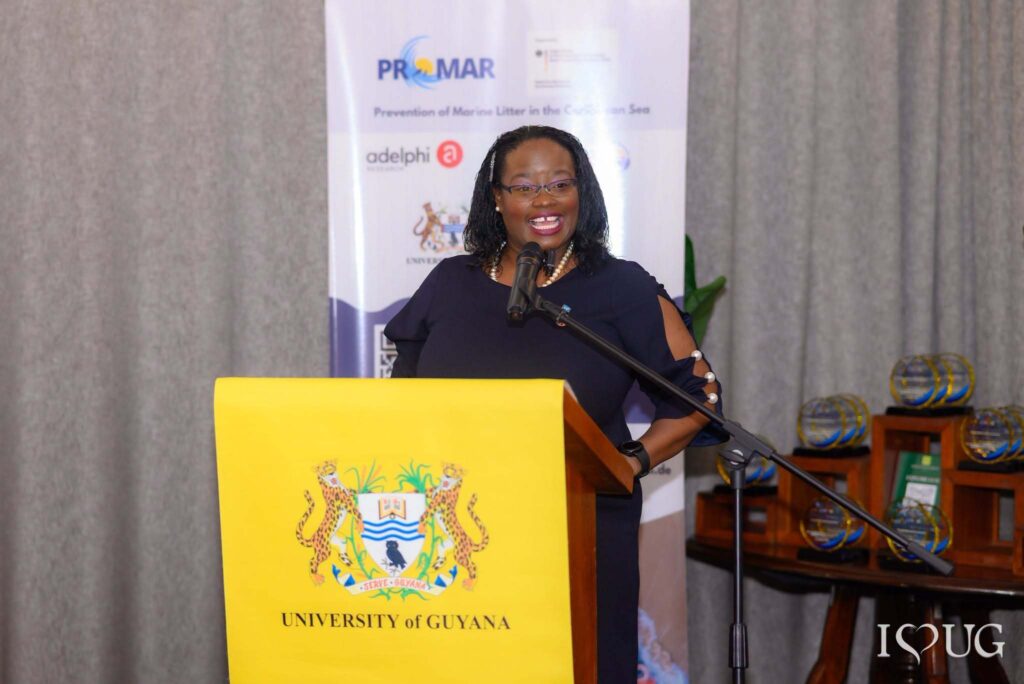
PROMAR’s work in Guyana has also sought to link practical waste management activities with research, education and longer-term institutional capacity.
Courses on circular economy assessment have been developed for possible institutionalisation within the University, alongside efforts to integrate marine litter monitoring and environmental management into relevant courses.
The project has also supported work relating to packaging waste policy, including extended producer responsibility (EPR), an approach that places greater responsibility on producers for the management of products and packaging after use. In addition, the Guyana team has contributed technical information to regional marine litter monitoring efforts.
Speaking at the Expo, Tracy Phillips of the UNEP Cartagena Convention Secretariat stressed that marine litter cannot be addressed only after it reaches the shoreline. The problem is connected to decisions made much earlier, including how products are designed, imported, consumed and collected, as well as whether there are markets and systems for recovering materials.
“Marine litter is not simply a problem that begins at the shoreline,” Ms.Phillips said.
Ms. Phillips also recognised the University of Guyana and the Guyana-PROMAR team, along with the EPA, government partners, participating communities, students, researchers, businesses and civil society organisations, for their contributions to the project.
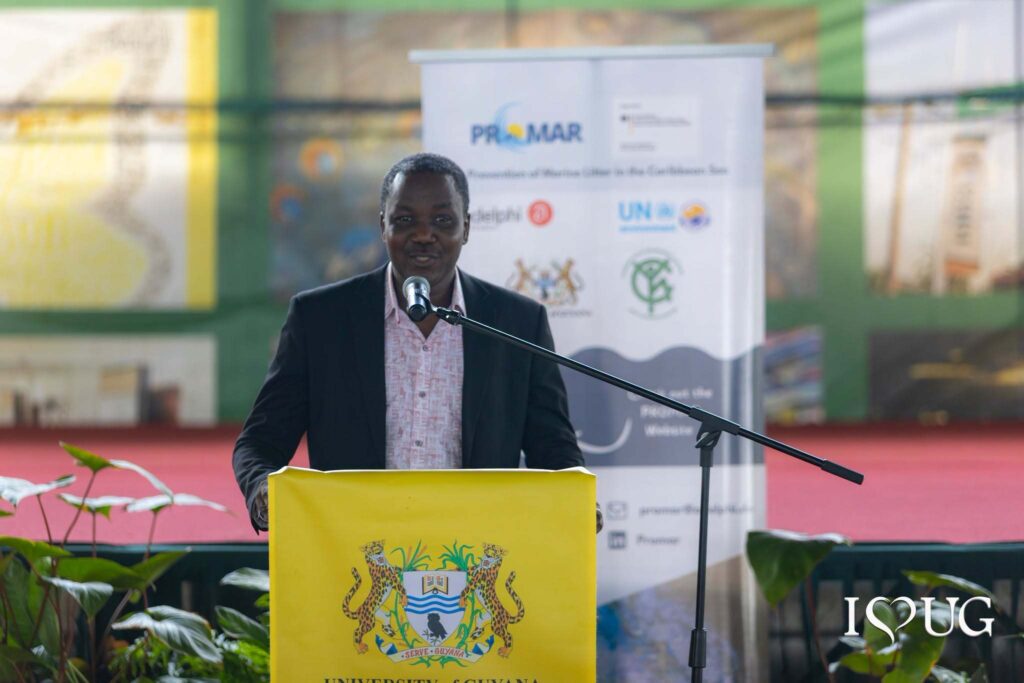
At the closing ceremony, Professor Oyedotun and the project’s partners acknowledged the contributions of those who had supported its implementation. The event also included the presentation of appreciation awards recognising individuals and partners who contributed to the initiative, without whom the work would not have been possible.
Mr. Munnolimath described the occasion as a time to celebrate the work undertaken while looking ahead to the next stage of environmental action. He also highlighted the importance of people and partnerships in ensuring that the project’s achievements translate into lasting change.
“Machines can support solutions, methodologies can guide actions, reports can capture lessons but it is people who turn all this into a lasting change,” Mr. Munnolimath said.
Ms. Phillips similarly encouraged stakeholders to look beyond the formal end of the project and consider how its partnerships and capacities could continue to contribute to environmental management in Guyana.
“The success of PROMAR should not ultimately be measured whether every activity was completed before the project closed. Its deeper success will be measured by whether the knowledge, the partnerships, the systems, and the ideas developed through the project continue to influence what happens afterwards,” she said.
In his closing remarks, Mr Munnolimath said: “Let us not say goodbye to the PROMAR mission. Let us say thank you for the journey, congratulations on the achievements, and good luck for the exciting work which lies ahead.”
For the University of Guyana, the close of PROMAR’s implementation phase is not the end of the effort to address plastic pollution. It is an opportunity to build on what has been learned, strengthen collaboration and keep exploring how waste can be managed as a resource, in support of cleaner communities and a healthier marine environment.