Kwayana, born Sydney Evanson King, died in the United States on October 10, 2026, at the age of 101. His death has renewed attention to his extraordinary political legacy, including a consequential episode in the history of the original People’s Progressive Party (PPP) that, until Hinds’s recent account, had not been publicly revealed in this form.
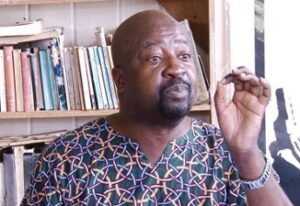 Speaking on his Politics 101 programme, Hinds recounted how Kwayana emerged as a compromise candidate after a bitter leadership dispute between Jagan and Linden Forbes Sampson Burnham threatened to prevent the PPP from forming a government following its victory in the 1953 elections.
Reportedly, Burnham maintained that he should lead the government because he chaired the party, while Jagan’s supporters argued that he was entitled to the premiership because he founded the movement and led it as its legislative leader.
With neither side prepared to yield, members of the executive proposed Kwayana as a compromise candidate.
According to Hinds, Martin Carter, Rory Westmaas and others supported the nomination, which commanded majority backing within the executive.
Kwayana later told Hinds how Burnham responded when the proposal was discussed.
“I remember Burnham with a keychain. He spun the keychain and said, ‘I’ll serve under Sydney,’” Hinds recalled.
Jagan, however, remained silent.
Hinds said Kwayana interpreted that silence as evidence that Jagan was uncomfortable with the prospect of serving under him. Rather than proceed to a vote that he believed he could win, Kwayana withdrew his name.
“I didn’t want to go down in history as taking away the leadership from Jagan, so I said no,” Hinds recounted Kwayana as explaining.
The decision meant that Kwayana relinquished an opportunity to lead the government at a defining moment in the colony’s political development.
The leadership dispute foreshadowed the fractures that would eventually split the original PPP, reshaping Guyana’s politics along ideological and increasingly racial lines.
Several African Guyanese members initially remained with Jagan after Burnham’s departure. Among them were Kwayana, Martin Carter, Rory Westmaas, Keith Carter and Lionel Jeffrey, a group Hinds said became known as the “ultra-left”.
A further rupture followed in 1954, when disagreements over the party’s direction and the inclusion of members of the Indian business elite in its cabinet contributed to the departure of these African Guyanese members.
Kwayana later became a founding member of the WPA in 1974, emerging as a prominent advocate for racial equality, democratic participation and shared governance.
His reported decision to decline the 1953 nomination offers a fresh perspective on the personal considerations behind one of Guyana’s formative political struggles.
Hinds’s account now adds a previously untold dimension to the legacy of a man whose political life spanned more than eight decades.