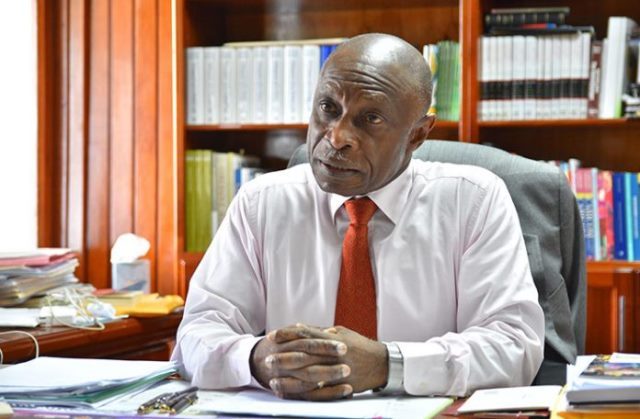
Attorney-at-law Siand Dhurjon, in defence of respect for the rule of law, made a profound statement last Thursday night that should compel every Guyanese to pay attention. His comments on the detention of Opposition Leader Azruddin Mohamed and members of his staff last Monday night, following an alleged confrontation involving Special Branch Head Prem Narine, conveyed a message that should trouble us all: that no one must dare defy or disagree with the government.
If that is the message being sent, Guyana is in dangerous territory. In a democratic state, contrary political opinions must be respected as a right, not treated as an offence against those who hold political power. No citizen should have to fear the consequences of exercising the fundamental right to disagree with the government.
Today, I revisit my articles of 30th August and 6th September in an abridged form because the issues raised remain relevant to the present circumstances.
In September, I drew attention to the events surrounding 3rd September, when Mohamed was arrested twice over what I consider spurious allegations, as further evidence of a troubling pattern. The People’s Progressive Party (PPP) regime, acting alongside the Guyana Police Force, appears increasingly willing to kick down the guardrails of democracy without regard for the consequences. Such conduct, if allowed to continue without accountability, threatens the very fabric of our society.
This issue is not about Mohamed alone. It is about all of us, our rights and respect for the rule of law. Mohamed happens to be the face of the current controversy, but make no mistake: if the conduct of the state and those in authority is accepted, and dissent is allowed to become a source of fear, tomorrow the face could be mine or yours. Woe betide those who find themselves in such circumstances without the financial means or political influence to seek judicial redress.
Our society is becoming increasingly repressive and more dangerous. We are at a critical point and must oppose these developments before it is too late. If we remain silent, we risk suffering a similar fate.
The circumstances surrounding Mohamed’s detention also raise serious questions about the freedom of an elected constitutional office holder to fulfil the responsibilities of his office. As Opposition Leader, Mohamed is entitled to move throughout the length and breadth of Guyana without unwarranted interference with his travel and movement, whether in a private or public capacity.
If the movement of the holder of such a powerful office, elected by more than 100,000 voters, according to the Guyana Elections Commission (GECOM), can be questioned or reportedly shot at on public thoroughfares, what can the average citizen expect next? What protection can ordinary citizens expect when they lack the resources to challenge the state?
Guyanese must not take this matter lightly. The implications extend to every citizen, whether in the Opposition, the government or presumably non-aligned, regardless of political affiliation or support for the government, religion, race, class, colour, creed or geographic location. Political loyalty offers no permanent guarantee of protection when accountability is absent.
To remain silent is to risk complicity in oppressive conduct and the violation of citizens’ rights. The right to dissent, freedom of movement and access to judicial redress must not depend on political connections, wealth or party allegiance.
I am therefore encouraged by the growing number of voices speaking out on this matter. It is only through frank, honest and open conversations, together with respect for each other’s rights, that we can move forward as a nation. We cannot build a just society by silencing disagreement, excusing abuses or pretending that violations affecting one person have no bearing on the rest of us.
The violation of anyone’s rights is a threat to all.