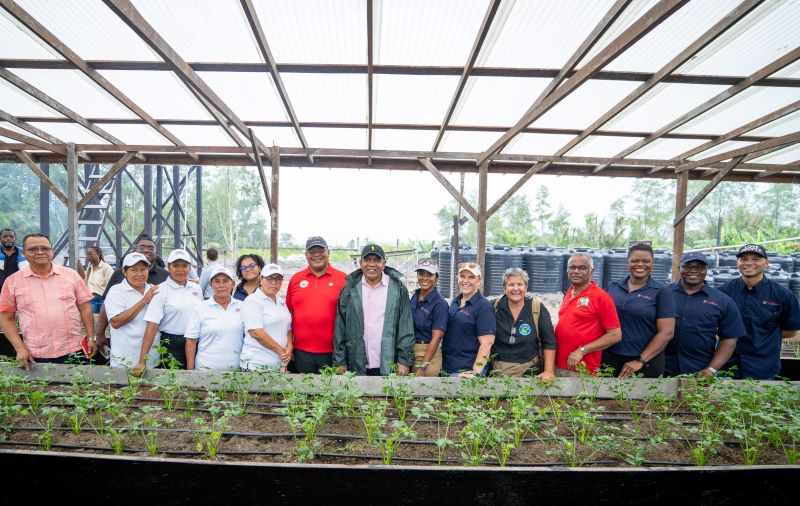
Women in Morawhanna and Smith Creek are set to benefit from new agricultural facilities designed to improve crop production, create income-generating opportunities and strengthen food security in Guyana’s hinterland, following the commissioning of two climate-smart shade houses.
The facilities were commissioned on Wednesday, October 14, under the Economic Livelihoods Project, funded by the Greater Guyana Initiative (GGI) and implemented by the Guyana Marine Conservation Society (GMCS).
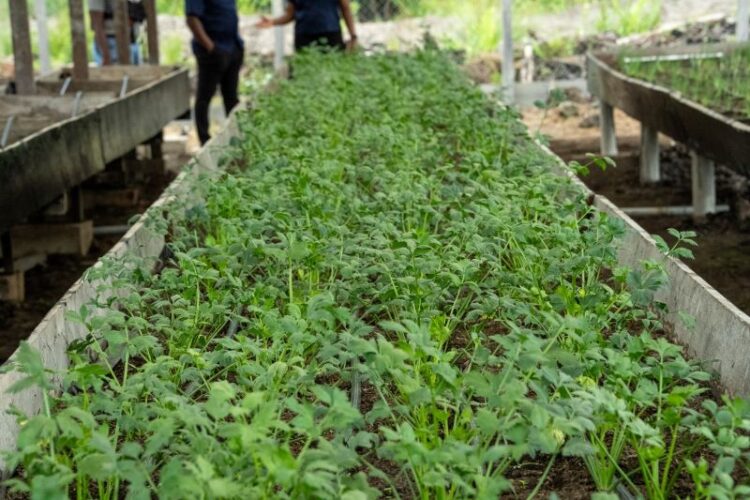
The project will support local women’s groups in cultivating crops such as celery and shallots, with plans to dehydrate the produce into value-added products. The approach is intended to extend shelf life, reduce post-harvest losses and enable the women to generate additional income from their agricultural activities.
The shade houses also incorporate features to help farmers cope with changing weather conditions. The Morawhanna facility includes water-harvesting and conservation measures to help maintain supplies during dry spells, including those associated with El Niño, while the Smith Creek structure features ultraviolet-resistant corrugated roofing.
Sylvia Roberts, leader of the Towatuma local women’s group spearheading the initiative, welcomed the investment, describing it as an important opportunity for women in the community.
“This project is a very successful one and beneficial to we the women,” Roberts said. “I must say thanks to the Greater Guyana Initiative and Ms. Annette for bringing such a wonderful project for us.”
Agriculture Minister Zulfikar Mustapha said the initiative supports efforts to expand agricultural production beyond the coastland and strengthen the hinterland’s contribution to national food security.
He also highlighted the government’s objective of achieving at least 35 per cent participation by women and young people in agriculture, stressing their role in the sector’s continued development.
“Today’s commissioning holds special significance as it reflects the central role women continue to play in the development and transformation of our agricultural sector,” Mustapha said.
GMCS Project Director Annette Arjoon-Martins credited collaboration among donors, government agencies and implementing partners for bringing the project to fruition.
“This project is the purest form of the power of partnerships,” she said, identifying IDB Lab, the Greater Guyana Initiative and the Ministry of Agriculture as contributors to its success.
Lorna Carlson, Socio-economic Manager at ExxonMobil Guyana, said the project demonstrates how investment in community-led initiatives can support livelihoods and local economic development.
“Today is about celebration, growth, partnership and community and it reminds us that agriculture remains at the heart of Guyana. It feeds families, it supports livelihoods across the country and it drives economic growth,” Carlson said.
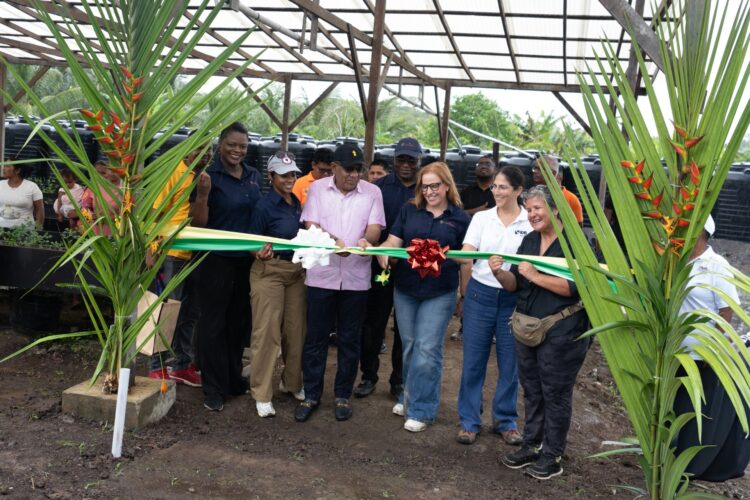
Region One Regional Chairman Brentnol Ashley said the facilities could improve local crop management, support more reliable production and create opportunities for Indigenous women and young people. Increased production in the region could also help reduce reliance on food transported from the coast.
“We celebrate more than the completion of agricultural structures. We celebrate women empowerment, stronger community partnerships and new opportunity for indigenous women and young people to build better lives,” Ashley said.
The facilities were constructed by local community contractors, providing an additional avenue for community participation in the project.
The investment comes as Guyana seeks to strengthen food production, expand economic opportunities outside its coastal population centres and build more resilient livelihoods in hinterland communities. By combining climate-conscious infrastructure with plans for processing and marketing produce, the initiative aims to help women move beyond cultivation towards higher-value agricultural activities.
The Greater Guyana Initiative is a 10-year, GY$20 billion commitment funded by the Stabroek Block co-venturers ExxonMobil Guyana, Hess and CNOOC. It supports capacity-building, community development and economic diversification across Guyana.
Through its partnership with GMCS, GGI supports community-led initiatives aimed at strengthening livelihoods and resilience among Indigenous and coastal populations.