Saturday, November 21, 2026
Village Voice News
ADVERTISEMENT
  • Home
  • News
  • Sports
  • Editorial
  • Letters
  • Global
  • Columns
    • Eye On Guyana
    • Hindsight
    • Lincoln Lewis Speaks
    • Future Notes
    • Blackout
    • From The Desk of Roysdale Forde SC
    • Diplomatic Speak
    • Mark’s Take
    • In the village
    • Mind Your Business
    • Bad & Bold
    • The Voice of Labour
    • The Herbal Section
    • Politics 101 with Dr. David Hinds
    • Talking Dollars & Making Sense
    • Book Review 
  • Education & Technology
  • E-Paper
  • Contact Us
No Result
View All Result
Village Voice News
No Result
View All Result
Home Feature

On This Day In History: Columbus reaches the “New World”

Admin by Admin
October 12, 2026
in Feature
Christopher Columbus (History)

Christopher Columbus (History)

0
SHARES
0
VIEWS
Share on FacebookShare on Twitter

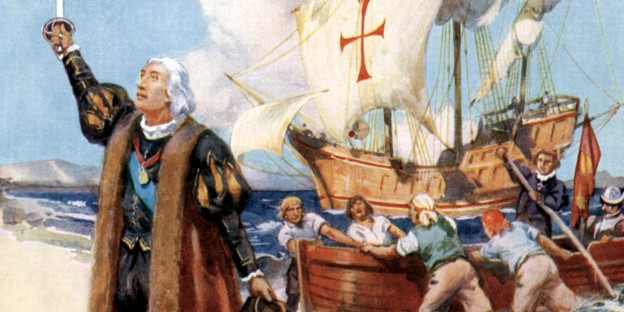
(History)- After sailing across the Atlantic Ocean, Italian explorer Christopher Columbus sights a Bahamian island on October 12, 1492, believing he has reached East Asia. His expedition went ashore the same day and claimed the land for Isabella and Ferdinand of Spain, who sponsored his attempt to find a western ocean route to China, India, and the fabled gold and spice islands of Asia.

Columbus was born in Genoa, Italy, in 1451. Little is known of his early life, but he worked as a seaman and then a maritime entrepreneur. He became obsessed with the possibility of pioneering a western sea route to Cathay (China), India, and the gold and spice islands of Asia. At the time, Europeans knew no direct sea route to southern Asia, and the route via Egypt and the Red Sea was closed to Europeans by the Ottoman Empire, as were many land routes.

READ ALSO

At 51, Irvine Dey Proves It Is Never Too Late to Pursue a University Degree

Mathematics Teacher Ravin Ragbir Named 2026 Best Graduating Student at UG Berbice Campus

Contrary to popular legend, educated Europeans of Columbus’ day did believe that the world was round, as argued by St. Isidore in the seventh century. However, Columbus, and most others, underestimated the world’s size, calculating that East Asia must lie approximately where North America sits on the globe (they did not yet know that the Pacific Ocean existed).

With only the Atlantic Ocean, he thought, lying between Europe and the riches of the East Indies, Columbus met with King John II of Portugal and tried to persuade him to back his “Enterprise of the Indies,” as he called his plan. He was rebuffed and went to Spain, where he was also rejected at least twice by King Ferdinand and Queen Isabella. However, after the Spanish conquest of the Moorish kingdom of Granada in January 1492, the Spanish monarchs, flush with victory, agreed to support his voyage.

On August 3, 1492, Columbus set sail from Palos, Spain, with three small ships, the Santa Maria, the Pinta and the Nina. On October 12, the expedition reached land, probably Watling Island in the Bahamas. Later that month, Columbus sighted Cuba, which he thought was mainland China, and in December the expedition landed on Hispaniola, which Columbus thought might be Japan. He established a small colony there with 39 of his men. The explorer returned to Spain with gold, spices, and “Indian” captives in March 1493 and was received with the highest honors by the Spanish court. He was the first European to explore the Americas since the Vikings set up colonies in Greenland and Newfoundland in the 10th century.

During his lifetime, Columbus led a total of four expeditions to the “New World,” exploring various Caribbean islands, the Gulf of Mexico, and the South and Central American mainlands, but he never accomplished his original goal—a western ocean route to the great cities of Asia. Columbus died in Spain in 1506 without realizing the scope of what he did achieve: He had discovered for Europe the New World, whose riches over the next century would help make Spain the wealthiest and most powerful nation on earth. He also unleashed centuries of brutal colonization, the transatlantic slave trade and the deaths of millions of Native Americans from murder and disease.
Columbus was honored with a U.S. federal holiday in 1937. Since 1991, many cities, universities and a growing number of states have adopted Indigenous Peoples’ Day, a holiday that celebrates the history and contributions of Native Americans. Not by coincidence, the occasion usually falls on Columbus Day, the second Monday in October, or replaces the holiday entirely. Why replace Columbus Day with Indigenous Peoples’ Day? Some argue that the holiday overlooks Columbus’ enslavement of Native Americans—while giving him credit for “discovering” a place where people already lived.

ShareTweetSendShareSend

Related Posts

Irvine Dey
Feature

At 51, Irvine Dey Proves It Is Never Too Late to Pursue a University Degree

by Admin
November 21, 2026

At 51 years old, Irvine Dey has demonstrated that determination, perseverance and a commitment to education can overcome even the...

Read moreDetails
Ravin Ragbir, Best Graduating Student, University of Guyana Berbice Campus, Class of 2026.
Feature

Mathematics Teacher Ravin Ragbir Named 2026 Best Graduating Student at UG Berbice Campus

by Admin
November 20, 2026

Ravin Ragbir, a 28-year-old Mathematics teacher from No. 72 Village, Corentyne, has been named Best Graduating Student at the University...

Read moreDetails
L-R The November 18, 1978 Mass suicide, and open for tourism
Feature

Jonestown Massacre Anniversary: 48 Years On, Guyana Confronts a Tragic Past Through Historical Tourism

by Admin
November 20, 2026

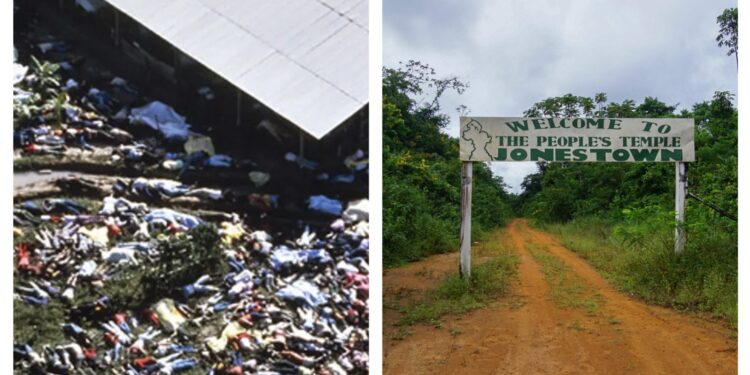
Forty-eight years after more than 900 people died in one of the most horrifying episodes of mass murder in modern...

Read moreDetails
Next Post
airport CJIA

CJIA Terminal Two to Showcase Guyana’s Culture 


EDITOR'S PICK

DM Branch Opening

Demerara Mutual Expands Presence with New Branch in Leonora West Central Mall

October 11, 2023

UN body faults ‘piecemeal’ work to end racial discrimination

October 4, 2022
ERC Chairman Shaikh Moeenul Hack with Students St. Gabriel's Primary Nov. 12,2025

ERC EXPANDS HARMONY CLUB PILOT TO ST. GABRIEL’S PRIMARY

November 14, 2025
U.S Secretary of State Marco Rubio

Rubio promises more strikes on Venezuelan cartels: ‘We’re not going to sit back anymore’

September 4, 2025

© 2024 Village Voice

No Result
View All Result
  • Home
  • News
  • Sports
  • Editorial
  • Letters
  • Global
  • Columns
    • Eye On Guyana
    • Hindsight
    • Lincoln Lewis Speaks
    • Future Notes
    • Blackout
    • From The Desk of Roysdale Forde SC
    • Diplomatic Speak
    • Mark’s Take
    • In the village
    • Mind Your Business
    • Bad & Bold
    • The Voice of Labour
    • The Herbal Section
    • Politics 101 with Dr. David Hinds
    • Talking Dollars & Making Sense
    • Book Review 
  • Education & Technology
  • E-Paper
  • Contact Us

© 2024 Village Voice