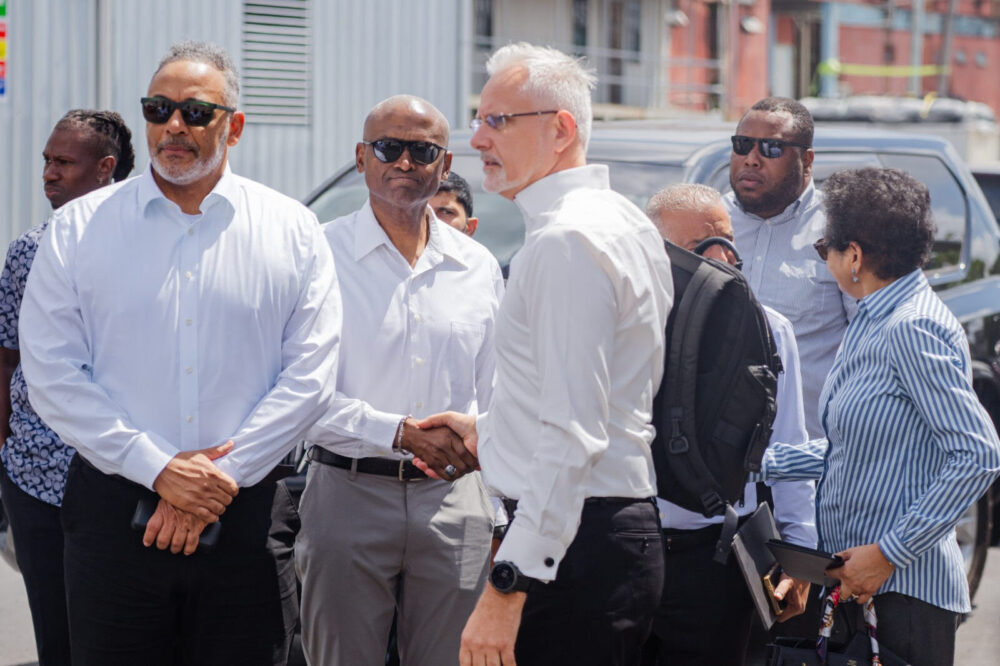
The five-member commission inspected the Transport and Harbours Department’s wharf in Kingston on Thursday, examining operational areas, records and the CCTV room before boarding the MV Ma Lisha, which operates between Georgetown and Port Kaituma. The commissioners also met privately with Maritime Administration Department (MARAD) Director General Captain Stephen Thomas.
The inspections form part of the commission’s preparatory work ahead of oral testimony from more than 100 expected witnesses. However, the inquiry is proceeding despite earlier calls from civil society organisations and opposition representatives for a more inclusive process and for the wreck to be raised before formal hearings commence.
Calls for a more inclusive commission
President Irfaan Ali appointed the five-member commission without the consultative process sought by sections of civil society and the parliamentary Opposition.
Transparency International Guyana Inc. (TIGI) challenged the manner in which the commission was constituted, arguing that the public inquiry into a disaster involving a state-operated vessel should command confidence across political and social divisions. The organisation called for consultations involving the Opposition, the National Toshaos Council, affected communities and civil society, as well as greater transparency surrounding the commission’s terms of reference.
In September, a group of 165 civil society organisations and individuals reportedly backed demands for a new, more representative commission, arguing that the investigation should reflect the national significance of the tragedy and the need for accountability.
Those calls were not reflected in the five-member body appointed by the President. Although the commission includes maritime, legal and military expertise from Guyana and abroad, the controversy over consultation has persisted.
The dispute is significant because the inquiry is expected to examine the conduct of state agencies, including the Transport and Harbours Department and maritime regulators. The public’s confidence in its findings will depend not only on the qualifications of the commissioners but also on the transparency and perceived independence of the process.
Families demanded that the vessel be raised first
Another major concern is the timing of the salvage operation. Relatives and survivors have repeatedly argued that raising the wreck is essential to recovering those still missing and preserving evidence about the vessel’s condition and the events leading to its sinking.
At the commission’s meeting with families on October 7, Opposition Leader Azruddin Mohamed called for the vessel to be raised before the inquiry proceeded with its work, questioning why recovery had not been undertaken earlier.
The Government has since awarded the salvage contract to BK International on a “no cure, no pay” basis, with the value reported at approximately G$1.034 billion. The disclosure was made to families at the October 7 meeting, nearly three months after the disaster.
Commissioner Dr Andrzej Jasionowski has said the recovery must be carefully managed to avoid damaging evidence that could help establish the vessel’s condition and the circumstances surrounding its sinking.
The Barima sank on July 18 while travelling from Georgetown to Port Kaituma. The latest figures cited by the inquiry stand at 76 survivors, 73 bodies recovered and 30 people unaccounted for.
Hearings begin next week
The commission is expected to examine the vessel’s seaworthiness and maintenance, passenger and cargo operations, crew qualifications, regulatory oversight and the search-and-rescue response. Chairman Justice Godfrey P. Smith has indicated that the inquiry could take approximately six months, with a report to be submitted to President Ali.
The commission has pledged to investigate “without fear or favour.” Its task now is to demonstrate that this commitment will be matched by a thorough examination of the evidence, transparent proceedings and recommendations capable of addressing any failures established.
With hearings approaching, the unresolved concerns over inclusion and wreck recovery continue to shape public scrutiny of the process. The families of those who died or remain missing are seeking more than a formal inquiry: they want the vessel recovered, the circumstances of the tragedy established and accountability pursued wherever the evidence warrants it.