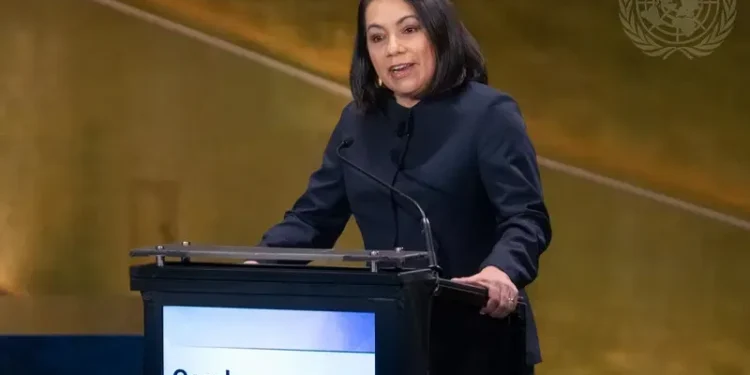
Former United Nations High Commissioner for Human Rights Navanethem “Navi” Pillay has been awarded the 2026 Nobel Peace Prize in recognition of her work advancing international law, human rights and accountability for serious crimes.
The Norwegian Nobel Committee announced the award on Friday, October 9, recognising the 85-year-old South African-born jurist for her contributions to strengthening the international legal order and protecting human dignity.
Pillay’s career has spanned some of the most consequential developments in international justice, from defending opponents of apartheid in South Africa to serving on international courts responsible for prosecuting grave crimes.
Announcing the award, Nobel Committee Chair Jørgen Watne Frydnes said Pillay was being recognised as a person who had, with “exceptional courage and integrity,” helped lead the way towards a more comprehensive global legal order.
Born in Durban, South Africa, in 1941, Pillay began her legal career under the apartheid system, when racial discrimination was embedded in law and political opponents faced persecution. In 1967, she became the first woman to establish a law practice in what is now KwaZulu-Natal, representing anti-apartheid activists and challenging abuses against detainees.
Her subsequent judicial career helped shape international criminal law. In 1995, she was appointed to the International Criminal Tribunal for Rwanda, later serving as its president from 1999 to 2003. The tribunal prosecuted individuals responsible for the 1994 Rwandan genocide, and Pillay played a significant role in landmark jurisprudence recognising rape as an act that could constitute genocide under particular circumstances.
She later served as a judge of the International Criminal Court before taking up the position of UN High Commissioner for Human Rights in September 2008. Her mandate was extended in 2012, and she remained in the role until 2014.
As High Commissioner, Pillay led the UN’s principal human rights office at a time when conflicts, political repression and allegations of serious violations demanded international scrutiny. Her work reflected the principle that state sovereignty should not place governments or individuals beyond the reach of international human rights standards.
Beyond judicial service, Pillay co-founded Equality Now, an international organisation advocating for women’s and girls’ rights. She also contributed to efforts to secure constitutional protections against discrimination in post-apartheid South Africa.
Her Nobel Peace Prize recognises a career built around the belief that justice, accountability and respect for human rights are essential to lasting peace.
Pillay’s achievement also highlights the contribution of legal institutions and human rights defenders who seek to ensure that abuses are documented, victims are heard and those responsible for serious crimes can be held accountable under the law.