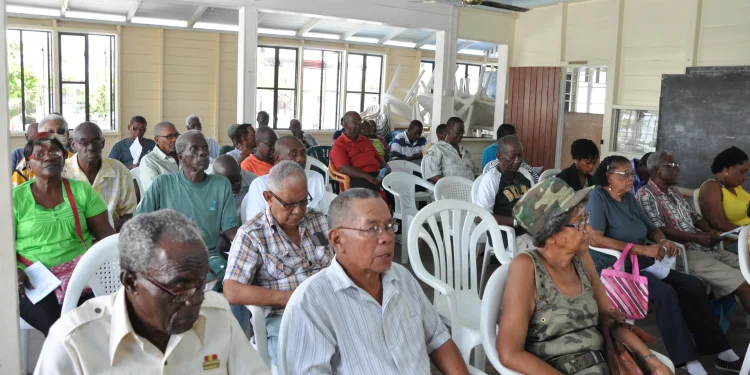
More than 8,500 certificates of title have been processed in the first eight months of 2026, marking significant progress by the Ministry of Housing in expanding land ownership and homeownership opportunities during the first year of the PPP/C Government’s new term.
Minister of Housing, Collin Croal, told the Department of Public Information(DPI) in a recent interview.
He said the pace of title processing is expected to surpass the ministry’s 2026 target of 10,000 titles, while efforts continue to reduce the time applicants wait to secure legal ownership of their property.
The ministry is also working to bring the turnaround time for titles to under three months, compared with previous waiting periods that could extend from six months to a year.
“We want to be able to give you that certificate of title within three months, so that you can go to the bank and you can have access to financing,” Minister Croal explained.
The drive for secure land tenure forms part of government’s wider five-year housing agenda, which includes assisting more than 40,000 persons to own homes, reducing the backlog of applicants for house lots and significantly reducing squatting and unregulated settlements.
4500 houselots
During the first year, more than 4,500 house lots have been allocated, with the ministry expecting to reach approximately 5,000 allocations at the one-year mark.
The ministry is simultaneously addressing a national backlog of more than 75,000 pending house-lot applicants, with Region Four accounting for more than 52,000 of those applicants.
Minister Croal said the ministry has pursued several strategies to accelerate delivery.
The ministry is focused on Region Four, where land availability remains a major constraint.
“We have to acquire more land. We have to prepare that land and then we have to be able to put the infrastructure in place, and that is where the major focus has been in this first year,” he said.
Alongside land allocation, the government has intensified its push towards actual homeownership, with more than 581 houses completed and handed over during the first year.
Prefab homes
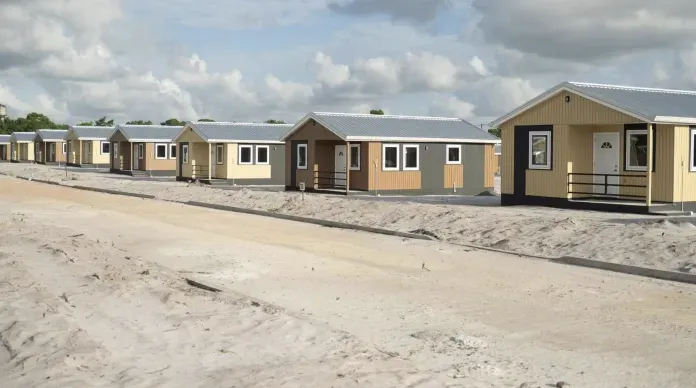
The ministry has also advanced its use of prefabricated and modular housing, receiving more than 200 responses to its Expression of Interest (EOI) and signing contracts for housing construction.
The initiative is expected to give beneficiaries greater choice in house designs, contractors and prices.
It will help to reduce the time traditionally required for construction.
“The idea is not to remove the local contractors…the idea is to add another option,” Minister Croal said.
He noted that traditional construction will continue alongside the emerging modular housing programme.
The government has also advanced its social housing programme, targeting extremely vulnerable persons.
Under the programme, beneficiaries who already own land can receive a house at no cost, subject to the established eligibility criteria.
The ministry is also piloting a standardised foundation programme for prefabricated homes in Lenora and Meten-Meer-Zorg, with the approach intended to reduce costs and improve efficiency through standardisation.
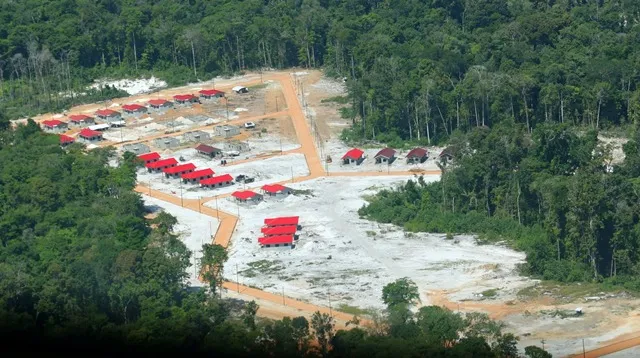
Additionally, in Yarrowkabra, more than 75 homestead houses have been completed and handed over to the ministry, with beneficiaries already identified.
The project also includes shade houses intended to help participating households generate additional income.
squatting, regularisation
The ministry has also continued its programme to address squatting and regularise communities where possible.
Meanwhile, in regards of regularisations, more than 21 areas are being targeted for regularisation or relocation.
The government has taken a two-track approach in regularising settlements where this is feasible, while relocating persons occupying areas that cannot legally or safely be regularised.
Among the areas addressed are sections of Ogle, riverbank communities between Houston and Diamond, Parika, , Non-Pariel, Greenwich Park Railway Line and communities in Region 10.
In Non-Pariel , 94 households were recognised, with 64 having completed the regularisation process.
Minister Croal said community engagement has proven critical to moving the regularisation process forward.
“Once you get the community leaders on board, they can help you to mobilise the residents, and that makes the process a lot easier,” he said.
In Region 10, the ministry has also secured the cooperation of the National Industrial and Commercial Investments Limited (NICIL) to facilitate the transfer of lands for regularisation in communities including Block 22, Kamaka Mines and Watooka West, where residents have occupied lands for years without formal ownership.
Complete communities
The ministry’s housing programme is also being developed around the concept of complete communities, with planning extending beyond the allocation of individual house lots.
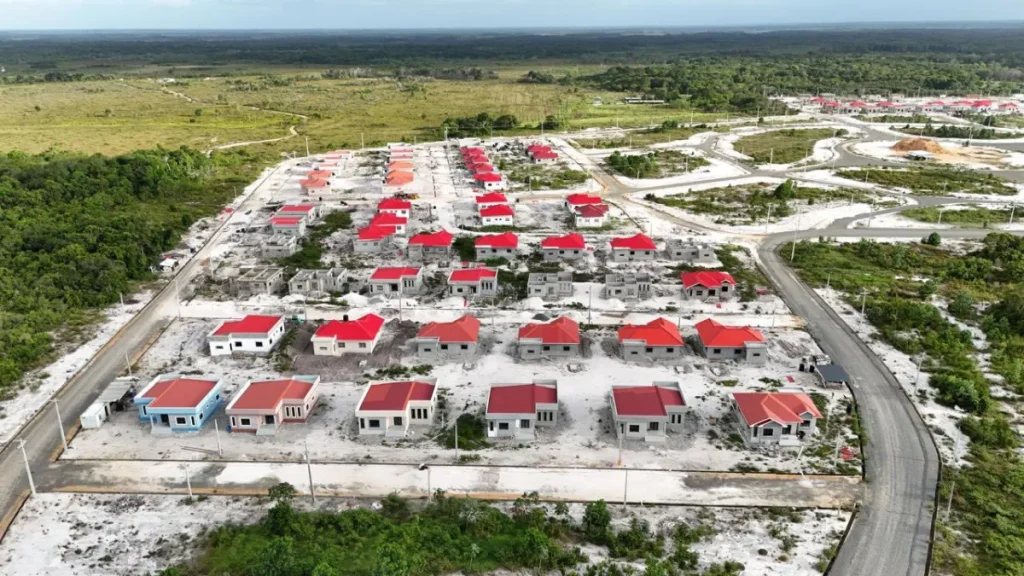
New communities are being designed to incorporate roads, drainage, electricity, water, public open spaces, schools, health facilities, recreation, security and commercial areas, with provision for future expansion.
The ministry is also advancing major infrastructure projects to support new housing development, including the Craig- to-Land of Canaan to Linden-Soesdyke four-lane highway, which is expected to be completed around the first quarter of 2027, and the Schoonard–Parika four-lane highway, which is expected to move into implementation in the fourth quarter of 2026.
Also, for the $150 billion 2026 housing programme, which encompasses housing development, infrastructure, land acquisition, regularisation and support for families constructing or improving homes, approximately 60 per cent of infrastructure expenditure has been completed, with supplementary funding included.
The government has also taken steps to improve access to housing finance, including reducing the lending rate for the low-income bracket to approximately three per cent on average and increasing the mortgage ceiling, allowing eligible borrowers to access significantly larger loans.
The ministry is also strengthening its regional presence to make services more accessible, with a new Region One office scheduled to open on September 12.
Looking ahead
As the government moves through the second year of its five-year mandate, the Ministry of Housing is expected to continue focusing on reducing the housing backlog, expanding home construction, securing land tenure and transforming informal settlements into planned communities.
Minister Croal said the ultimate measure of the programme will be whether more Guyanese are able to achieve secure homeownership.
“At the end of the five years, what we want to be able to say is that we have assisted over 40,000 persons to own their homes, we have significantly reduced the backlog, and we have made sure that people across Guyana are living on land that they can call their own,” he said.
DPI