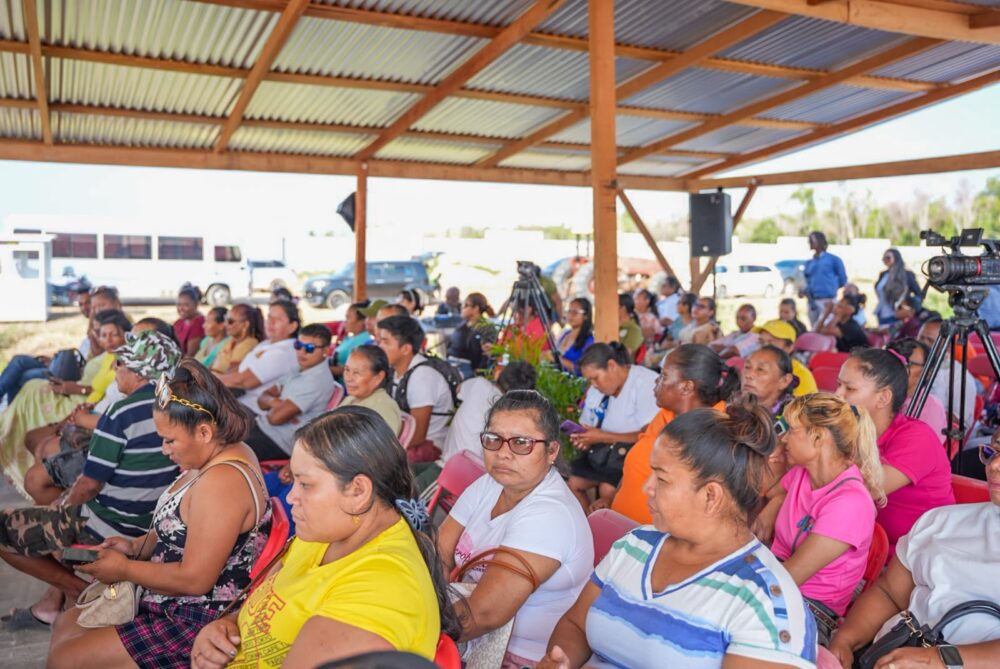
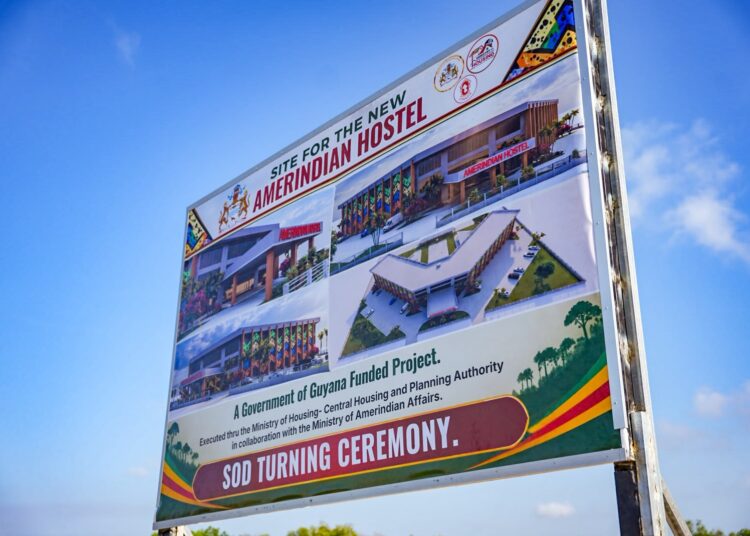
Construction has begun on a new $1.2 billion Amerindian Hostel at Ogle, East Coast Demerara, with the facility designed to accommodate 300 Indigenous people at any one time.
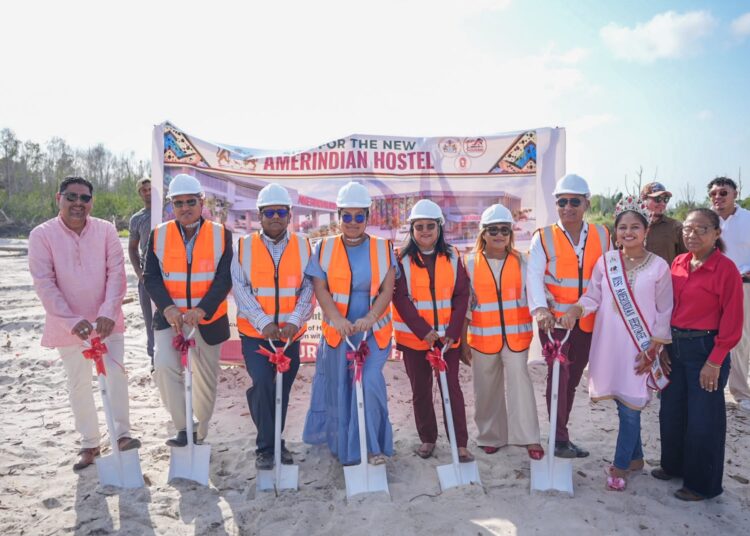
The sod was turned on November 6 by Finance Minister Dr Ashni Singh, who said the investment is intended to provide improved accommodation for Amerindians travelling to Georgetown for medical care, official business and other essential services.
The project, included in the 2026 National Budget, will replace the existing hostel, which was constructed in 1972 and accommodates approximately 2,500 people annually, according to the Ministry of Finance.
Singh said the investment must be viewed alongside efforts to strengthen economic opportunities in Indigenous communities, arguing that every village should have the capacity to generate sustainable economic activity and provide livelihoods for its residents.
“Our intention is to ensure that every single Amerindian village throughout our country has a viable village economy,” the minister said.
He said this would require improved access to education, employment and entrepreneurship, particularly for young people and working-age residents in hinterland communities.
Singh also encouraged Indigenous entrepreneurs to access financing through the recently launched Guyana Development Bank, which offers small and quick loans to support small and medium-sized businesses.
“I certainly hope that our brothers and sisters in the hinterland are taking advantage and availing themselves of those arrangements to apply for those SME loans and quick loans, so that you will be able to invest in a small business, engage in economic activity and earn income to take care of yourself and your family, and grow your business,” he said.
Using agriculture as an example, Singh said village economies could expand beyond primary production into agro-processing and manufacturing. He pointed to cassava farmers who could develop businesses producing cassava bread and cassareep, and peanut farmers who could move into manufacturing peanut butter and other products.
The minister also said the need for Indigenous residents to travel to Georgetown for healthcare should gradually decrease as additional medical facilities are developed in the hinterland. He identified planned hospital projects in Lethem, Region Nine, as well as Regions One and Seven.
“But to the extent that our Amerindian brothers and sisters still have to journey to the coastland for one reason or another, we want you to be able to access modern and comfortable facilities, so that you can come to Georgetown if you need to transact your business, do what you have to do, and travel onwards then return to your village to continue with your productive and rewarding economic activity,” Singh said.
A history rooted in Guyana
The investment comes against the historical backdrop of Guyana’s Indigenous peoples, who are recognised as the country’s first inhabitants. Their presence dates back thousands of years, with archaeological and historical accounts tracing Indigenous settlement in the territory to approximately 11,000 years ago.
Guyana is home to nine recognised Indigenous nations: the Lokono Arawaks, Warao, Caribs or Kalina, Akawaio, Arekuna, Patamona, Macushi, Wapichan and Wai Wai. Their languages, traditions, knowledge of the land, agriculture, crafts and cultural practices have contributed significantly to the country’s national heritage.

Indigenous communities are spread across Guyana’s ten administrative regions, with many located in the hinterland, where distance and limited access to specialised services can make travel to the coast necessary.
The history of Indigenous land rights has also been central to their relationship with the state. The Amerindian Lands Commission was established following the country’s independence, and its work informed subsequent efforts to recognise community lands. The Amerindian Act of 2006 provides a legal framework for the recognition and protection of the collective rights of Amerindian villages and communities, including provisions for the granting of land.
The new hostel is expected to serve as an important accommodation facility for Indigenous people who must temporarily leave their villages to access services in the capital.
Housing Minister Collin Croal, Amerindian Affairs Minister Sarah Browne-Shadeek and Member of Parliament and Vice-Chairman of the National Toshaos Council Sonia Latchman also attended Friday’s ceremony and delivered remarks.
The Ministry of Finance’s announcement did not provide a projected completion date for the facility.