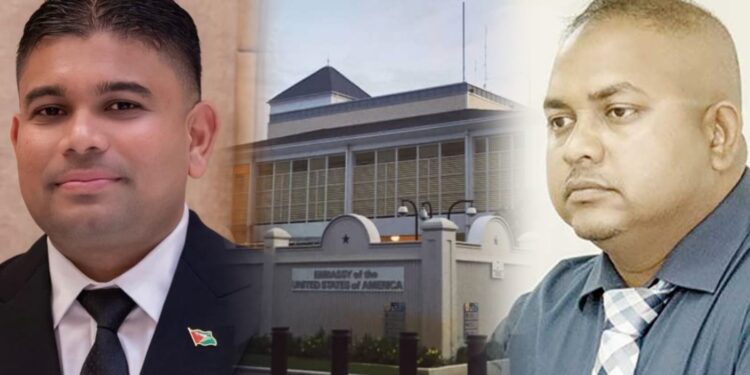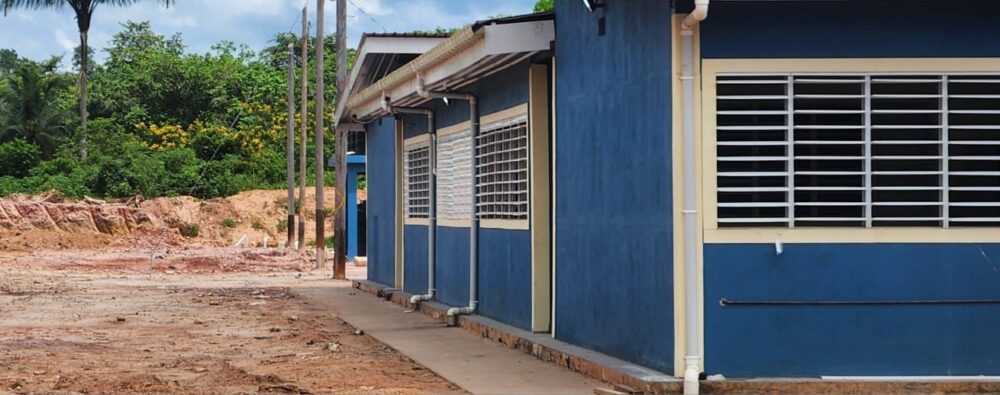
By Mark DaCosta- According to a press statement issued on September 7 by A Partnership for National Unity (APNU) Member of Parliament Sherod Duncan, the newly opened Kwebanna Secondary School and its dormitory in Region One are reportedly operating under unsafe, substandard conditions, with construction still incomplete, security lax, water and meals inadequate, supervision stretched dangerously thin and parents effectively trapped between risk to children and unaffordable river travel costs.
Duncan contends that a project financed by roughly G2.017 billion in public funds must be independently inspected and publicly certified as fit for occupancy before children remain on site, failing which the State should pay for their safe return home.
When six contracts totalling some G2.017 billion were signed in July 2023 for a modern secondary school at Kwebanna in the Barima-Waini region, it was heralded as a transformative investment: capacity for more than 600 students, a dormitory for 250, quarters for 25 teachers, and an end to the era of hinterland children ageing out in primary schools without secondary-trained teachers.
Yet barely two years on, the dream appears to have outpaced its delivery. Parents in the riverine communities of Santa Cruz, Warapoka, St Bede’s, Chinese Landing, Kokerite, Kariako, Wallaba and Karaburi — communities the school was expressly built to serve — now describe an institution where, according to Duncan, “construction work is continuing while students occupy the compound.”
The litany of hazards attributed to parents is alarming: an only partially fenced compound with negligible security, “deep, exposed drains and muddy, flood-prone spaces between buildings,” interruptions in the water supply, no dedicated drinking-water facilities, poor ventilation and an absence of a dorm father.
For a dormitory housing more than 100 children, Duncan reports “too few staff to supervise and care” for them, while a skeleton kitchen crew has allegedly struggled to serve meals on schedule. The stakes of such neglect were underscored when “two students reportedly required medical attention after experiencing stomach pains over the weekend” — an incident that, in the MP’s words, “require an immediate, independent inspection and a public response from the regional and national education authorities.”
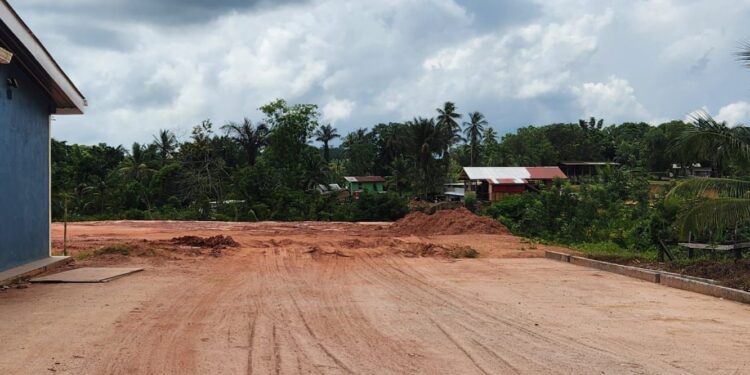
What compounds this ordeal is geography and economics. Kwebanna is not a hop, skip and jump from anywhere; reaching these villages means river transport, diesel and time. Parents have told Duncan that “the high cost of river transportation and fuel makes it difficult for them simply to remove their children and return later,” with some saying “the Government’s G20,000 transportation assistance has already been exhausted.” It is a cruel arithmetic: “No parent should be forced to choose between leaving a child in conditions they consider unsafe and meeting travel expenses they can scarcely afford.”
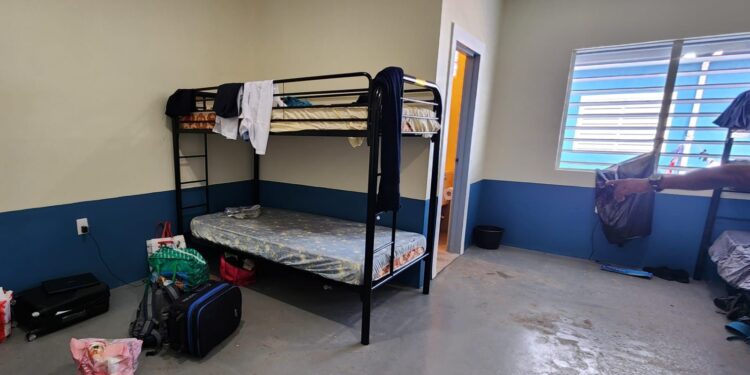
Duncan’s thesis is one of accountability commensurate with investment. He has therefore called on the Ministry of Education, the Regional Democratic Council and the engineering, health, fire and water authorities to “inspect the entire school and dormitory compound immediately and publish their findings.” Security, reliable water, adequate meals, proper dormitory supervision and safe walkways, he insists, “must be put in place without delay.”
His final demand is the sharpest edge of the statement: if the compound has not been formally certified as safe and ready for occupancy, the authorities must “arrange and fund the safe return of the affected children until the necessary work is completed.”
Whether the authorities will publish their inspection reports, or whether parents will be left once more to weigh safety against boat fares, remains to be seen. For now, the G2.017 billion question hangs over the Barima-Waini rivers: what exactly did our nation purchase?