Tuesday, September 22, 2026
Village Voice News
[adning id="37476"]
ADVERTISEMENT
  • Home
  • News
  • Sports
  • Editorial
  • Letters
  • Global
  • Columns
    • Eye On Guyana
    • Hindsight
    • Lincoln Lewis Speaks
    • Future Notes
    • Blackout
    • From The Desk of Roysdale Forde SC
    • Diplomatic Speak
    • Mark’s Take
    • In the village
    • Mind Your Business
    • Bad & Bold
    • The Voice of Labour
    • The Herbal Section
    • Politics 101 with Dr. David Hinds
    • Talking Dollars & Making Sense
    • Book Review 
  • Education & Technology
  • E-Paper
  • Contact Us
No Result
View All Result
  • Home
  • News
  • Sports
  • Editorial
  • Letters
  • Global
  • Columns
    • Eye On Guyana
    • Hindsight
    • Lincoln Lewis Speaks
    • Future Notes
    • Blackout
    • From The Desk of Roysdale Forde SC
    • Diplomatic Speak
    • Mark’s Take
    • In the village
    • Mind Your Business
    • Bad & Bold
    • The Voice of Labour
    • The Herbal Section
    • Politics 101 with Dr. David Hinds
    • Talking Dollars & Making Sense
    • Book Review 
  • Education & Technology
  • E-Paper
  • Contact Us
No Result
View All Result
Village Voice News
No Result
View All Result
Home Regional

Haiti calls for urgent international action after 47 killed in Kenscoff massacre

Admin by Admin
August 31, 2026
in Regional
0
SHARES
0
VIEWS
Share on FacebookShare on Twitter

Haiti has called on the international community to accelerate the full deployment of the UN-backed Gang Suppression Force and strengthen enforcement of an arms embargo following a massacre in Kenscoff that left at least 47 people dead.

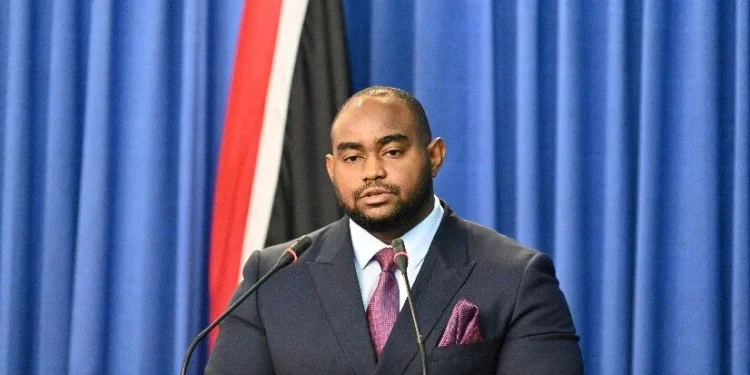
Addressing an urgent meeting of the United Nations Security Council on Friday, Haiti’s UN Ambassador Eric Pierre said the attack underscored the need for greater international support as armed gangs continue to expand their reach and terrorize communities.

READ ALSO

SVG govt considers separation of national IDs from electoral rolls

BEIJING, Sept. 22 (Xinhua) — Five years after its debut, the Global Development Initiative (GDI) has evolved from a Chinese proposal into broad international consensus, translating vision into action and delivering concrete progress across the world. First proposed during the general debate of the 76th UN General Assembly in September 2021, the GDI anchors six core principles: development as a priority, a people-centered approach, benefits for all, innovation-driven development, harmony between humanity and nature, and results-oriented actions. The framework fully aligns with the UN 2030 Agenda for Sustainable Development. Amid a widening global development deficit and stalled progress of the UN 2030 Agenda for Sustainable Development for many developing nations, China has positioned the GDI as a global public good. Upholding mutual benefit and shared growth, the country has served as a reliable partner for the Global South, delivering a result-oriented platform for pragmatic development cooperation. Since its launch, China has established more than 30 cooperation mechanisms and platforms, mobilized over 23 billion U.S. dollars through vehicles such as the China-UN Peace and Development Fund and the Global Development and South-South Cooperation Fund, carried out over 1,800 “small yet smart” livelihood projects, and trained upwards of 200,000 professionals. DELIVERING TANGIBLE BENEFITS Across the Global South, China’s commitment to common development aligned with the GDI has been translated into projects that improve people’s lives. Skills training programs exemplify the initiative’s on-the-ground impact. This September, 34 Indonesian students enrolled in a three-year industrial mechatronics program at Wuhu Vocational Technical University in east China’s Anhui Province. The cohort joins a customized international order-tailored training program run in partnership with Anhui Conch Group Co., Ltd., a leading domestic cement manufacturer. Launched in 2019, the program adopts a “Chinese language plus vocational skills” model, with courses covering automation, industrial robots and artificial intelligence. “I will not only gain practical skills, but also understand the logic behind it,” said Indonesian student Nilam Insirah, noting that the training allows her to pursue management-related career paths. “I hope to bring the professional knowledge, management know-how and life experience I gained in China back to Indonesia,” program graduate Brayen Difan Makatiwo told Xinhua. “I look forward to becoming a bridge connecting Indonesia with China and the wider world,” he said. Infrastructure connectivity is a key part of these efforts. The China-Laos Railway has turned landlocked Laos into a land transport hub. In Brazil, a “power highway” transmits clean electricity generated in the Amazon rainforest to urban clusters more than 2,000 kilometers away. The initiative has also taken root in regional cooperation. Within the Shanghai Cooperation Organization (SCO) framework, China’s trade with other member states has exceeded 2.3 trillion U.S. dollars. The China-Kyrgyzstan-Uzbekistan railway, now under construction, will further boost regional connectivity. More than two-thirds of the 100 “small yet smart” livelihood projects, outlined at the 2025 SCO Tianjin summit, have now been approved for implementation. In Guinea, Chinese hybrid rice has raised production efficiency, and “brought hope to the country’s young people,” said Guinean Prime Minister Amadou Oury Bah. China’s Juncao technology, which turns grass into mushrooms and animal feed, has been introduced in more than 100 countries, including Fiji and other Pacific island countries. China has further extended cooperation in poverty reduction and agricultural technology, including hybrid rapeseed cultivation in Pakistan and a desertification control center with Mongolia. Market access is expanding too. Since May 2026, China has granted zero-tariff treatment to all 53 African countries with diplomatic relations with China. Innovation and green development feature prominently. China has put MAZU, its homegrown AI-powered meteorological early warning system, into service in some 30 countries. Chinese technologies such as the BeiDou navigation system are also being applied in Egyptian industrial parks. GROWING GLOBAL CONSENSUS “With the ‘six commitments’ as its core philosophy, the GDI has grown from a Chinese proposal into a widely accepted international consensus and from China’s cooperation concept into tangible joint action by China and the international community,” said Dong Xiangrong, a researcher at the Chinese Academy of Social Sciences. The initiative’s practical results are matched by expanding international support. More than 130 countries and international organizations have endorsed it. Nearly 100 countries and international and regional organizations have signed cooperation documents with China, and the Group of Friends of GDI has grown to 88 members. Key multilateral milestones have sustained GDI momentum, including the 2022 High-level Dialogue on Global Development, the 2023 “BRICS Plus” leaders’ dialogue, and the 2026 SCO Summit. “The Group of Friends of GDI has become an important platform for countries to coordinate development positions and match development resources under the UN framework, and a model of South-South cooperation that carries weight in global governance, climate change and development financing,” said Dong.

The assault in the mountainous commune southeast of Port-au-Prince claimed the lives of at least 47 people, including three boys and two girls. Dozens of people were abducted, others were injured and homes were set ablaze.

People seeking refuge from the violence were also attacked, including at a church, where gang members executed people and killed others as they attempted to escape.

Pierre condemned “in the strongest possible terms these acts of extreme barbarism” following the deadly Aug. 23-24 attack.

“We express our deep solidarity with the victims, their families and the communities affected by this violence and we remain mobilised to provide urgent responses commensurate with the security challenges,” he said.

Pierre said the massacre demonstrated the continued ability of armed gangs to inflict violence despite efforts by the Haitian National Police and the Armed Forces of Haiti, with support from the Gang Suppression Force.

“The heinous criminal attack in Kenscoff underscores the urgent need for the international community to accelerate the deployment of the GSF to the planned strength of 5,500 personnel as soon as possible and above all to provide it with the full means necessary to carry out its missions alongside the national security forces,” Pierre said.

GSF personnel from contributing countries began operations on June 1, with the force expected to reach 5,500 personnel by October 2026.

Pierre said Haiti’s security forces have been placed on high alert as authorities seek to regain control of gang-held areas.

“The instructions are clear, protect, secure and restore the authority of the state,” he said.

He also called for stronger international enforcement of the UN arms embargo on Haiti to stem the flow of weapons and ammunition to criminal gangs.

“We call on the members of the international community to strengthen their contribution to upholding and implementing of the arms embargo imposed by the Security Council Sanctions Committee Resolution 2653 on Haiti in order to stem the flow of arms and ammunitions which fuel the violence of criminal gangs,” Pierre said.

According to the ambassador, Chad, Mongolia and Côte d’Ivoire have signed agreements with Haiti to join the GSF, while discussions are underway with Jamaica, Sri Lanka, Bangladesh and Guatemala.

The security crisis comes as Haiti prepares to hold its first elections in a decade.

The Provisional Electoral Council has scheduled the first round of presidential and legislative elections, along with a constitutional referendum, for Dec. 13. Haitians have not voted in national elections since 2016, when Jovenel Moïse was elected president. Moïse was assassinated on July 7, 2021.

Pierre said restoring security is essential to ensuring the elections can proceed.

“Today, we need greater synergy at the international level to support the government in restoring security, which is an essential condition in order to organise the upcoming elections in the country,” he said.

Carlos Ruiz Massieu, special representative of the UN secretary-general and head of the United Nations Integrated Office in Haiti, told the Security Council that the Kenscoff massacre was “deeply shocking” but was not an isolated incident.

“It is the latest in a series of attacks affecting the commune of Kenscoff since early 2025. It demonstrates the continued capacity and determination of gangs to terrorise the population, expand their influence beyond the capital and pose a direct challenge to state authority and the rule of law,” Massieu said.

BINUH documented 1,408 people killed and 656 injured in Haiti between April and June 2026 alone, according to Massieu.

He said the attack has triggered renewed public outrage and calls for authorities and international partners to protect civilians, strengthen security institutions and restore public order.

“For far too long, Haitians have lived in fear of being killed, kidnapped or subjected to sexual violence,” Massieu said, warning that without improved security, efforts to strengthen governance and move forward with elections will remain vulnerable to setbacks.

He also called for those responsible for the Kenscoff massacre, as well as those who finance, arm and enable gang violence, to be held accountable.

The Security Council also heard about the mounting humanitarian toll of Haiti’s crisis.

Assistant Secretary-General for Humanitarian Affairs Indrika Ratwatte said an estimated 6.4 million people — more than half of Haiti’s population — need humanitarian assistance.

Nearly 200,000 people were forcibly returned to Haiti during the first eight months of 2026, a 10% increase compared with the same period last year, he said.

Humanitarian organizations also recorded more than 5,500 incidents of gender-based violence during the first six months of the year, or about 30 cases per day. Women and girls accounted for the vast majority of survivors.

Ratwatte urged the international community to focus on stopping the violence, funding humanitarian operations and addressing the underlying causes of the crisis.

“The people of Haiti deserve more than mere survival,” he said. “They deserve safety, opportunity, and hope for a better future.”

caribbeannationalweekly.com
ShareTweetSendShareSend

Related Posts

Prime Minister Godwin Friday
Regional

SVG govt considers separation of national IDs from electoral rolls

by Admin
September 22, 2026

Prime Minister Dr. Godwin Friday announced that the government of St. Vincent and the Grenadines is evaluating separating national identification...

Read moreDetails
A GIFT: Prime Minister Kamla Persad-Bissessar, centre, and Foreign Affairs Minister Sean Sobers, right, present a painting of the Magnificent Seven to John Dramani Mahama, President of the Republic of Ghana, before their bilateral meeting in New York, yesterday.
Regional

BEIJING, Sept. 22 (Xinhua) — Five years after its debut, the Global Development Initiative (GDI) has evolved from a Chinese proposal into broad international consensus, translating vision into action and delivering concrete progress across the world. First proposed during the general debate of the 76th UN General Assembly in September 2021, the GDI anchors six core principles: development as a priority, a people-centered approach, benefits for all, innovation-driven development, harmony between humanity and nature, and results-oriented actions. The framework fully aligns with the UN 2030 Agenda for Sustainable Development. Amid a widening global development deficit and stalled progress of the UN 2030 Agenda for Sustainable Development for many developing nations, China has positioned the GDI as a global public good. Upholding mutual benefit and shared growth, the country has served as a reliable partner for the Global South, delivering a result-oriented platform for pragmatic development cooperation. Since its launch, China has established more than 30 cooperation mechanisms and platforms, mobilized over 23 billion U.S. dollars through vehicles such as the China-UN Peace and Development Fund and the Global Development and South-South Cooperation Fund, carried out over 1,800 “small yet smart” livelihood projects, and trained upwards of 200,000 professionals. DELIVERING TANGIBLE BENEFITS Across the Global South, China’s commitment to common development aligned with the GDI has been translated into projects that improve people’s lives. Skills training programs exemplify the initiative’s on-the-ground impact. This September, 34 Indonesian students enrolled in a three-year industrial mechatronics program at Wuhu Vocational Technical University in east China’s Anhui Province. The cohort joins a customized international order-tailored training program run in partnership with Anhui Conch Group Co., Ltd., a leading domestic cement manufacturer. Launched in 2019, the program adopts a “Chinese language plus vocational skills” model, with courses covering automation, industrial robots and artificial intelligence. “I will not only gain practical skills, but also understand the logic behind it,” said Indonesian student Nilam Insirah, noting that the training allows her to pursue management-related career paths. “I hope to bring the professional knowledge, management know-how and life experience I gained in China back to Indonesia,” program graduate Brayen Difan Makatiwo told Xinhua. “I look forward to becoming a bridge connecting Indonesia with China and the wider world,” he said. Infrastructure connectivity is a key part of these efforts. The China-Laos Railway has turned landlocked Laos into a land transport hub. In Brazil, a “power highway” transmits clean electricity generated in the Amazon rainforest to urban clusters more than 2,000 kilometers away. The initiative has also taken root in regional cooperation. Within the Shanghai Cooperation Organization (SCO) framework, China’s trade with other member states has exceeded 2.3 trillion U.S. dollars. The China-Kyrgyzstan-Uzbekistan railway, now under construction, will further boost regional connectivity. More than two-thirds of the 100 “small yet smart” livelihood projects, outlined at the 2025 SCO Tianjin summit, have now been approved for implementation. In Guinea, Chinese hybrid rice has raised production efficiency, and “brought hope to the country’s young people,” said Guinean Prime Minister Amadou Oury Bah. China’s Juncao technology, which turns grass into mushrooms and animal feed, has been introduced in more than 100 countries, including Fiji and other Pacific island countries. China has further extended cooperation in poverty reduction and agricultural technology, including hybrid rapeseed cultivation in Pakistan and a desertification control center with Mongolia. Market access is expanding too. Since May 2026, China has granted zero-tariff treatment to all 53 African countries with diplomatic relations with China. Innovation and green development feature prominently. China has put MAZU, its homegrown AI-powered meteorological early warning system, into service in some 30 countries. Chinese technologies such as the BeiDou navigation system are also being applied in Egyptian industrial parks. GROWING GLOBAL CONSENSUS “With the ‘six commitments’ as its core philosophy, the GDI has grown from a Chinese proposal into a widely accepted international consensus and from China’s cooperation concept into tangible joint action by China and the international community,” said Dong Xiangrong, a researcher at the Chinese Academy of Social Sciences. The initiative’s practical results are matched by expanding international support. More than 130 countries and international organizations have endorsed it. Nearly 100 countries and international and regional organizations have signed cooperation documents with China, and the Group of Friends of GDI has grown to 88 members. Key multilateral milestones have sustained GDI momentum, including the 2022 High-level Dialogue on Global Development, the 2023 “BRICS Plus” leaders’ dialogue, and the 2026 SCO Summit. “The Group of Friends of GDI has become an important platform for countries to coordinate development positions and match development resources under the UN framework, and a model of South-South cooperation that carries weight in global governance, climate change and development financing,” said Dong.

by Admin
September 22, 2026

PRIME MINISTER Kamla Persad-Bissessar is expected to begin two days of high-level bilateral talks on the margins of the United...

Read moreDetails
Prime Minister Mia Mottley and CARICOM Sec Gen Dr. Carla Barnett (WiredJA photo)
Regional

CARICOM Reparations Conference Shifts From Advocacy to Action

by Admin
September 21, 2026

The Third CARICOM Regional Conference on Reparations, held in Barbados from September 17–19, has moved the Caribbean’s reparations campaign toward...

Read moreDetails
Next Post

WORD OF THE DAY: CONSCIENTIOUS


EDITOR'S PICK

APNU Set To Unveil People-Centred Manifesto

July 20, 2025

More than a million could die waiting for green cards as U.S. immigration buckles amid COVID

August 4, 2022

Guyana, Beyond Oil

March 19, 2021

Government Is Sliding Toward Chinese, Putin Style Authoritarianism

July 3, 2026

© 2024 Village Voice

No Result
View All Result
  • Home
  • News
  • Sports
  • Editorial
  • Letters
  • Global
  • Columns
    • Eye On Guyana
    • Hindsight
    • Lincoln Lewis Speaks
    • Future Notes
    • Blackout
    • From The Desk of Roysdale Forde SC
    • Diplomatic Speak
    • Mark’s Take
    • In the village
    • Mind Your Business
    • Bad & Bold
    • The Voice of Labour
    • The Herbal Section
    • Politics 101 with Dr. David Hinds
    • Talking Dollars & Making Sense
    • Book Review 
  • Education & Technology
  • E-Paper
  • Contact Us

© 2024 Village Voice