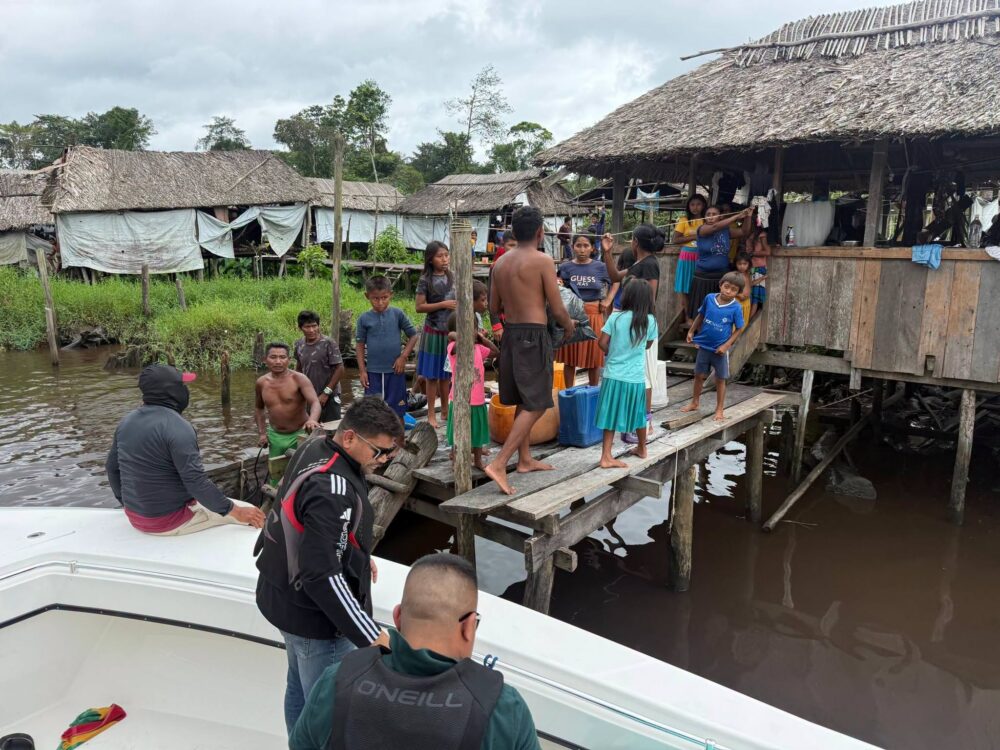
For families in Guyana’s Region One, the sinking of the MV Barima has not ended with funerals, a recovery operation or the government’s announcement of a multimillion-dollar relief programme.
The disaster exposed a deeper reality: poverty, isolation and inadequate public services that have long shaped life in the region.
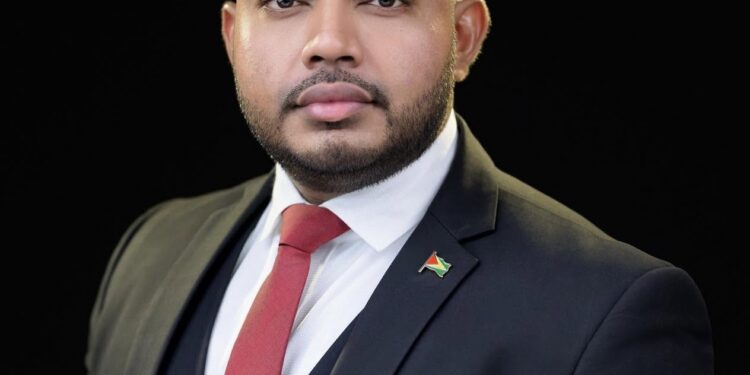
But as national attention might ordinarily have begun to fade, Opposition Leader Azruddin Mohamed has continued returning to the affected communities — keeping their plight in the political spotlight and putting pressure on the government to do the same.
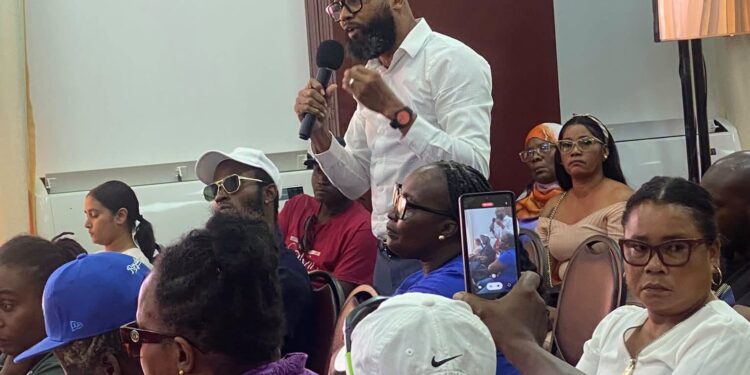
Mohamed and his We Invest in Nationhood (WIN) party launched the H.E.R.O. initiative last Friday, promising assistance to families affected by the tragedy. Since then, Mohamed and WIN lawmakers have continued travelling into Region One, meeting residents and families affected by the July 18 sinking.
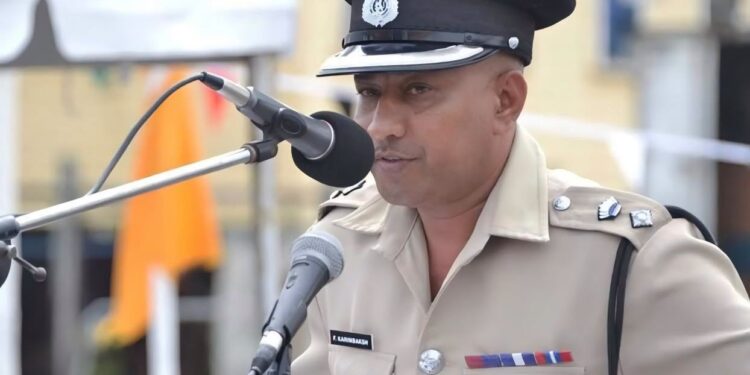
On Tuesday, Mohamed and other WIN parliamentarians visited Port Kaituma and Mabaruma before returning to Georgetown, where a confrontation with police and Coast Guard personnel later resulted in Mohamed’s detention.
The visits have had an effect beyond opposition political messaging.
With Mohamed repeatedly returning to Region One and publicly highlighting the circumstances confronting residents, the government has also stepped up its presence in the affected communities. President Irfaan Ali and ministers of his People’s Progressive Party government have been visiting communities and emphasizing the administration’s H.E.A.R.T. programme, established following the tragedy.
The sequence is difficult to ignore.
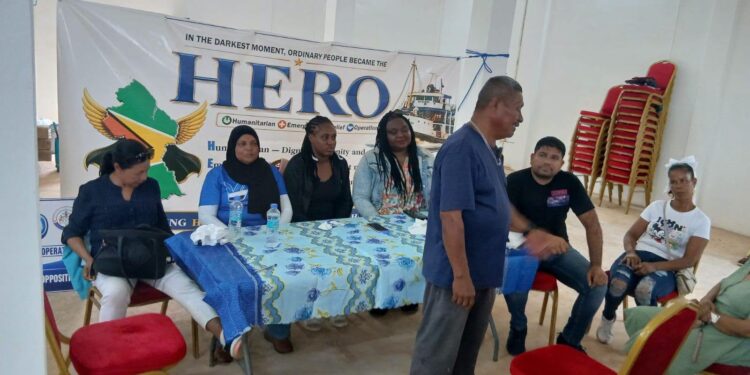
Had the Barima tragedy been allowed to recede into the background, some of the hardship exposed by the disaster might have received considerably less sustained political attention. Instead, Mohamed’s continued presence has kept the issue alive, forcing the government to demonstrate that it remains engaged with families and communities long after the initial national outpouring of sympathy.
On Wednesday, Housing Minister and Region One parliamentary representative Collin Croal visited families and survivors in Imbotero, Smith Creek, White Water, Hotoquai and Aruka Mouth. Government statements said the visits formed part of Ali’s commitment to maintaining contact with those affected and ensuring assistance reaches them.
The government has pointed to H.E.A.R.T. as evidence of its response. Officials say the programme has delivered more than G$75 million in assistance to more than 750 people nationwide, including support for funerals, memorials, food and education.
But that figure demands scrutiny.
Where is the evidence of the G$75 million?
A claim of G$75 million is significant in a country where public accountability has become increasingly important. Yet a headline figure does not tell families or taxpayers how the money was spent.
The government should provide a transparent breakdown showing how much was distributed directly to families, how many families received assistance, the amounts paid, when payments were made and how much of the reported G$75 million represents direct assistance versus funerals, food, education and other expenditures.
Without that information, the public is being asked largely to accept the figure on the government’s word.
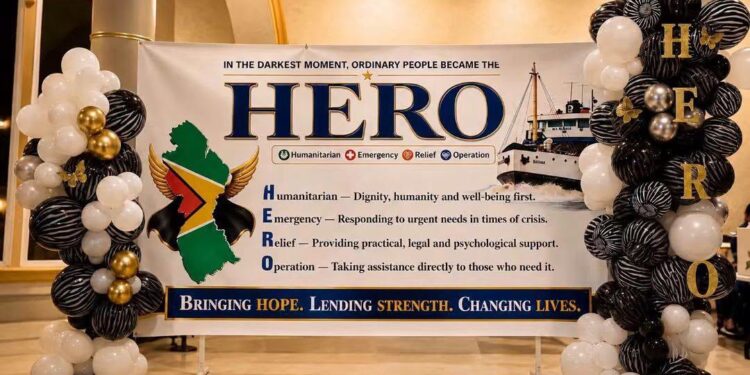
Mohamed’s H.E.R.O. initiative has added further pressure. He has called for an interim payment of G$5 million to each affected family, arguing that families should receive meaningful assistance while the circumstances surrounding the tragedy are investigated. H.E.R.O. has also offered legal, psychological, social and financial assistance.
The opposition initiative has therefore changed the political equation.
The government is no longer operating in an environment where it can simply announce a relief programme and expect the Barima tragedy to gradually disappear from public debate. Each visit by Mohamed to an affected community creates another opportunity for residents to describe their circumstances and another reason for the administration to respond.
And what those visits have exposed is broader than the ferry disaster.
Residents in Region One continue to confront problems involving transportation, employment, infrastructure, health services and access to basic necessities. The Barima tragedy has become a window into those longstanding difficulties.
For families who lost relatives, however, the political contest between HERO and HEART is secondary.
They need assistance that is tangible, timely and verifiable.
They also need answers about how a tragedy of such magnitude occurred and whether the failures that contributed to it will be corrected.
A Commission of Inquiry is expected to examine the sinking. But an inquiry can establish responsibility; it cannot, by itself, solve the immediate economic hardships facing bereaved families or the structural problems confronting Region One.
That is where Mohamed’s continued presence has become politically consequential.
His repeated trips into the region have kept affected communities visible at a moment when national attention could easily have moved on. The government’s renewed ministerial visits suggest that pressure from the opposition is making it increasingly difficult for the administration to do so.
The central test now is not which political camp can make the most visits or announce the largest figure.
It is whether the people of Region One will see sustained assistance, transparent accounting and lasting investment after the cameras leave.
For now, Mohamed’s vigilance is ensuring they remain in view.