The Alliance For Change (AFC) has issued a forceful condemnation of the police action against Opposition Leader Azruddin Mohamed and several Members of Parliament, all representing the We Invest In Nationhood (WIN) party, warning that the treatment of elected representatives raises serious questions about the use of state power and the future of democratic freedoms in Guyana.
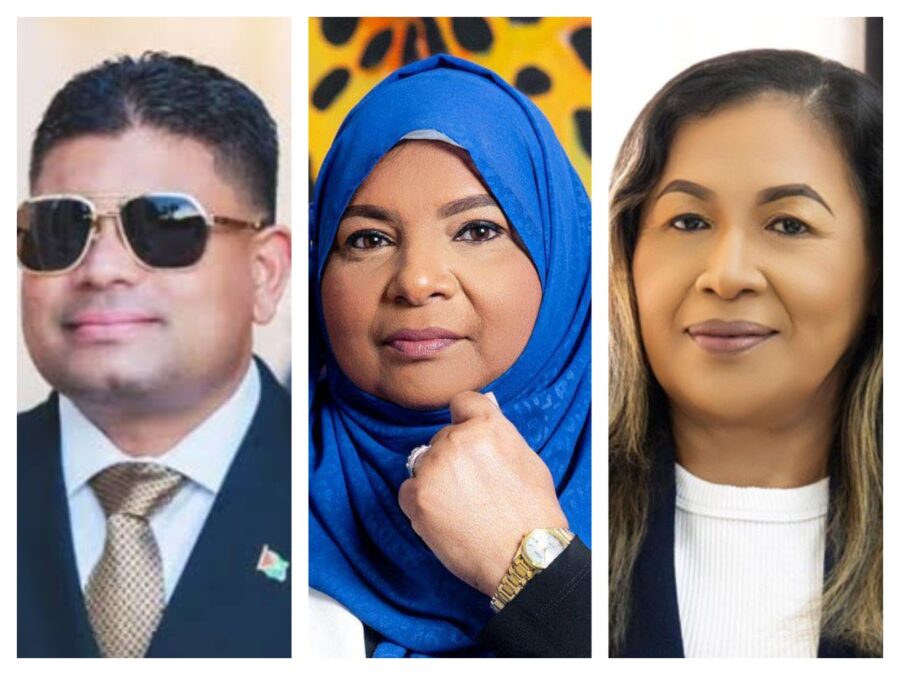
The incident resulted in the detention of WIN parliamentarians Natasha Singh and Dawn Hastings-Williams, along with Opposition Leader Azruddin Mohamed. Singh and Hastings-Williams were each released on G$200,000 bail, while Mohamed was granted G$100,000 bail.
In a statement issued Thursday, the AFC described the police conduct as “oppressive” and “intimidating,” while stressing that lawful enforcement must itself respect constitutional protections.
“No Member of Parliament—or any citizen—is above the law, but law enforcement must itself be lawful, proportionate and respectful of constitutional rights. The police must never become an instrument of political intimidation.”
The statement follows a late-night confrontation Tuesday involving Mohamed and other parliamentarians at Friendship, East Bank Demerara, after they returned from Region One, where they had met residents and people affected by the MV Barima disaster.
The Guyana Police Force said a joint police and Coast Guard patrol intercepted a “go-fast” vessel after officers signalled it to stop and the vessel allegedly failed to comply, prompting a pursuit. Police also reported that a bag was seen being thrown into the Demerara River.
Opposition figures have disputed that account, saying the vessel had already docked at Friendship when officers arrived.
The Maritime Administration Department (MARAD) subsequently said that neither Mohamed nor the vessel was licensed or authorised to operate in Guyana’s waters.
The episode has since widened into a political dispute over the conduct of the security forces and the treatment of elected representatives.
The AFC warned that the issue extends beyond Mohamed, Singh and Hastings-Williams or the WIN party.
“What is taking place should concern every Guyanese, regardless of political affiliation.”
The party said aggressive state action against elected representatives could have a chilling effect on political dissent and undermine confidence in democratic institutions.
“When elected representatives can be subjected to humiliation and aggressive State action, it sends a chilling message that dissent may be punished and political opponents targeted.”
The AFC went further, describing the developments as evidence of an authoritarian drift.
“These are clear and unmistakable signs of a drift toward dictatorship.”
The party said authoritarianism develops when abuse of state power becomes normalised, institutions are weakened and law enforcement is used to intimidate those who challenge those in power.
The AFC is calling on the Government and Guyana Police Force to immediately stop any conduct amounting to harassment or intimidation and to respect the Constitution, Parliament and the fundamental rights of citizens.
“This is not merely about Azruddin Mohamed or WIN. It is about the preservation of democracy itself.”
The controversy comes as opposition lawmakers continue to press the Government over the MV Barima tragedy, maritime safety and the unfinished G$1.4 billion Port Kaituma waterfront project.
The AFC said political disagreements cannot justify the misuse of state institutions.
“The AFC will not remain silent while the machinery of the State is used to intimidate political opponents and calls on all Guyanese to condemn these vulgar acts of intimidation.”
At the centre of the dispute is a broader question over the boundaries of state authority: whether police and other security agencies can enforce the law without allowing political tensions to influence their conduct.
For the AFC, the treatment of the three WIN lawmakers has elevated that question into a test of Guyana’s democratic safeguards.
The party is urging Guyanese to look beyond the identities of those detained and focus on the principle at stake—whether the exercise of state power against political opponents is lawful, proportionate and consistent with constitutional democracy.