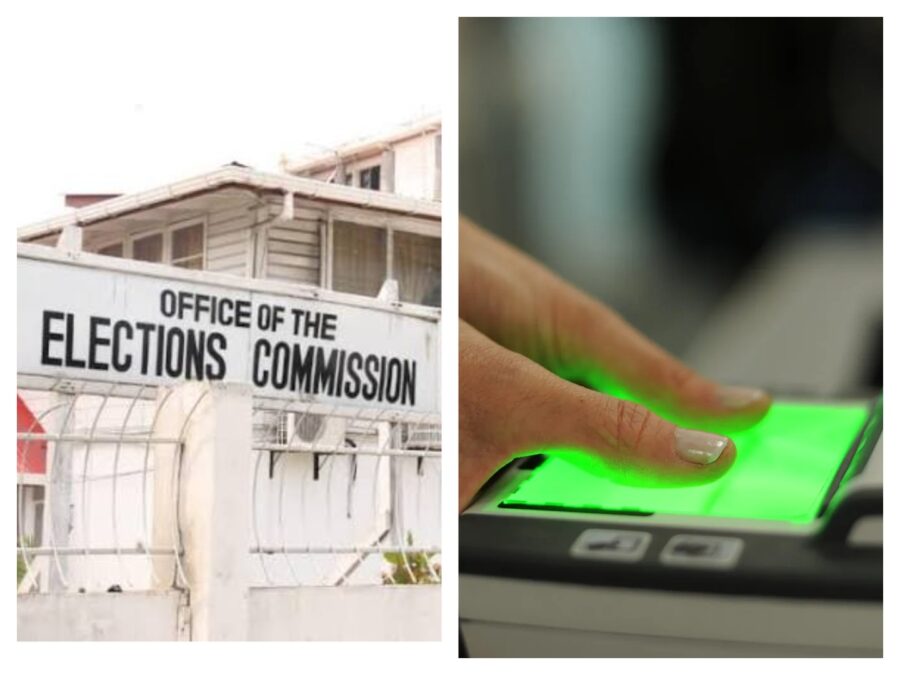
Almost a year after Guyanese went to the polls for the September 1, 2025 General and Regional Elections, the Guyana Elections Commission (GECOM) has yet to implement a biometric voter-verification system—despite repeated calls from opposition parties, civil society, trade union representatives and international election observers.
The delay is raising fresh concerns about the Commission’s preparedness as it moves toward Local Government Elections, constitutionally due in 2026, and whether the electoral machinery is being strengthened sufficiently to command public confidence.
The issue is not new. Biometrics was one of the most fiercely debated electoral reforms ahead of the 2025 elections. GECOM ultimately did not implement the system, citing legislative, technical and administrative challenges.
But the Commonwealth Observer Group, after observing the 2025 elections, made the matter unmistakable. It recommended that GECOM “prioritise adoption of biometric technology early in the next election cycle to enhance integrity, efficiency and credibility in the electoral process.”
Nearly a year later, there is still no publicly announced implementation date, completed procurement process or demonstrated system ready for deployment.
That raises an uncomfortable question: If biometrics was supposedly too difficult to implement before the 2025 elections, what has GECOM done during the intervening year to ensure that the same obstacles do not become an excuse again?
The concern is amplified by persistent controversy surrounding Guyana’s voters list, with opposition parties continuing to describe it as bloated and demanding stronger mechanisms to verify voters and prevent electoral abuse.
The PPP’s own position on biometrics has also undergone scrutiny. While in opposition, the party supported enhanced electoral safeguards, but now, as the governing party, PPP General Secretary Bharrat Jagdeo has repeatedly dismissed the opposition’s demands for biometric verification.
In January 2025, Jagdeo called the issue a “storm in a teacup” and argued that existing safeguards were sufficient.
In November 2024, however, he had said that the Government was not opposed to enhanced biometrics and that, if GECOM reached agreement on improving the electoral system, “Financially, there will be no constraint to free and fair elections or clean elections.”
The contradiction has not escaped public attention.
Meanwhile, Opposition Leader Azruddin Mohamed has gone further, alleging that the 2025 elections were rigged and arguing that stronger safeguards are necessary to prevent a recurrence. After the polls, Mohamed declared, “We won this elections. The PPP, it’s a rigged government. We won the elections.” He has called for electoral reform, including biometrics, arguing that without such measures, “they’re going to continue rigging the elections.”
The electoral concerns extend beyond biometrics.
Questions have also persisted about the formal post-election procedures surrounding the certification and declaration of the 2025 results. Section 96 of the Representation of the People Act provides for the Chief Election Officer’s report to the Commission, while Section 99 addresses the declaration and publication of election results.
At the same time, Guyana has demonstrated that money is not the obstacle to strengthening institutions.
The National Assembly approved the $1.558 trillion 2026 national budget, while the Government subsequently sought and obtained approval for another $54.9 billion in supplementary expenditure in July, following the paper’s presentation in June.
The issue, therefore, is not whether Guyana can afford stronger electoral safeguards.
It is whether GECOM has the institutional urgency and political independence to deliver them.
The Commonwealth Observer Group also warned that there had been limited implementation of recommendations from previous observer missions and stressed the need for reforms that strengthen public confidence.
With Local Government Elections approaching, the continued absence of a biometric system is becoming more than an administrative delay. It is becoming a test of GECOM’s credibility.
Guyanese have already heard the promises. They have heard the arguments about feasibility, legislation, cost and timing. What they now need is evidence of action.
If biometric verification is capable of strengthening the integrity and credibility of Guyana’s elections, why is GECOM still talking about it nearly a year after the last national poll instead of showing the country a functioning system?
The next election cannot simply be another exercise in asking citizens to trust the process.
The process must be strong enough to earn that trust.