More than a month after the MV Barima disaster claimed scores of lives and plunged families and entire communities into grief, the Ministry of Human Services and Social Security is finally preparing to launch an online counselling platform for survivors and bereaved families—raising troubling questions about why such an accessible intervention was not deployed sooner.
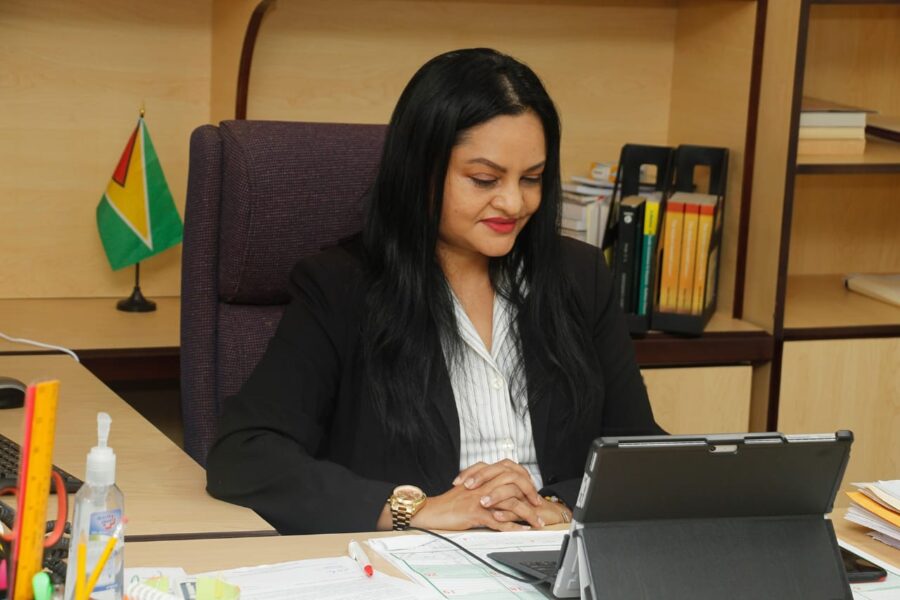
Minister Dr Vindhya Persaud announced Sunday that the ministry will launch EMBRACE, a national online counselling platform intended to connect survivors and families affected by the July 18 tragedy with counsellors and specialists, including Guyanese professionals in the diaspora.
The platform is expected to go live this week, beginning with families affected by the Barima disaster before being expanded nationally.
“It’s going to be a system where persons can request a time. They will see the list that is available, their specialities, and they can have confidential therapy and counselling from any one of these persons,” Persaud said.
But the announcement comes after a month in which grieving families have repeatedly spoken of the absence of meaningful psychosocial support, particularly in remote communities.
The Barima, an 87-year-old ageing vessel whose seaworthiness had been questioned before it embarked on its final voyage, was travelling from Georgetown to Port Kaituma when it capsized off Guyana’s northwest coast on July 18. Questions had been raised over its maintenance and condition, with opposition figures pointing to documents detailing works required on the vessel. The Government rejected claims that it was unseaworthy, insisting it remained certified to operate and had been dry-docked in 2024.
The tragedy triggered a massive search-and-rescue and recovery operation involving Guyanese authorities and international assistance, including specialist divers from Trinidad and Tobago and French Guiana. More than 50 bodies were recovered, dozens of survivors were accounted for, and more than 100 people were feared dead, with some victims still awaiting recovery.
For many families, however, the physical recovery operation has been followed by a psychological ordeal.
Singh exposes suffering in Region One
That suffering was brought sharply into public view last week by We Invest in Nationhood (WIN) Member of Parliament Natasha Singh, who travelled to Port Kaituma and several satellite communities around Mabaruma, including Kumaka, Wauna, Hosororo, White Water and Arakuru.
Singh said she met survivors and relatives of victims who were struggling with the aftermath of the disaster, including mothers crying while waiting for closure because their children had not been found.
She also reported complaints that some survivors were dealing with health problems without adequate assistance and that families had received little or no psychosocial support.
Her account exposed the distance between Georgetown’s official pronouncements and the reality confronting families in the communities closest to the disaster.
The solution was already being proposed
Perhaps most striking is that the basic technological solution now being unveiled by the Ministry was publicly proposed before Persaud’s announcement by Dr Karen Abrams, one of Guyana’s foremost technology experts and Executive Director, STEMGuyana.
In a social media post, Abrams suggested using technology to connect certified Guyanese mental-health professionals locally and in the diaspora with people traumatised by the disaster.
“What if someone (STEMG) builds a platform that allows certified Guyanese mental health professionals (local and diaspora)to volunteer x hrs per week, offering support resources to local folks who have endured trauma. So people in need can log in, select folks 1. On call for emergencies. 2. Schedule session…(zoom).”
The concept bears striking similarity to EMBRACE, which Persaud now says will allow affected persons to select available counsellors and schedule confidential therapy sessions.
The question is unavoidable: why did it take more than a month, public outcry, opposition intervention and repeated appeals for such a solution to begin taking shape?
Psychologist Dr Deborah London has also publicly urged authorities to address the psychological consequences of the disaster, underscoring the need for timely and sustained intervention.
The psychological impact of a mass-casualty event does not disappear when bodies are recovered or national mourning ends. Survivors can experience post-traumatic stress, anxiety, depression, nightmares, survivor’s guilt and fear of travelling by water. For families whose loved ones remain missing or whose deaths were sudden and violent, the risk of prolonged or complicated grief is even greater.
HEART or public relations?
The government’s much-promoted HEART initiative, unveiled by President Irfaan Ali as the administration’s framework for supporting victims of national tragedies, is also coming under scrutiny.
While the initiative promises humanitarian, psychological and social assistance, its rollout has increasingly appeared to critics as a public-relations response rather than evidence of an urgent, deeply engaged system of care.
The Barima families did not need another acronym. They needed immediate access to trained professionals, particularly in communities where geographical isolation makes conventional services difficult to access.
Minister Persaud now says the ministry has formally requested assistance from the Red Cross, the United Nations and other agencies. The UN Resident Representative’s Office and the Pan American Health Organisation have responded.
Those interventions are welcome. But they also underscore the central question: why was the response not immediate?
A government serious about the psychological welfare of Barima survivors should not have needed weeks of public pressure before turning to a technology-based solution that could connect traumatised Guyanese with professionals locally and abroad.
The Barima tragedy has already exposed questions about maritime safety, vessel maintenance, emergency response and government accountability. The delayed psychosocial response risks becoming another painful chapter.
For the families left behind, grief does not operate on a government timetable. And for those still carrying the trauma of July 18, another announcement is not enough.
They need help—and they needed it weeks ago.