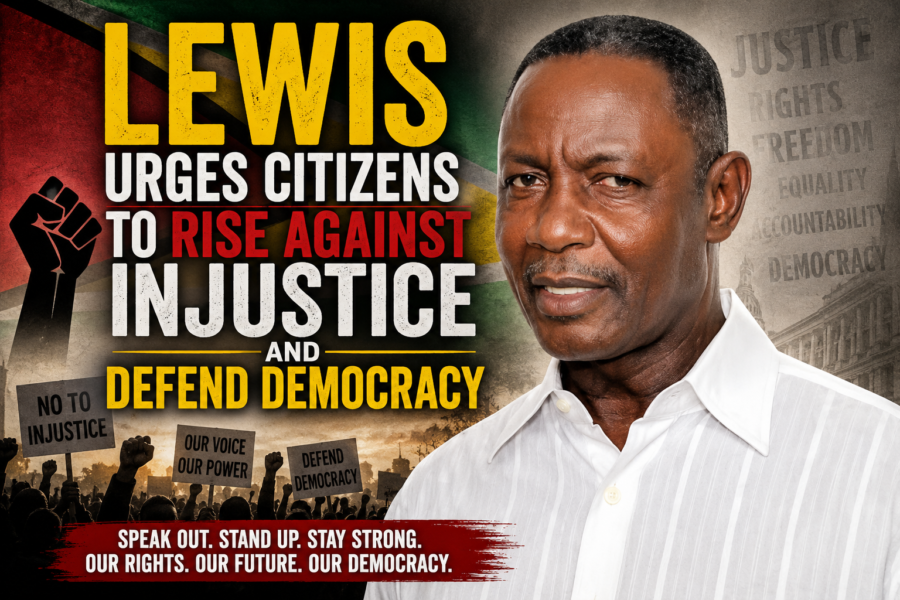
By Mark DaCosta- In a stirring analysis, Lincoln Lewis, the General Secretary of the Guyana Trades Union Congress, underscored the urgent necessity for citizens to engage in activism as the country grapples with issues of governance and civil rights. He advocates for a robust response from the populace, especially young voices, against the oppression and injustices perpetuated by the current ruling regime. This compelling critique was shared in his column, Eye On Guyana, published on August 9, 2026.
Lewis articulates a vision where activism lays the groundwork for good governance and social harmony. He commends the younger generation for emerging boldly to voice their concerns but warns against letting this momentum wane. He stresses the importance of fearlessness in advocating for what is right, referencing the adage, “a threat to one is a threat to all,” to highlight the interconnected nature of social justice. Citizens, he argues, must not hesitate to raise their voices in the face of violations, discrimination, and historical distortions that affect their communities.
The message the veteran trade unionist conveys is that if individuals do not advocate for their rights, they should not expect anyone else to do so. He urges them to confront issues that affect their lives with the clarity and honesty that every situation deserves. “Every case must be judged on its merit,” he states, reinforcing his call for accountability and justice in society.
Furthermore, Lewis reflects on the disheartening behaviour of some Black leaders within the ruling party, who, he believes, have compromised their principles for political favours or financial gain. He expresses disappointment that during a month symbolic of the struggle for liberation — February — these leaders fail to uphold the dignity associated with their heritage. He provocatively states, “the price of losing their dignity in public life” leaves a troubling void, and questions the legacy they are creating for future generations.
The general secretary goes on to challenge these leaders, urging them to reflect on their public personas and the negative examples they set for the youth. He poignantly asks, “What is a man without a spine, pride, and decency?” This rhetorical question underscores the gravity of the situation, as he emphasises the importance of ethical leadership in fostering a culture of integrity.
The trade unionist asserts that individuals must stand firm against those who seek to exploit them for unethical agendas. He passionately calls for a collective rejection of dishonour in favour of dignity, a legacy that has long been fought for. He argues vigorously against sacrificing one’s dignity for fleeting political advantages, stating, “Do not trample on this legacy for a mess of pottage.”
Turning to the current political climate under the Ali and Jagdeo administration, Lewis raises serious concerns about the regime’s tactics to silence dissenting voices, particularly targeting social media users whose viewpoints they find offensive. He cautions that such actions represent a dangerous infringement on the rights of citizens, insisting, “Let us not allow this new encroachment on our rights to be met with silence.”
Lewis also highlights the pressing economic issues faced by workers and speaks out against the marginalisation of trade unions. He critiques the regime’s method of undermining union dues, which hampers the representation of workers striving for improved conditions, fair pay, and benefits. He notes that while the government supports unions aligned with its interests, many others are left to struggle without such backing.
Lewis calls on Black leaders within the People’s Progressive Party (PPP) to address these economic challenges head-on, suggesting that they advocate for fair treatment, constitutional rights, and protection against discrimination. He concludes with the rallying cry, “there is dignity in doing what is right — and now is always the time to do what is right.”
Through his impassioned discourse, Lincoln Lewis resonates with the need for civic engagement and vigilance among the citizenry. His urgent plea reminds the people of our nation that the responsibility for a just and equitable society lies not just with those in power but also with each individual who has a stake in the future. As we listen to Lewis, citizens are encouraged to take a stand against injustice, upholding the dignity of their ancestors and forging a path toward a more equitable society for the present and for generations to come.