
By Mark DaCosta- The Alliance For Change (AFC) has called for an independent, internationally respected forensic authority to examine all the evidence surrounding the 12 October shooting outside the Kitty home of Senior Superintendent Prem Narine, head of the Special Branch. In a statement issued 8 November 2026, the party argues that the case has become too contested, and too consequential, to be settled by institutions whose own conduct is part of the dispute. It wants the Government to commission the independent review and make the findings public.
The AFC speaks of a “ballooning controversy” and insists the matter is “of grave national importance.” Few would quarrel with that. Shortly before midnight on 12 October, gunfire erupted near Narine’s Barr Street residence, and Opposition Leader Azruddin Mohamed was arrested together with his videographer, Mario Mohamed, and his driver, Eugene Thorne. Police say Narine fired only after coming under fire. Mohamed says he was filming what he considers a wasteful police deployment at an officer’s private home, and that he was shot at. His lawyers also allege that the three men were assaulted in custody.
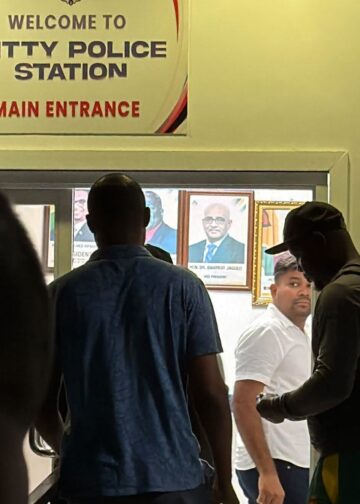
The three were later charged with possession of a firearm and ammunition and with attempting to obstruct the course of justice. They pleaded not guilty and were released on bail of $750,000 each, with conditions that include keeping away from Narine and his family. Narine is also a key witness in the United States extradition proceedings involving Mohamed and his father, Nazar Mohamed, which gives the incident a significance well beyond a single night in Kitty.
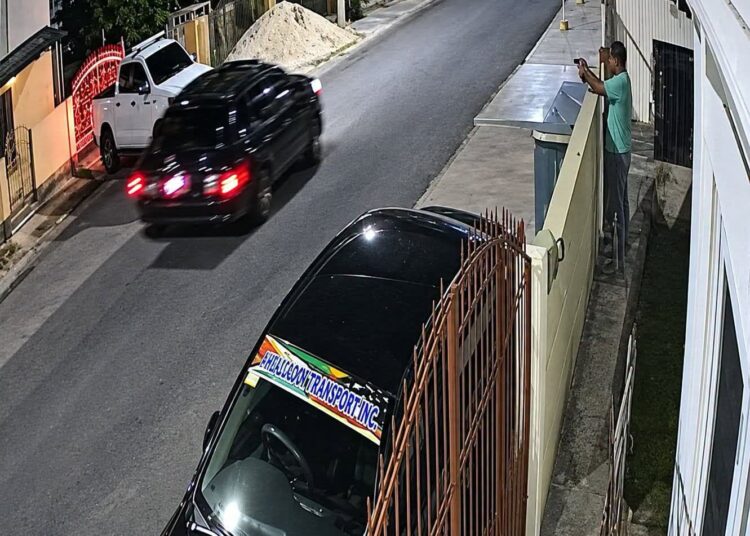
The controversy deepened on 26 October, when Mohamed publicly played more than 20 minutes of closed-circuit footage, which he says supports his account. Police allege that the recording was downloaded from the Liliendaal Command Centre by Police Constable Ryan Greene, who is said to have saved it to a flash drive on 23 October and received $800,000 for it the following day. Mohamed was arrested on 28 October.
Two days later, he and Constable Greene were charged under Section 9 of the Cybercrime Act, denied bail by Magistrate Abigail Gibbs and remanded to prison until 24 November. A second constable, Ashton Chappelle, faces the same charge. Mohamed’s attorneys have moved the High Court, where a ruling on urgent bail is expected on 13 November. The charges are allegations only, and none has been tested at trial.
It is against this backdrop that the AFC says the footage in the public domain, “together with additional video and forensic evidence” held by police, demands outside scrutiny. The party wants an authority with “no political or institutional connection to any of the parties involved” to authenticate every recording, test its timestamps and continuity, and establish whether anything has been “edited, altered or manipulated.”
The same body would examine ballistic, medical and other forensic material, together with the chain of custody for physical and digital exhibits. Most importantly, it would assess whether the evidence matches the accounts offered by each side.
The statement is careful about what it does not claim. The AFC says it is “not seeking to prejudge the guilt or innocence of any individual,” nor to interfere with the work of the Police Force. Its argument rests instead on credibility.
With a senior police officer, the Leader of the Opposition and the integrity of surveillance footage all entangled in the same affair, the party contends that only an investigation “whose independence and technical credibility cannot reasonably be questioned” can persuade a doubtful public.
The danger of leaving matters as they are, the AFC suggests, extends beyond this one case. “Public confidence in the Government and the institutions responsible for upholding the rule of law is being seriously tested,” the statement warns, and prolonged uncertainty risks eroding it further. An international review, it says, would offer Guyanese “an impartial basis upon which to understand what actually occurred” and begin restoring trust in the Police Force.
The proposal is not without complications. The principal matters are already before the courts, and the Government may argue that foreign experts have no place in live proceedings. A review would also have to be designed so that it did not prejudice any trials still to come. Ministers have not yet responded publicly to the AFC’s call.
The party nonetheless urges the Government to “act without delay.” It closes on a principle few Guyanese would dispute: “Guyanese people deserve the truth. Justice must not only be done but must be demonstrably done.”