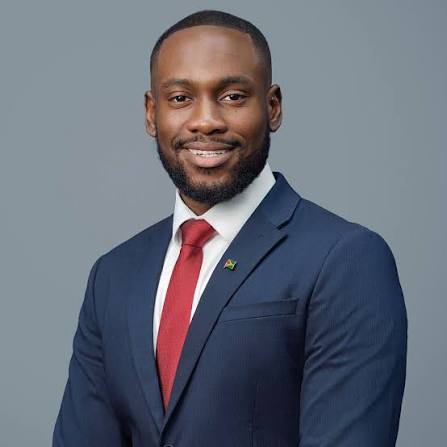
The Government’s insistence that the Commission of Inquiry (COI) into the MV Barima tragedy will be independent is facing renewed scrutiny after evidence surfaced that Minister of Labour and Manpower Planning Keoma Griffith, who was appointed to the post in September 2025, was until recently listed as part of the team at the Trinidad and Tobago law firm founded by one of the inquiry’s commissioners.
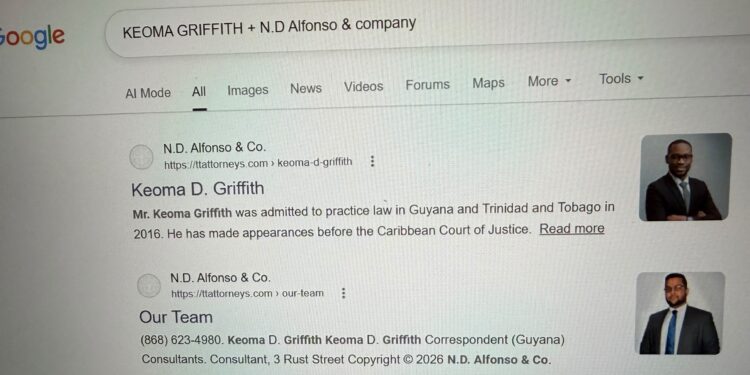
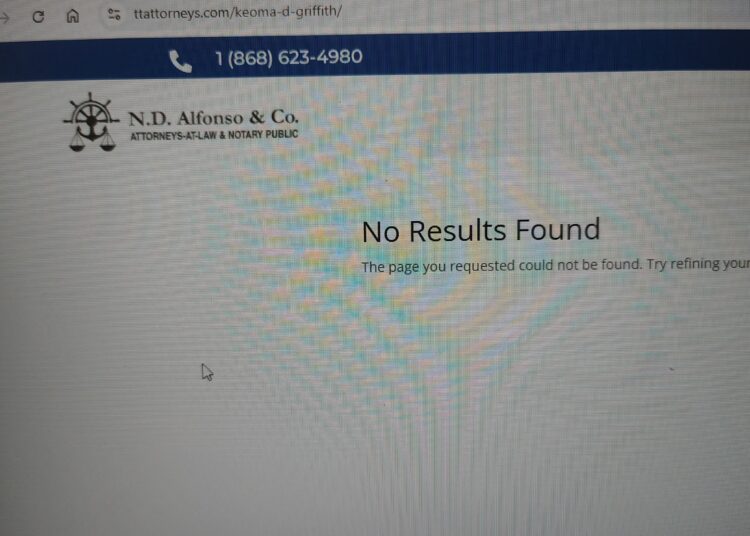
A visit to the website of N.D. Alfonso & Company on Thursday found that Griffith’s name is no longer listed among the firm’s personnel. However, archived versions of the website and screenshots reviewed by this publication show Griffith featured as the firm’s Guyana Consultant under its “Our Team” section, with his chambers address also identified as the firm’s Guyana contact.
The firm’s founding partner is Trinidadian Senior Counsel Nyree Dawn Alfonso, one of the five commissioners appointed by President Dr. Irfaan Ali to investigate the country’s worst maritime disaster.
The five-member Commission comprises former Belizean Justice of Appeal Justice Godfrey Phillip Smith (Chairman), Jamaican maritime surveyor Captain Hamada Fouda, Trinidad and Tobago maritime attorney Nyree Dawn Alfonso, retired Trinidad and Tobago Rear Admiral Hayden Pritchard, and Polish forensic naval architect Dr. Andrzej Jasionowski.
The timing of Griffith’s apparent disappearance from the firm’s website has only deepened questions over whether the minister remained professionally affiliated with Alfonso’s firm when she was appointed to the Commission of Inquiry. Neither Griffith, President Ali nor Alfonso has publicly explained the reported relationship.
The issue is not merely whether an actual conflict exists. It is whether the circumstances create a reasonable perception that the inquiry lacks the appearance of complete independence—a standard commissions of inquiry are expected to meet if they are to maintain public confidence.
There is no evidence that Griffith is participating in the commission’s work or influencing its deliberations. Nor is there evidence that Commissioner Alfonso has acted improperly. However, legal and public accountability advocates have long maintained that justice must not only be done but must also be seen to be done.
That principle has become central to the controversy and critical to securing public confidence.
Did the President know that a serving Cabinet minister was reportedly affiliated with the law firm of one of the commissioners before making the appointment? If not, was adequate due diligence conducted? If Griffith had already resigned from the firm, when did that resignation take effect, and why did his profile reportedly remain on the firm’s website until after the relationship became the subject of public discussion?
The controversy also places Griffith’s own history with commissions of inquiry under renewed examination.
Before entering elective politics, Griffith served as Counsel to the Commission of Inquiry into the Mahdia Secondary School Dormitory Fire, leading evidence before the inquiry as it investigated the blaze that claimed the lives of 20 children.
That inquiry produced recommendations aimed at improving school safety and child protection. The Government subsequently announced compensation for the families of the victims. While the payments were welcomed by grieving relatives, questions lingered in some quarters over whether compensation had eclipsed accountability for the systemic failures exposed by the tragedy.
Now, less than a year after becoming Minister of Labour and Manpower Planning, Griffith finds himself connected to another high-profile inquiry—not as counsel, but because of his reported professional association with the law firm of one of its commissioners.
The issue extends beyond the MV Barima investigation.
As a serving government minister, Griffith’s reported association with a foreign law firm raises broader questions about the appearance of conflicts of interest. Although there is no evidence that N.D. Alfonso & Company has represented clients seeking government contracts or regulatory approvals in Guyana, ethics specialists have long argued that public office holders should avoid professional relationships that could create even the perception of privileged access or influence.
Commissioner Alfonso herself is no stranger to controversy. During Trinidad and Tobago’s Commission of Enquiry into the Paria diving tragedy, she publicly apologised after concerns were raised over the appearance of a witness before the proceedings.
The reported link between Griffith and Alfonso’s law firm is therefore likely to intensify scrutiny of the commission’s independence and impartiality, despite repeated assurances by President Irfaan Ali that the inquiry will be transparent and free from influence.
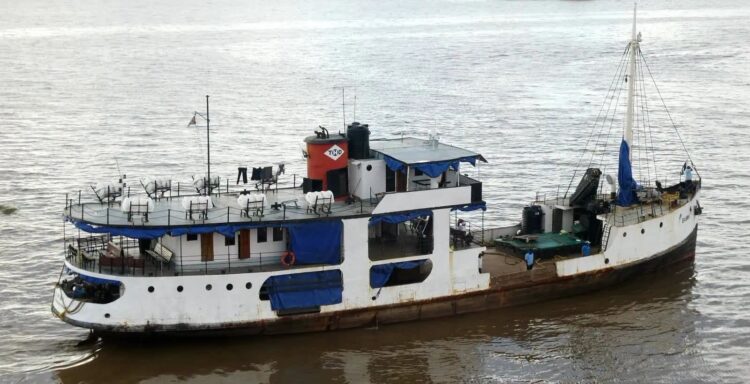
For many of the families who lost loved ones aboard the MV Barima, the inquiry represents their best hope of establishing the truth.
But before witnesses are called and evidence is led, a fundamental question has already emerged: can the public have complete confidence in an inquiry when a government minister was reportedly affiliated with the law firm of one of its commissioners, and that connection disappeared from public view only after it attracted public attention?
Until those questions are answered by the President, Minister Griffith and Commissioner Alfonso, concerns over the appearance of impartiality are likely to persist alongside the inquiry itself.