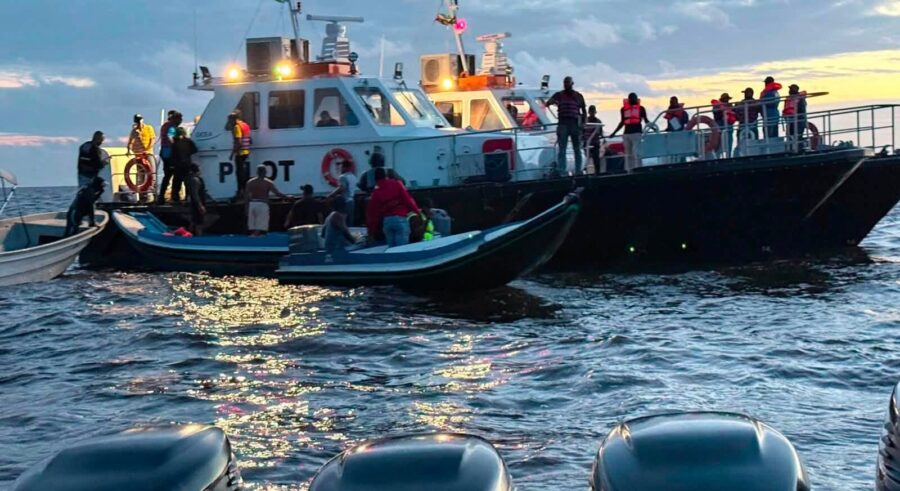
As the search and rescue operation continues, a number of difficult questions are emerging about the timeline and scale of the emergency response to the MV Barima disaster.
According to official statements, a distress signal was received at approximately 11:00 p.m. on Saturday. Reports are that the first aircraft to arrive over the search area was a privately operated Roraima Airways BN-2B Islander, piloted by Captain Gerald Gouveia Jr. and Captain Learie Barclay, which reached the scene at approximately 1:56 a.m. Reports further indicate that the aircraft arrived before rescue assets from the Guyana Defence Force (GDF), the Maritime Administration Department (MARAD), and the Guyana Coast Guard.
These reports have prompted calls for authorities to release a detailed timeline showing exactly when each agency was notified, when rescue assets were deployed, and when they arrived at the scene. Additionally, while the distress call occurred around 11p.m., by 12:30 a.m. passengers were frantically calling relatives and reporting a capsize in progress. Allegedly, help never arrived until after 2 a.m. The government of Guyana must be transparent with Guyanese citizens.
Additional questions have also been raised about the scale of the aerial response. Citizens are asking why only one Guyana Defence Force helicopter was reportedly deployed during the critical early hours of the rescue operation when two additional helicopters, acquired by the Government earlier this year, were widely presented as strengthening the country’s emergency response and search and rescue capabilities. Authorities are expected to clarify whether those aircraft were available, operational, or otherwise unable to participate in the mission.
Further questions have surfaced over passenger reports that the MV Barima was laden and people complained that it seemed too overloaded when it left for Port Kaituma. There are also reports that the vessel may have recently experienced a leak. While those reports have not been officially confirmed, many believe they should be thoroughly examined as part of any independent investigation into the tragedy.
The tragedy has also renewed scrutiny of the vessel itself. The MV Barima is an 87-year-old vessel, reportedly built in 1939. Questions are now being raised about its seaworthiness, particularly in light of reports that approximately GY$90 million was spent on repairs to the ferry about four years ago. Authorities are expected to address the nature of those repairs, the vessel’s inspection history, and whether it met all required safety and operational standards before departing Georgetown.
The Government has confirmed that 53 people have been rescued. However, with 116 passengers, in addition to crew members, reportedly aboard the vessel, more than half of those on board remain unaccounted for. Families, friends, and concerned citizens across Guyana continue to wait anxiously for news as search and rescue teams press on by air and sea.
As the nation prays for survivors, many Guyanese are urging the Government to maintain full transparency throughout both the rescue effort and the subsequent investigation. They are calling for regular factual updates, a comprehensive account of the emergency response, and a thorough examination of every factor that may have contributed to one of Guyana’s most significant maritime disasters in recent history.