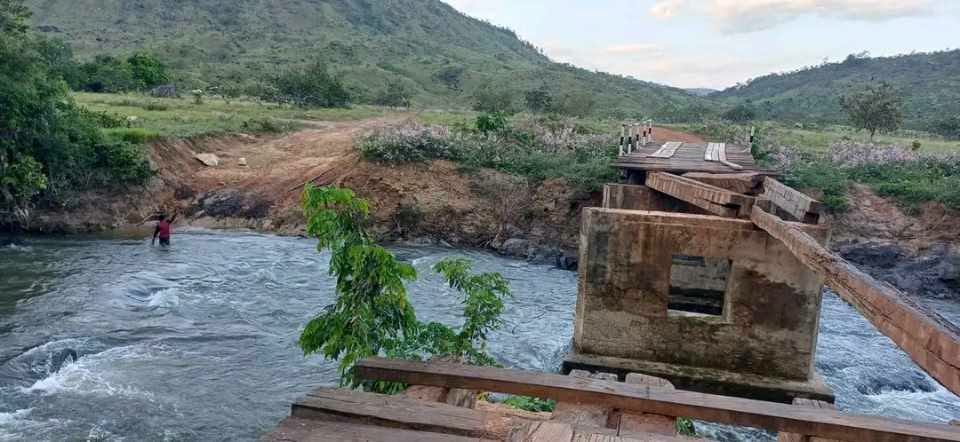
By Mark DaCosta- Three months after the collapse of the Marpaikru Bridge, one of the most critical transport links connecting Regions Eight and Nine, thousands of hinterland residents remain effectively cut off as the deteriorating crossing continues to disrupt commerce, inflate the cost of essential goods, and isolate communities from vital services.
Describing the prolonged inaction as unacceptable, Opposition Leader and We Invest in Nationhood (WIN) leader Azruddin Mohamed on Wednesday, July 15, 2026 called on the Government to immediately repair the bridge, warning that every day it remains impassable deepens the economic and social hardship facing residents, farmers, transport operators, and businesses that depend on the corridor.
The Marpaikru Bridge is not merely a crossing over water; it is the backbone of a corridor that stretches from the savannah settlement of Karasabai in Region Nine through rugged terrain to the elevated village of Paramakatoi in Region Eight, Region Nine, with its expansive Rupununi grasslands and heavy trade ties to neighbouring Brazil, stands in stark contrast to Region Eight, which is cloaked in dense forest and dominated by the formidable Pakaraima mountain range.
The bridges along this route must contend with swollen jungle rivers, deep ravines, and seasonal creeks that swell dramatically during the rainy months. For decades, the wooden structures along this corridor have succumbed to rot, flooding, and washouts, making the journey from the flatlands of Karasabai up to Paramakatoi a perilous undertaking at the best of times.
The economic significance of maintaining a reliable link between these two regions cannot be overstated. Region 9, particularly the border town of Lethem, operates as a major commercial hub. A functional road and bridge network allows goods to flow from Lethem directly into the isolated communities of Region Eight. The price disparity alone tells the story of what happens when that connectivity is broken.
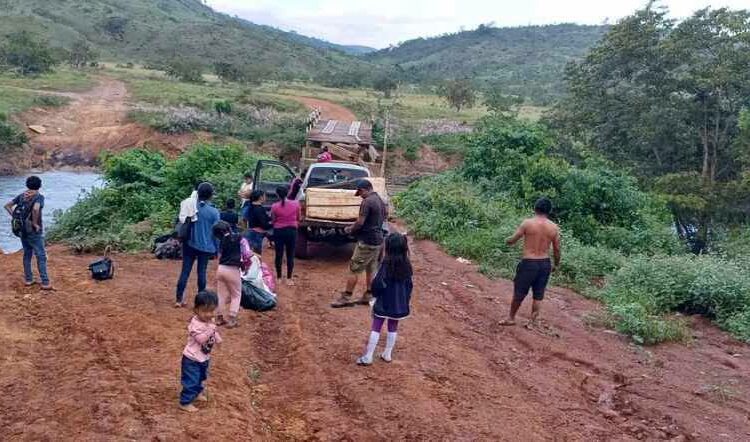
A sack of cement that costs roughly $2,800 to $2,900 in Lethem can balloon to $14,000 by the time it reaches Paramakatoi, precisely because transporting heavy goods over dilapidated bridges and poor roads is so difficult. When bridges are sound and roads are passable, the cost of living drops, affordable housing becomes feasible, food security improves, and modern infrastructure finally becomes within reach for hinterland residents. Conversely, when a critical bridge gives way, the consequences are immediate and devastating.
In his statement, Mohamed highlighted the severity of the situation, noting that “the bridge serves as a main transportation link between Regions 8 and 9″ and that “the prolonged closure of the bridge is burdensome for residents, businesses, transport operators, and farmers.” The disruption extends far beyond inconvenience. With trucks and other vehicles unable to traverse the damaged structure, the flow of food, fuel, medical supplies, and other essential commodities into Region Eight has been severely curtailed.
Shortages have emerged, and the prices of basic goods have climbed steeply, placing an intolerable strain on households already struggling with the high cost of living in the interior. Emergency response capabilities have also been compromised, and while upgraded airstrips, such as the newly commissioned concrete airstrip in Paramakatoi, can handle urgent medical evacuations, overland travel remains the primary affordable means for residents to access regional hospitals, schools, and markets. When a bridge collapses, it effectively imprisons entire communities.
The call for action from the opposition comes against the backdrop of a broader national effort to modernise hinterland infrastructure. The Government of Guyana, through the Ministry of Public Works, launched an ambitious reconstruction programme in early 2025, undertaking the rebuilding of 29 bridges along the Karasabai-to-Paramakatoi corridor.
These crossings are being upgraded from traditional timber to reinforced concrete, supported by substantial national budget allocations focused on hinterland road and bridge development. This initiative represents a long-overdue transition from a hazardous, seasonal trail to a dependable, year-round link, one that promises to free the communities of Regions Eight and Nine from the tyranny of their geography and secure their long-term economic integration.
Yet the collapse of the Marpaikru Bridge serves as a stark reminder that progress is uneven and that existing structures cannot be neglected while new ones are being built. As Mohamed put it, “The Marpaikru Bridge requires immediate repairs.” For the residents, farmers, and business owners of Region Eight who depend on this corridor for their very survival, the urgency is not political rhetoric; it is a matter of daily hardship. The government must act swiftly to restore this crossing, for every day it remains impassable is another day of inflated prices, stranded produce, and isolated communities in the heart of Guyana.