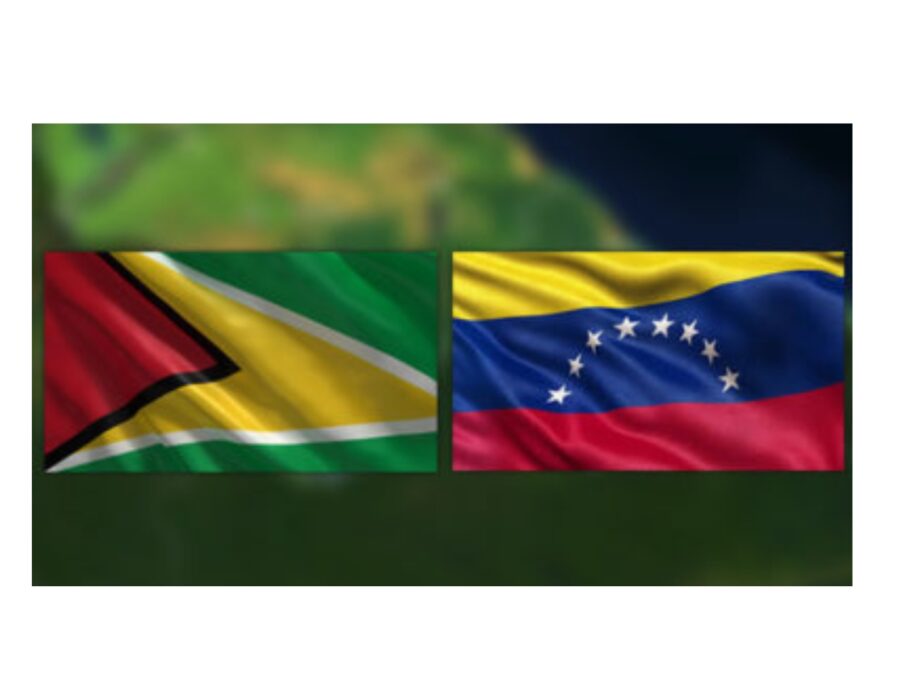
By Mark DaCosta- The catastrophic seismic events that struck northern Venezuela on 24 June 2026 will almost certainly trigger a substantial new wave of refugees across our western border, compounding pressures on our nation’s already strained social, economic, and administrative systems. What has been a manageable — if challenging — flow of economic migrants is poised to become an acute humanitarian emergency that will test the resilience and compassion of every Guyanese citizen.
For several years now, our country has served as a refuge for Venezuelans fleeing the collapse of their homeland. According to figures compiled by the Inter-Agency Coordination Platform for Refugees and Migrants from Venezuela, approximately 28,300 Venezuelan nationals were residing in Guyana as of February 2026.
When set against our national population of roughly 800,000, this figure represents a significant demographic imprint — particularly given that the true number is likely far higher, owing to porous borders, an inefficient paper-based registration system, and the absence of formal refugee status for Venezuelans in our jurisdiction.
The geographical concentration of this population is striking: the overwhelming majority have settled in our hinterland regions, notably Region One (Barima-Waini) and Region Seven (Cuyuni-Mazaruni), where indigenous communities such as Kamwatta and Khan’s Hill have become primary reception areas. Over time, secondary migration has drawn increasing numbers to the populated coastal belt, including Georgetown and its environs, where employment opportunities in construction, the informal sector, and the burgeoning hospitality industry have proven attractive.
The effects of this existing migrant presence on our national life are already deeply felt and multifaceted. Economically, the picture is one of paradox. In remote hinterland communities, the sudden population increase has strained already limited local resources, driving up the prices of essential commodities and food items.
Conversely, in the mining and agricultural sectors, Venezuelan migrants have provided a steady stream of affordable labour. On the coast, bilingual migrants are increasingly being absorbed into the hospitality and retail sectors. However, this influx of cheap labour has also sparked resentment among some working-class Guyanese, who perceive the migrants as unfair competition capable of depressing local wages.
Culturally and linguistically, the presence of Venezuelan migrants is fundamentally altering the social fabric of our nation, the only English-speaking country in South America. The infusion of the Spanish language is the most palpable change; in border regions, Spanish is rapidly becoming a de facto second language, necessitating ad hoc translation services in community governance and healthcare.
The cultural exchange is also evident in the culinary landscape, with traditional Venezuelan fare such as arepas and empanadas becoming commonplace in Guyanese markets and street food stalls. Yet this cultural blending is not without friction. In the education sector, the language barrier poses a monumental challenge. Guyanese schools, particularly in Region One, have struggled to accommodate non-English speaking children, straining resources and requiring teachers to adapt to bilingual environments without formal training.
At the level of community relationships, the Guyanese response has oscillated between profound humanitarian empathy and rising xenophobia. In indigenous communities, traditional leaders initially welcomed migrants, allocating agricultural land to help them achieve self-sufficiency.
However, as numbers have swelled, the strain on rudimentary sanitation and healthcare systems has escalated. In broader Guyanese society, concerns over national security, human trafficking, and an increase in petty crime have fuelled anti-migrant sentiments. The presence of migrant women in the sex trade, often driven by extreme economic vulnerability, has also raised serious moral and public health concerns.
The dynamics of this migration were irrevocably altered by the events of 24 June 2026. At 6:04 p.m. local time, a magnitude 7.2 earthquake violently shook northern Venezuela, followed a mere 39 seconds later by an even more powerful magnitude 7.5 mainshock. These twin tremors, the most severe seismic event to strike Venezuela in over a century, decimated infrastructure across seven states, including La Guaira, Miranda, and Aragua.
The human toll has been catastrophic. According to official figures as of 11 July, more than 4,000 people have perished, nearly 17,000 have been injured, and 17,900 have been left homeless. The International Organisation for Migration estimates that up to 6.76 million people could be affected by the disaster, with some 680,000 children requiring humanitarian assistance across the affected states. More than 1,000 buildings, including hospitals, have been damaged or destroyed, alongside over 400 schools and water systems.
While the epicentre of this disaster lies on Venezuela’s northern coastline, far from our border, the ripple effects are expected to be profound. Natural disasters in nations already crippled by economic fragility inevitably trigger massive internal displacement. As survivors flee the devastated northern states in search of food, medical care, and shelter, this internal pressure will invariably push populations outward toward the borders.
Consequently, our nation must anticipate a massive, sudden influx of new refugees. Unlike the gradual economic migration of the past decade, this new wave will consist of disaster refugees — individuals who have lost everything abruptly and may be suffering from acute physical trauma, untreated injuries, and profound psychological distress. This influx will arrive independently of the ongoing economic migration, creating a compounding crisis.
The anticipated shocks to Guyanese society are severe and wide-ranging. Healthcare systems in border regions like Region One, already operating at capacity, will likely be overwhelmed by individuals requiring urgent medical intervention, trauma care, and treatment for communicable diseases rampant in post-disaster scenarios. The sudden establishment of informal, makeshift settlements near the border will pose severe sanitation risks, potentially leading to outbreaks of waterborne diseases like cholera, which would threaten both migrant and host populations.
The rapid spike in demand for food, medicine, and shelter will trigger acute localised inflation, threatening the food security of vulnerable Guyanese border communities. Perhaps most troublingly, the sudden visual and physical impact of thousands of desperate refugees could strain the limits of Guyanese hospitality, potentially inflaming xenophobic rhetoric and straining community relations to breaking point.
Our government has not been idle. President Irfaan Ali expressed our nation’s readiness to assist Venezuela within our capacities, and in early July, Guyana dispatched a vessel from Georgetown to Caracas carrying 88 containers of humanitarian, emergency supplies. Yet the challenge ahead demands far more than emergency relief.
To prevent the impending refugee surge from destabilising our nation, we must adopt a proactive, coordinated, and multi-tiered mitigation strategy. The central government must immediately scale up border processing capabilities, expand biometric registration systems, and establish formal temporary reception centres in Regions One and Seven equipped with adequate sanitation, clean water, and emergency medical supplies.
The state must urgently appeal to the United Nations High Commissioner for Refugees, the International Organisation for Migration, and international donor agencies for immediate financial assistance, technical expertise, and logistical support. Local governments must identify and zone specific areas of land for temporary housing, enforce strict environmental and sanitation regulations, and provide emergency funds to hire bilingual teaching assistants.
Non-governmental organisations and community groups must be financially supported to manage the equitable distribution of humanitarian aid and facilitate social cohesion through community dialogues and cultural exchange programmes. And ultimately, the success of any mitigation strategy rests on the disposition of the Guyanese citizenry — volunteering with local relief organisations, donating essential supplies, offering language exchange opportunities, and most importantly, actively resisting the spread of misinformation and xenophobia.
The influx of Venezuelan refugees into our nation is no longer a distant or temporary phenomenon; it is a permanent structural shift in our demographic and socio-economic reality. While the steady migration over the past few years had already presented significant challenges to our health, education, and social systems, the devastating earthquakes of June 2026 have escalated the situation from a chronic strain to an acute humanitarian emergency.
As the aftershocks of the Venezuelan disaster drive thousands toward our border, the resilience of our host nation will be rigorously tested. By implementing forward-thinking, coordinated strategies across central and local governments, empowering community organisations, and fostering a culture of individual empathy, we can mitigate the negative shocks. In doing so, our nation can not only uphold its humanitarian obligations but also harness the potential of a diverse, expanding population to forge a stronger, more resilient society.
References and Citations
1. Inter-Agency Coordination Platform for Refugees and Migrants from Venezuela (R4V). “Venezuelan Refugees and Migrants in the Region — May 2026.” ReliefWeb, 11 June 2026. https://reliefweb.int/report/
2. United Nations Office for the Coordination of Humanitarian Affairs. “Venezuela: Humanitarian Response Plan Addendum — June 2026 Earthquakes.” ReliefWeb, 13 July 2026. https://reliefweb.int/report/
3. United Nations News. “Venezuela earthquake disaster: needs ‘skyrocketing’, say relief agencies.” UN News, 1 July 2026. https://news.un.org/en/story/
4. International Organization for Migration. “Up to 6.76 Million People Could Be Affected by Venezuela Earthquakes, according to IOM.” IOM Press Release, 27 June 2026. https://www.iom.int/news/676-
5. Wikipedia. “2026 Venezuela earthquakes.” Wikipedia, accessed 13 July 2026. https://en.wikipedia.org/wiki/
6. United Nations Population Fund. “Flash Update on the Earthquakes in Venezuela (24–26 June 2026).” UNFPA, 26 June 2026. https://www.unfpa.org/
7. The New Humanitarian. “‘There is no food’: Venezuelan migrants neglected in oil-rich Guyana.” The New Humanitarian, 28 November 2024. https://www.
8. Caribbean Investigative Journalism Network (CIJN). “Life on Guyana’s border with Venezuela.” CIJN, 22 April 2026. https://www.cijn.org/life-on-
9. United States Department of State. “Responding to Venezuela Earthquakes.” State.gov, 8 July 2026. https://www.state.gov/
10. Direct Relief. “Venezuela Earthquakes 2026 | Disaster Response.” Direct Relief, 7 July 2026. https://www.directrelief.org/
11. Demerara Waves. “Guyana, Barbados ready to assist earthquake-devastated Venezuela.” Demerara Waves, 25 June 2026. https://demerarawaves.com/
12. Global Humanitarian Overview 2026. “Venezuela (RMRP).” Humanitarian Action, 8 December 2025. https://humanitarianaction.
13. Britannica. “Guyana.” Encyclopaedia Britannica, accessed 13 July 2026. https://www.britannica.com/
14. R4V Platform. “Refugees and Migrants from Venezuela.” R4V, May 2026. https://www.r4v.info/en/
15. HIAS. “Fact Sheet: Guyana.” HIAS, accessed 13 July 2026. https://hias.org/wp-content/