(Based on reporting by the Trinidad Express)
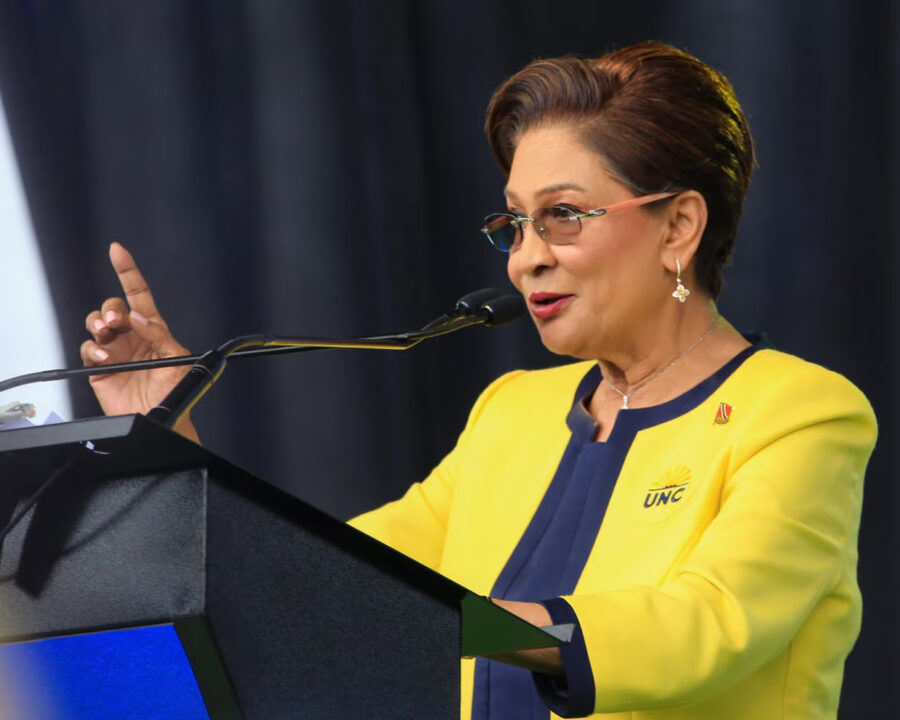
Trinidad and Tobago’s new government has ordered former Prime Ministers Dr. Keith Rowley and Stuart Young to surrender their diplomatic passports as part of a sweeping review prompted by what Prime Minister Kamla Persad-Bissessar says is the widespread abuse of one of the country’s highest official travel privileges.
The move comes after the government said an investigation found that 985 people were in possession of diplomatic passports, despite “most” of them not meeting the qualifying criteria.
According to reporting by the Trinidad Express, Persad-Bissessar said the review was triggered after foreign partners requested that Trinidad and Tobago examine its system for issuing diplomatic passports amid concerns over how the documents were being used.
“The Government was requested by our foreign counterparts to look into the issuance and abuse of Trinidad and Tobago-issued diplomatic passports. Upon investigation it was revealed that 985 persons possess diplomatic passports despite most of these persons not meeting the criteria for holding these passports,” she said.
The findings have raised questions about how diplomatic passports—which are ordinarily reserved for senior state officials and accredited diplomats representing a country abroad—came to be so widely distributed.
The review has already ensnared former Prime Minister Stuart Young, who revealed Thursday that he had received an unexpected call instructing him to return the diplomatic passport issued to him after leaving office.
Young described the decision as another act of political victimisation.
“As a former prime minister, you get a diplomatic passport. It was given to me on the second of May last year. I didn’t ask for it. Get a call out of the blue: return the passport,” he said.
Persad-Bissessar rejected that assertion, insisting the action forms part of a broader effort to restore integrity to the system rather than target individuals.
She said Young would instead receive an official passport.
“MP Young will therefore receive an official passport instead of a diplomatic passport.”
The Prime Minister also confirmed that former Prime Minister Keith Rowley no longer qualifies to retain a diplomatic passport.
“Bearers of diplomatic passports are required to return them to the Ministry of Foreign and CARICOM Affairs when their overseas posting concludes, they retire, or they leave the qualifying political office,” she said.
“He is retired and he is not representing the country in an official capacity. Therefore, he should not be in possession of a diplomatic passport.”
She added that ministry officials will contact Rowley to arrange for the return of his diplomatic passport before issuing him an official passport.
According to the Express, the review extends well beyond the country’s two most recent former prime ministers.
Some holders of diplomatic passports will be issued official passports, others will have their diplomatic passports withdrawn altogether and replaced with ordinary passports, while those who continue to satisfy the established criteria will retain them.
Persad-Bissessar maintained that the exercise should not be viewed as punitive.
“This is not a downgrade or any indication of wrongdoing by anyone who is being affected. It is simply corrective action being taken,” she said.
She nevertheless took aim at Young’s public criticism of the decision.
“When some people get used to preferential treatment, equal treatment seems like discrimination to them. Stuart should stop his cry baby, beh-beh behaviour. It’s unbecoming.”
The Prime Minister also sought to clarify a perception surrounding diplomatic passports, noting that possession of the document does not automatically confer diplomatic immunity.
“Both the diplomatic and official passports confer special benefits, however immunity only applies to diplomatic passport holders and is strictly granted by the receiving country based on official Vienna Convention accreditation,” she explained.
The review represents one of the first major governance reforms undertaken by the Persad-Bissessar administration and has exposed what the government describes as years of lax oversight in the issuance of diplomatic passports.
If the government’s figures are borne out, the discovery that nearly 1,000 individuals held diplomatic passports despite many allegedly falling outside the eligibility requirements is likely to fuel further scrutiny of how one of the country’s most privileged official documents was distributed under previous administrations.