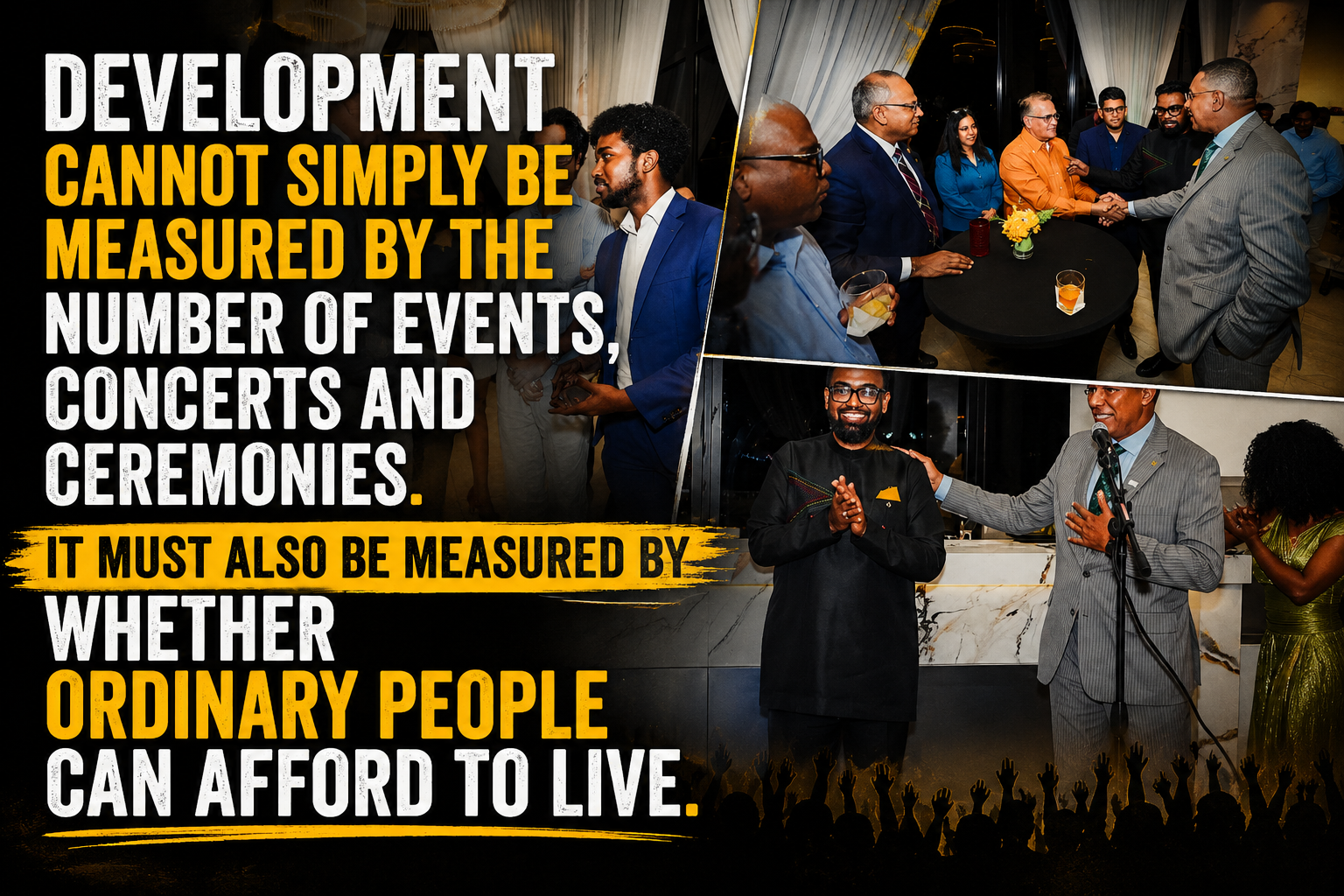
GEORGETOWN, Guyana – While the Government of Guyana continues to host a seemingly endless series of celebratory dinners, cultural extravaganzas, launches and entertainment events, many ordinary Guyanese say they are struggling to afford basic necessities and increasingly feel disconnected from the country’s widely celebrated economic boom.
In conversations with residents across Georgetown and on social media, frustration with the rising cost of living was evident.
“Every week there is another concert, another dinner, another celebration,” one woman said while shopping at a city market. “But I am standing here trying to figure out whether I can buy bread and cheese for my children. The government seems to be celebrating a prosperity that many of us don’t feel.”
A taxi driver expressed similar sentiments.
“They tell us the country is rich, but I don’t feel rich. My expenses keep going up. Rent is up, food is up, transportation is up. The government needs to remember that ordinary people can’t eat fireworks and entertainment.”
Another resident questioned the priorities of the administration.
“Who are all these celebrations really for? We need lower food prices, better wages and more opportunities. Every day I hear about billions and billions, but my grocery bill keeps getting bigger.”
A young father said the constant festivities send the wrong message.
“It’s like the government is having a party while a lot of people are barely making it. There is a disconnect between what leaders are celebrating and what people are experiencing.”
Even among those who support the government’s infrastructure and development agenda, there is concern that the social divide is widening.
“There is nothing wrong with celebrating progress,” one businessman said. “But there must also be an understanding that a significant number of Guyanese are struggling. Development cannot simply be measured by the number of events, concerts and ceremonies. It must also be measured by whether ordinary people can afford to live.”
History offers sobering lessons for governments that become disconnected from the economic realities facing their citizens. The French Revolution was fueled in part by widespread poverty and the inability of ordinary people to afford bread. The often-repeated phrase attributed to Queen Marie Antoinette, “Let them eat cake,” whether she actually uttered those words or not, has become a lasting symbol of a ruling class perceived as indifferent to the suffering of ordinary people.
Guyana is obviously not eighteenth-century France, but the lesson remains relevant. Governments ignore the economic anxieties of their people at their peril.
The Government of Guyana would do well to ensure that ordinary citizens can afford food and enjoy a decent standard of living in a country experiencing unprecedented economic growth. No amount of celebration, entertainment or official festivities can substitute for economic security and opportunity.
And history also teaches another lesson: social discontent cannot be managed indefinitely through force or intimidation. A nation prospers when its citizens feel included in its success, not when they believe that the benefits of growth belong only to a privileged few.