A Partnership for National Unity (APNU) on Friday called for sweeping reforms at the Georgetown Public Hospital Corporation (GPHC), arguing that declining patient care and administrative shortcomings at the country’s premier public healthcare institution expose deeper leadership and management failures within Guyana’s public health system despite years of increased government spending.
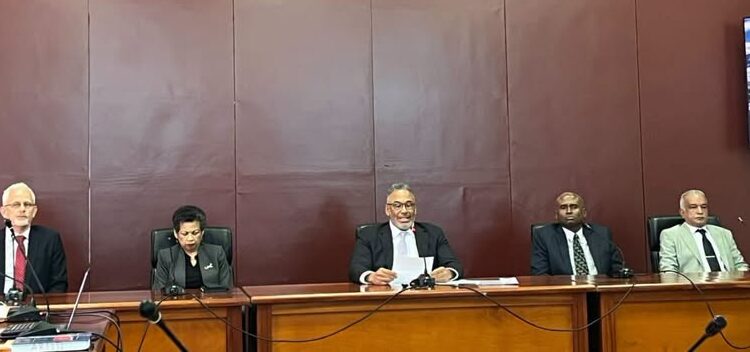
At a press conference, the opposition partnership said it was “gravely concerned” by what it described as deteriorating conditions at GPHC, citing reports from patients and their families of poor administration, inadequate resources and policies that fail to address the needs of ordinary Guyanese.
Among the concerns raised was the treatment of children over the age of 12 as adults within the public healthcare system.
According to APNU, the policy “disregards the unique physical, emotional, and developmental needs of adolescents and places unnecessary burdens on both patients and their families.”
The partnership contrasted the practice with private medical institutions, which it said generally provide more age-appropriate treatment and accommodation for younger patients, while the public healthcare system continues to apply policies that many parents regard as outdated, insensitive and inconsistent with modern standards of care.
APNU also criticised reports that patients are being forced to remain in hospital without access to basic necessities, including clean bed sheets.
“It is an indictment of the current administration that Guyana’s principal public hospital can find itself unable to provide such fundamental requirements for patient comfort and dignity in ‘the fastest growing economy,'” the partnership stated.
While sharply critical of hospital management, APNU stressed that responsibility should not be placed on frontline healthcare workers.
“Every day, healthcare professionals across the country work long hours, often under tremendous pressure, while facing persistent staffing shortages, limited resources, and compensation that many believe does not adequately reflect the importance of their work,” the partnership said.
It added that doctors, nurses, technicians and support staff have kept the healthcare system functioning despite what it described as inadequate support from policymakers and administrators.
“Guyanese doctors and nurses deserve recognition, respect, improved working conditions, and fair compensation. They do not deserve continued neglect from policymakers and administrators,” APNU said.
The partnership further argued that the government’s emphasis on constructing new hospitals and purchasing equipment has not translated into corresponding improvements in patient care.
“The Government can no longer ignore the growing concerns being raised by patients, families, and healthcare professionals by simply buying equipment and building understaffed hospitals around the country,” APNU stated. “Billions of dollars have been allocated to healthcare over the years, yet many citizens continue to encounter conditions that fall short of reasonable expectations.“
The criticism comes as the government continues to increase investment in the health sector. Budget 2026 provides G$161.1 billion for healthcare, up from G$143.2 billion in 2025, with allocations for new regional hospitals, medical equipment, pharmaceuticals, digital health systems and improvements at GPHC. The budget also earmarks G$1.5 billion for upgrades to the Georgetown Public Hospital and the completion of the Campbellville and Industry polyclinics, G$764 million for the implementation of an electronic health records system at GPHC, and G$3.1 billion for advanced medical equipment, including an MRI scanner, CT scanner and a cardiac catheterisation laboratory.
The PPP/C administration has said the investments are part of its plan to modernise Guyana’s healthcare system and expand access to specialist services nationwide.
However, international assessments continue to point to persistent structural challenges. According to the World Bank, approximately 80 per cent of Guyana’s population relies on the public healthcare system, while hinterland communities continue to experience shortages of healthcare professionals and the country’s health information system remains largely paper-based. The World Bank has also reported that non-communicable diseases account for approximately 70 per cent of all deaths in Guyana, underscoring the importance of an efficient and well-managed public healthcare system.
In response to these continuing challenges, APNU called for an immediate review of hospital policies affecting minors, a comprehensive assessment of patient care conditions, greater transparency and accountability in the administration of public healthcare facilities, and meaningful engagement with healthcare workers to address staffing, remuneration, workplace conditions and the resources needed to provide quality care.
“The health and dignity of Guyanese citizens must never become secondary to administrative inefficiency or political complacency,” APNU said. “Health is our most critical asset. Our nation deserves a healthcare system that reflects the aspirations of its people and the sacrifices of the hardworking professionals who serve within it every day.”
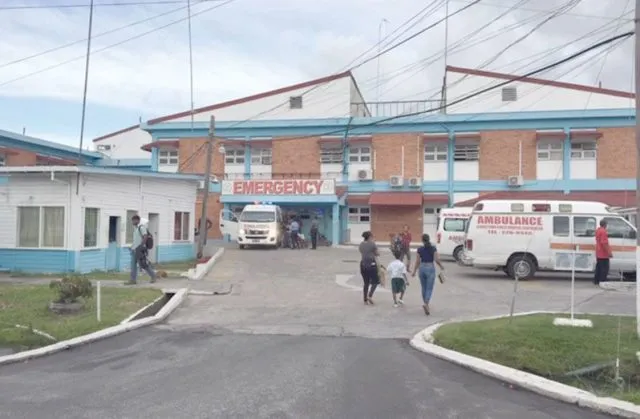
The Georgetown Public Hospital Corporation is Guyana’s principal referral and teaching hospital and serves as the country’s leading tertiary healthcare institution. While the government has defended its record of expanding healthcare infrastructure and increasing budgetary allocations, APNU contends that stronger governance, greater accountability and better management are essential to ensuring that increased investment translates into improved care for patients.
The Ministry of Health had not publicly responded to APNU’s statement up to the time of publication.