By Mark DaCosta- A catastrophic seismic doublet has struck northern Venezuela, unleashing twin earthquakes of magnitude 7.2 and 7.5 within mere seconds of each other on the evening of Wednesday, 24 June 2026, at about 6:05 pm, with the United States Geological Survey (USGS) warning that the death toll could climb well beyond ten thousand. The tremors originated west of the capital, Caracas, near the community of Morón along the Caribbean coast, with the first shock registering at 7.1 magnitude at a depth of 22 kilometres, followed just thirty-nine seconds later by a more powerful 7.5-magnitude event at a shallow depth of 10 kilometres.
The epicentres lay approximately 168 kilometres west of Caracas, and the violence of the shaking was felt across the entire nation and as far as Bogotá, Colombia. The USGS has issued its highest-level red alert, estimating a 44 per cent probability that fatalities will exceed 10,000, with initial projections suggesting a range between 10,000 and 100,000 deaths. This disaster ranks among the most severe seismic events to hit Venezuela in more than a century, occurring at a time when many citizens were at home observing a national holiday, amplifying the potential for catastrophic loss of life.
The scientific dimensions of this disaster are both striking and deeply troubling. Seismologists have identified the event as a rare and dangerous “seismic doublet” — a sequence of two earthquakes of comparable magnitude occurring in rapid succession and in close proximity, indicating a complex rupture-interaction process along the boundary between the Caribbean and South American tectonic plates. At this location, the Caribbean plate shifts eastward relative to South America at a rate of roughly 20 millimetres per year, a movement accommodated primarily by the Boconó fault system. The shallow depth of the mainshock — just 10 kilometres — ensured that the energy released reached the surface with devastating intensity.
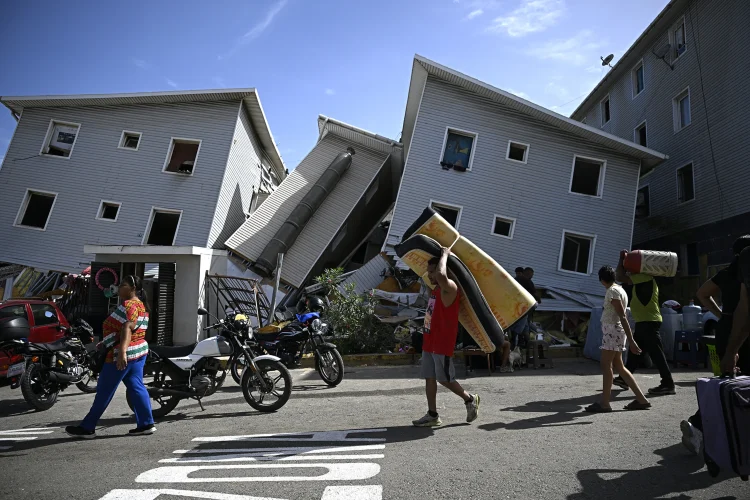
The USGS estimates that the rupture zone extended approximately 150 kilometres in length and 20 kilometres in width, exposing a vast swathe of the population to violent ground motion. Approximately 27,000 people were subjected to the highest intensity of shaking — classified as “Violent” on the Modified Mercalli Intensity scale — while over 420,000 experienced “Severe” shaking. The predominant building stock in the affected region, consisting largely of unreinforced brick masonry and adobe block construction, proved acutely vulnerable to such forces.
The USGS further projects that economic losses could reach between one and nine per cent of Venezuela’s gross domestic product, a staggering blow for a nation already grappling with profound economic and humanitarian crises. Historical context underscores the gravity of the present catastrophe: the July 1966 Caracas earthquake, a magnitude 6.6 event centred 131 kilometres to the east, claimed roughly 240 lives, toppled multiple high-rise apartment buildings, and left widespread destruction in its wake. The 2026 doublet dwarfs that event in both magnitude and scope.
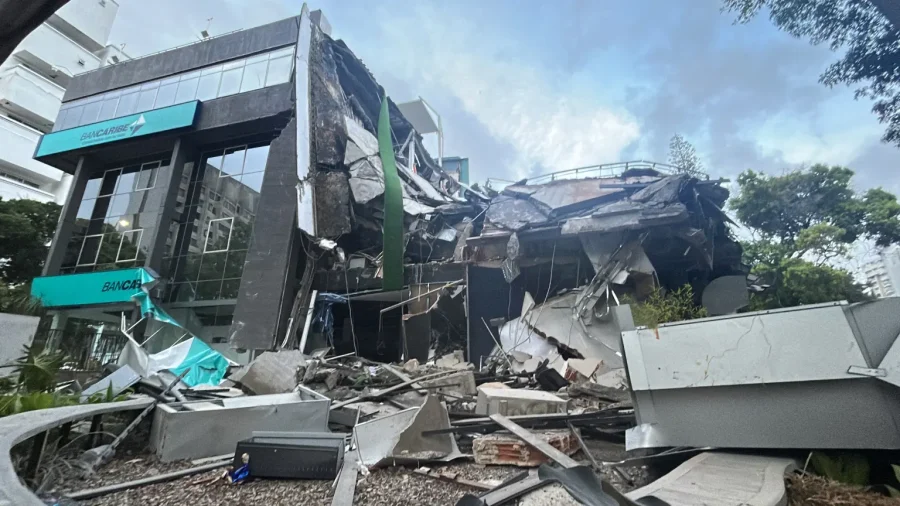
The human toll and physical devastation on the ground paint a harrowing picture of chaos, fear, and mounting tragedy. In Caracas, buildings swayed and crumbled as terrified residents poured into the streets, many clutching their pets as dust clouds rose from collapsed structures in neighbourhoods normally bustling with restaurants and commerce. The Altamira district suffered particularly alarming damage, with homes and buildings reduced to rubble. Interior Minister Diosdado Cabello confirmed that the shaking was perceptible across several states and described “alarming situations” in the capital, urging motorists to yield to ambulances and emergency vehicles while appealing for calm and adherence to rescue protocols.
Witness accounts convey the sheer terror of the experience. Astrid Ramirez, a 41-year-old publicist in western Caracas, recounted hearing screams as soon as the shaking began, with everyone scrambling down stairwells. Coro Martinez, a 56-year-old resident of eastern Caracas, described a deafening crash as objects tumbled inside her home, including jugs within her refrigerator, declaring, “I’ve never experienced anything like it.” Eighty-year-old pensioner Maria Romero, evacuated from her southern Caracas home with police assistance, judged the event even more terrible than the 1967 quake.
Caracas resident Hector Ricci described how the tremor began gently before intensifying, forcing entire neighbourhoods into the streets. The timing of the disaster — shortly after 6 p.m. local time during a national holiday — meant countless families were gathered at home, a circumstance that almost certainly magnified the casualty count. The tremors also triggered tsunami alerts for the Virgin Islands and the Dominican Republic, though an alert for Puerto Rico was swiftly lifted.
Venezuela’s governmental response has been swift but remains shrouded in uncertainty regarding the full scale of casualties. Acting President Delcy Rodríguez declared a nationwide state of emergency on Wednesday night, appealing for calm and unity in a televised address. “We ask the population to remain calm and united,” she urged, while offering condolences to bereaved families without providing specific figures for deaths or injuries. Rodríguez confirmed that the country’s principal airport had sustained severe damage and was closed, and that metro and train services had been suspended. She directed citizens to evacuate compromised structures immediately.
The international community has begun mobilising assistance, though the contours of that aid remain undefined. The United States, through its State Department, has indicated it is preparing to offer support to Venezuela, though no specifics regarding the form or timing of that assistance have been disclosed. The US Embassy in Caracas issued an emergency alert advising American citizens to avoid damaged areas, monitor local media, and seek secure shelter, with emergency services operating on a restricted basis. The shallow depth and shallow epicentral location of the mainshock, combined with the region’s history of large, damaging earthquakes, have prompted seismologists to warn that powerful aftershocks may follow, further endangering already weakened structures and complicating rescue operations.
For our nation, the implications of this disaster resonate on multiple levels. Guyana, situated on the South American landmass and sharing the same tectonic neighbourhood, must view this catastrophe as a stark reminder of our own seismic vulnerability. The tremors were felt across our country, with residents in Georgetown and New Amsterdam reporting perceptible shaking. Our government, led by President Dr Irfaan Ali, has demonstrated its capacity for rapid disaster response through recent domestic relief programmes, and there exists both a moral imperative and a strategic interest in extending solidarity to our neighbour in this hour of need.
The Caribbean and South American plates do not recognise political boundaries. While the precise nature of Guyana’s contribution to Venezuelan relief efforts has yet to be detailed, our nation’s humanitarian tradition and our geographical proximity suggest that assistance — whether in the form of medical teams, relief supplies, or logistical support — will be forthcoming. The international response, led by the United States and likely to involve regional partners, will require coordination to ensure that aid reaches those most in need amid Venezuela’s complex political and economic landscape.