The Alliance For Change (AFC) is calling on the Government of Guyana to translate expressions of solidarity into tangible humanitarian assistance for Venezuela following the devastating earthquakes that struck Caracas on Wednesday, even as President Dr. Irfaan Ali simultaneously announced Guyana’s readiness to assist its western neighbour.
The statements, issued independently but at roughly the same time, reflected a rare convergence between the government and the opposition party on Guyana’s response to a regional humanitarian crisis, despite the longstanding territorial controversy between Georgetown and Caracas.
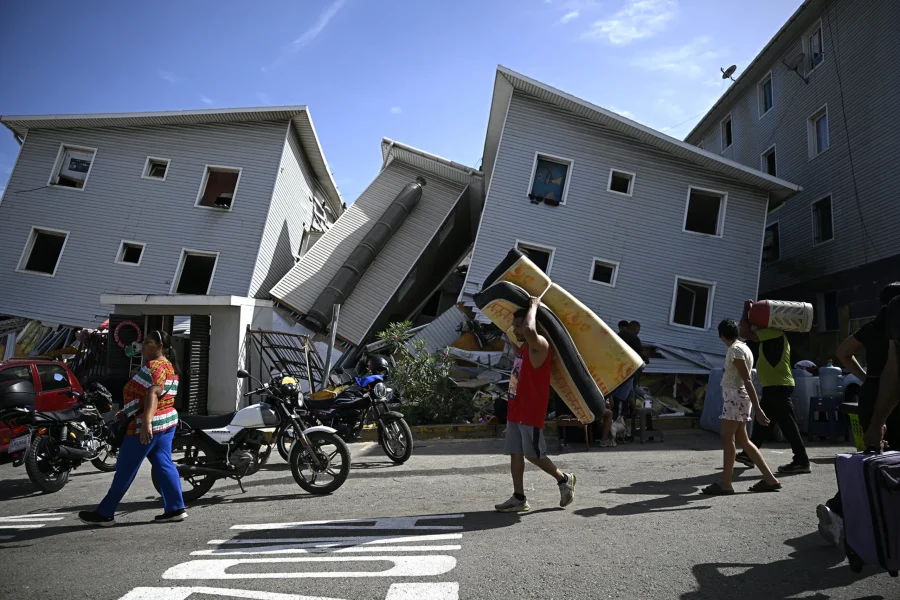
The appeal comes as Venezuela grapples with one of the deadliest natural disasters in its modern history. Two powerful earthquakes measuring 7.2 and 7.5 struck the country within a minute of each other on Wednesday, causing widespread destruction in and around Caracas and several other states. Authorities have declared a state of emergency as search-and-rescue operations continue amid dozens of aftershocks. More than 160 people have been confirmed dead, nearly 1,000 injured, and the toll is expected to rise as emergency crews search collapsed buildings for survivors.
 The earthquakes have unfolded against the backdrop of one of the Caribbean and South America’s most sensitive geopolitical disputes. Guyana and Venezuela remain before the International Court of Justice (ICJ) over Venezuela’s false claim to the Essequibo, which comprises more than two-thirds of Guyana’s territory.
Guyana maintains that the 1899 Arbitral Award conclusively settled the boundary and has consistently argued that the matter should be resolved through international law.
Against that backdrop, both the government and the AFC stressed that humanitarian considerations should not be eclipsed by political differences.
In a statement, President Ali expressed Guyana’s sympathy with the Venezuelan people and indicated the country’s willingness to help.
“We stand in solidarity with the people of Venezuela. As neighbours, we are ready to offer assistance within our capacity,” the President said.
He added that Guyana was “deeply saddened by the scale, magnitude, and destruction” caused by the disaster and extended the country’s “love, prayers, and thoughts” to the families of those affected.
The AFC welcomed the humanitarian sentiment but argued that Guyana should now take the next step by providing practical assistance through regional and international relief mechanisms.
“The AFC expresses its deep sorrow and sympathy following the loss of lives, injuries, and destruction of property suffered by communities across Venezuela. Our thoughts and prayers are with the families who have lost loved ones, those who have been displaced, and all those whose lives have been disrupted during this difficult period,” the party said.
While reaffirming Guyana’s commitment to defending its sovereignty and internationally recognised borders, the AFC maintained that compassion should remain a defining principle of responsible leadership.
“The AFC recognises that nations may have legal disagreements, territorial controversies, and differences in political positions. However, before we are citizens of countries, we are human beings. The pain of losing a family member, the devastation of losing one’s home, and the fear and uncertainty faced by ordinary people are experiences that transcend borders and politics.”
The party noted that the relationship between Guyana and Venezuela extends beyond diplomacy and territorial claims.
“Guyana and Venezuela share a long history, deep cultural connections, and a common humanity. While Guyana remains firmly committed to the protection of its sovereignty and its internationally recognized borders, we also believe that compassion and solidarity must guide our response when people are suffering.”
The AFC called on the government to channel assistance through established humanitarian institutions.
“The AFC therefore calls on the Government of Guyana to move beyond expressions of sympathy and provide tangible humanitarian support where appropriate. This can include offering assistance through established regional and international humanitarian mechanisms, within CARICOM and OAS structures, working with relevant local agencies to identify areas where Guyana can contribute, and demonstrating that our nation stands with ordinary people affected by tragedy.“
According to the party, providing humanitarian aid would reinforce Guyana’s standing as a responsible member of the international community rather than compromise its legal position in the border controversy.
“Supporting people in distress does not weaken Guyana’s legal position; rather, it reflects the values of compassion, dignity, and respect that should guide a responsible nation.“
The AFC concluded by extending its solidarity to the Venezuelan people.
“The AFC extends its solidarity to the people of Venezuela and reaffirms that while we may differ on matters of law and diplomacy, our common humanity must always come first.”
Although Guyana and Venezuela remain locked in a high-stakes territorial controversy before the International Court of Justice over the Essequibo region, the statements from President Ali and the AFC signal a shared view that humanitarian assistance should rise above political and diplomatic differences. Both maintained that compassion for ordinary Venezuelans affected by the disaster is consistent with Guyana’s unwavering commitment to defending its sovereignty and internationally recognised borders.