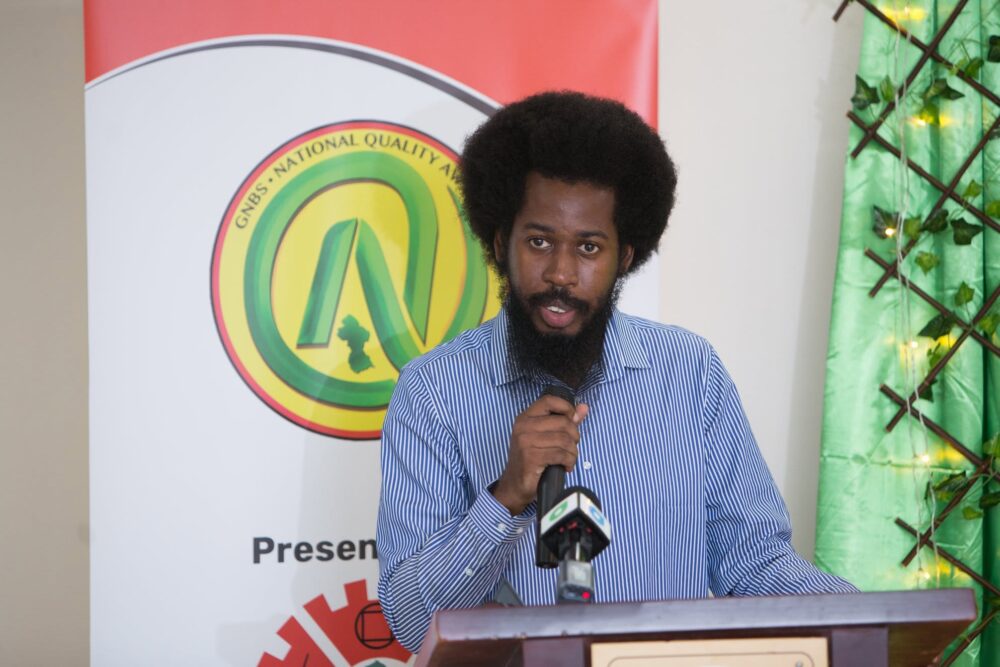
Concerns previously raised by technology commentator and media influencer Rowen Willabus about the potential implications of social media regulation have taken on added significance following Attorney General Anil Nandlall’s recent disclosure that he has formally approached Meta Platforms seeking what he described as an “institutional arrangement” between the Government of Guyana and the parent company of Facebook.
When Willabus published a lengthy social media post on June 15 warning about the risks associated with proposed restrictions on children’s access to social media, the public was unaware that the government was simultaneously pursuing a more structured relationship with one of the world’s largest social media companies.
Now, with Nandlall’s revelation in the public domain, some of the questions raised in Willabus’ post are likely to attract renewed scrutiny.
While the Attorney General has not disclosed the specifics of the arrangement being sought, he has made clear that the government is increasingly concerned about content posted on Facebook and the speed with which information spreads before it can be removed.
“You need to have a constant engagement with a platform like Facebook,” Nandlall said. “You see the destruction that it includes in one post, and by the time you get that post removed, the damage is already done.“
His comments come as the Department of Public Information and Minister within the Office of the Prime Minister Kwame McCoy continue nationwide consultations on social media usage, with particular emphasis on restricting access for children and addressing harmful online content.
The government’s stated objective is the protection of children. However, commentators and digital rights advocates have cautioned that the mechanisms required to enforce age restrictions could have consequences extending well beyond their original purpose.
It was against this backdrop that Willabus urged Guyanese to examine not only the intention behind proposed legislation but also how such measures could operate in practice.
“Remove your political lenses, put on your thinking caps and walk with me.
Protecting kids from the evils and brain rot online is every parent’s goal. The GoG is preparing to restrict children’s access to social media, which on the surface, is good thing. However, we need to look carefully at how these laws actually work, because the details matter in our wonderful society.
Stay with me.
Here’s the part that doesn’t get said out loud: to stop under-16s from having accounts, a platform has to check the age of everyone.
Stew on that. Stew a little bit more.
You cannot verify a child without processing the adult beside them. So a law sold as ‘protect the children’ has the opportunity to quietly become a system that verifies the identity of every single social media user in the country.
Itate what this means.
A database, or a chain of companies (most likely one), holding identity records on all of us. In a country where we are DEAD CERTAIN that data protection is already weak, that is a breach or plain out stupidness waiting to happen.
Once your identity is tied to your account, anonymous and pseudonymous speech becomes far harder. The critic, the whistleblower, the ordinary citizen who wants to speak without fear they lose their cover first.
My core belief is that privacy is a human right and not a privilege. I’m deep into tech so I know, and that’s why it worries me. The tool a government builds/uses to age-check children is the same tool that can later monitor, identify, and pressure free speech. Infrastructure like that outlives the reason it was built and we don’t have far to look: RE: idiotic provisions in the cybercrime bill.
Even Australia, with strong courts and a real data protection regulator, faced fierce opposition from privacy advocates over exactly this.
Ask the questions:
Will every Guyanese have to verify their identity to use social media? Who holds that data, and how is it protected? What stops it from being repurposed for surveillance or other, as we know? Is there a privacy-preserving design, or are we going with the cheapest thing?
I warned about the ‘cybercrime’ bill and politicians making laws as if they won’t one day be subjected to them. When the tables turn, your goose is cooked.
Let’s think about this before it’s law, not after.”
At the time the post was published, the discussion centred primarily on age verification and children’s access to social media. Since then, however, Nandlall’s disclosure that the government is seeking a formal arrangement with Meta has introduced a new dimension to the debate.
The Attorney General’s remarks have prompted questions about what form such an arrangement could take and whether it could involve enhanced cooperation on content moderation, reporting mechanisms or the removal of content deemed harmful, defamatory or otherwise objectionable.
Those questions are particularly significant in Guyana, where concerns about freedom of expression and government regulation of online speech have surfaced repeatedly in debates surrounding the Cybercrime Act and other legislative measures affecting digital communications.
Willabus’ warning that systems introduced for one purpose can later be expanded for another has resonated with some observers who note that digital infrastructure, once established, often remains in place long after the original justification has faded.
The government’s consultations on social media regulation continue, but Nandlall’s disclosure has ensured that the conversation is no longer confined to protecting children online. Increasingly, it is becoming a broader discussion about privacy, anonymous speech, data protection, state influence over digital platforms and the extent to which governments should be involved in regulating online discourse.
With few details yet available about the arrangement being sought with Meta, the questions posed by Willabus before that information became public now appear even more relevant: Who controls the data? Who determines what content is harmful? And what safeguards will exist to protect citizens’ privacy and freedom of expression?