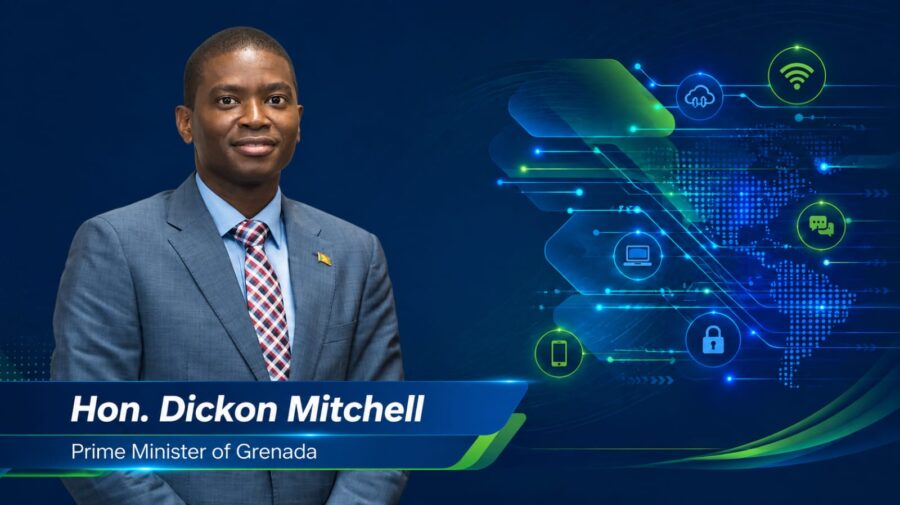
Grenada Prime Minister Dickon Mitchell has called on Caribbean governments to deepen regional cooperation and accelerate digital transformation, arguing that the future competitiveness, resilience and sovereignty of CARICOM will depend on how effectively the region responds to rapid technological change.
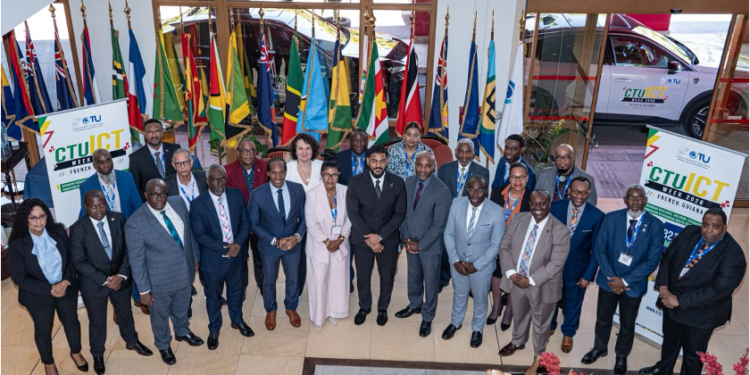
Mitchell, who serves as Lead Head of Government with responsibility for Science and Technology in the CARICOM Quasi Cabinet, made the appeal during the opening session of a meeting of CARICOM ministers responsible for Information and Communication Technology (ICT), held under the theme, “Accelerating Digital Development to 2030.”
His message comes at a time when governments and businesses around the world are investing heavily in artificial intelligence (AI), digital infrastructure, cybersecurity and data governance, reshaping economies and creating new standards for global competitiveness.
“If CARICOM is to remain competitive and relevant, we need to act collectively and strategically to ensure that our Region is not left at the margins of the global digital economy,” Mitchell stated.
The Prime Minister said digital technologies are no longer merely tools of convenience but have become essential pillars of economic resilience, national security and sustainable development. He noted that the Caribbean must position itself to take advantage of emerging technologies while protecting its interests in a rapidly evolving digital environment.
Mitchell pointed to several initiatives already underway, including the advancement of the CARICOM Single ICT Space, strengthened regional cybersecurity cooperation and the adoption of the Strategic Framework for Digital Resilience 2025–2030.
While acknowledging that progress has been made, he stressed the need to convert plans and strategies into tangible results.
“We must move decisively from policy discussions to measurable implementation and outcomes to build a CARICOM digital economy,” he said.
The Grenadian leader also highlighted the increasingly complex global landscape, marked by economic uncertainty, geopolitical tensions and the emergence of new rules governing artificial intelligence, digital trade, data governance and internet management.
According to Mitchell, no CARICOM member state has the capacity to successfully navigate those challenges in isolation.
“We must work collectively,” he said, noting that the region’s strength lies in coordinated action and shared solutions.
A major focus of his address was artificial intelligence, which he described as a transformative force capable of reshaping public services, boosting productivity and creating entirely new industries.
Mitchell said AI presents a unique opportunity for Caribbean countries to leapfrog traditional development pathways and participate more fully in the global economy. However, he cautioned that the technology must be deployed responsibly and guided by principles of inclusion, trust and ethical governance.
He also emphasized the importance of investing in people, particularly young people, through expanded digital skills training and education. The Prime Minister argued that greater investment is needed in digital infrastructure, cybersecurity systems and modern regulatory frameworks capable of keeping pace with technological innovation.
The ministerial meeting reviewed and approved frameworks covering digital cooperation, artificial intelligence, cybersecurity and digital skills development, all of which are expected to play a central role in CARICOM’s long-term development strategy.
CARICOM Secretary-General Carla Barnett led the Secretariat’s delegation at the discussions.
Mitchell’s appeal reflects a growing recognition among regional leaders that the Caribbean’s economic future will be shaped not only by traditional sectors such as tourism, agriculture and energy, but also by its ability to build a modern digital economy. The choices made today regarding technology, innovation and regional cooperation will determine how effectively CARICOM can create opportunities for its people, strengthen public institutions and compete in an increasingly interconnected world.