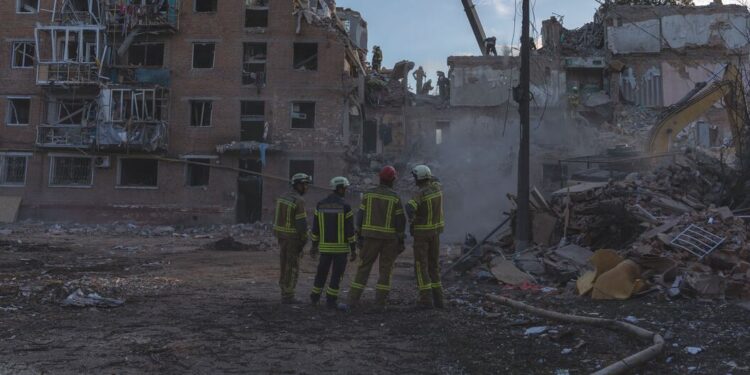
Doubts swirled around the US-Iran interim deal to end the war in the Middle East as shippers said it could take weeks for confidence to return after any reopening of the Strait of Hormuz, and fundamental questions remained unanswered.
US President Donald Trump said on Monday a preliminary agreement to end the conflict had been signed by the US and Iran, although details have yet to be made public and both countries said a permanent truce was yet to be negotiated.
The interim agreement would extend a tenuous ceasefire announced in April by another 60 days and reopen the Strait of Hormuz, which Iran has effectively blocked since the US and Israel attacked Iran in February.
Negotiators would address difficult issues – like the future of Iran’s nuclear program – during the next phase of talks, to be held during the 60-day window.
Two other issues that Trump and Israeli Prime Minister Benjamin Netanyahu used to justify the war – ending Iran’s support for regional armed proxies and curbing its missile program – are not thought to be on the agenda for those negotiations.
Doubts over US negotiation team
US and Iranian officials are due in Switzerland on Friday to begin detailed negotiations, but European allies have voiced concern that an inexperienced US negotiating team could struggle to secure a robust agreement, potentially leading to a prolonged standoff.
Diplomats and analysts note that Iranian negotiators are highly skilled in nuclear diplomacy, often exploiting weaknesses in their counterparts and buying time to advance their agenda, making the prospect of a comprehensive agreement within 60 days challenging.
One key factor in whether the interim accord holds will be the situation in Lebanon, where Israeli Prime Minister Benjamin Netanyahu has said his troops would remain in the south as long as needed to tackle Hezbollah. Tehran has demanded an Israeli withdrawal.
Trump appeared critical of Israel’s strategy in Lebanon and also suggested that neighboring Syria – which under President Ahmed al-Sharaa is struggling to stabilise the country after years of civil war – could be best placed to intervene.
“I suggested to Israel to let Syria take care of Hezbollah because to be honest, I think they do a better job of doing it,” he said.
At G7, Trump threatens Iran with ‘all hell’
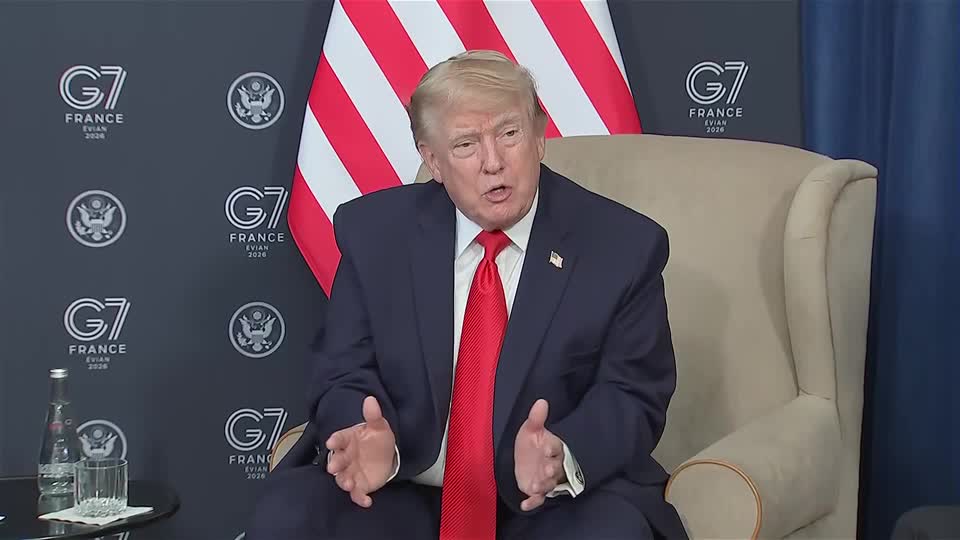
“The deal’s all signed,” Trump said after he arrived in France for a summit of the G7 group of big economies. He said Vice President JD Vance would attend a formal signing ceremony in Geneva on Friday.
Trump maintained that the interim accord makes clear that Tehran would never be allowed to develop a nuclear weapon, and he also suggested Syria could be better positioned to disarm Hezbollah.
Speaking ahead of talks with Qatar’s Emir Sheikh Tamim bin Hamad Al Thani on the sidelines of the G7 summit in France, Trump defended the 14-point memorandum of understanding with Iran that has yet to be made public.
“The only thing that really matters to me is Iran will never have a nuclear weapon, and it says it loud and clear,” he told reporters, warning that “all hell will rain down” on Iran if it sought to acquire one.
In 2015, former U.S. President Barack Obama secured a nuclear deal with Iran in exchange for sanctions relief, a process that took two years to finalize. Trump withdrew the United States from that accord during his first term.
“This deal is a wall to a nuclear weapon. His (Obama) deal was a road to a nuclear weapon. My deal, they can’t have a nuclear, they get blown up,” Trump said.
Tanker operator: It may take a month to regain normality
Iranian President Masoud Pezeshkian wrote on social media Monday that the interim agreement was an “important step” toward stopping the fighting but noted a final deal for a lasting truce “has yet to take shape.”
Vance said the signed memorandum was a “very general document” with “a very significant sanctions relief package” for Iran.
US and Iranian officials say it could eventually deliver substantial economic benefits to Iran by lifting sanctions, unfreezing foreign assets and setting up a $300 billion reconstruction fund, paid for by neighboring Gulf states, which host US military bases.
While the latest agreement could lift Iran’s chokehold on the Strait of Hormuz, that only restores the prewar status quo, and shippers say traffic will only restart once they are satisfied they can transit safely.
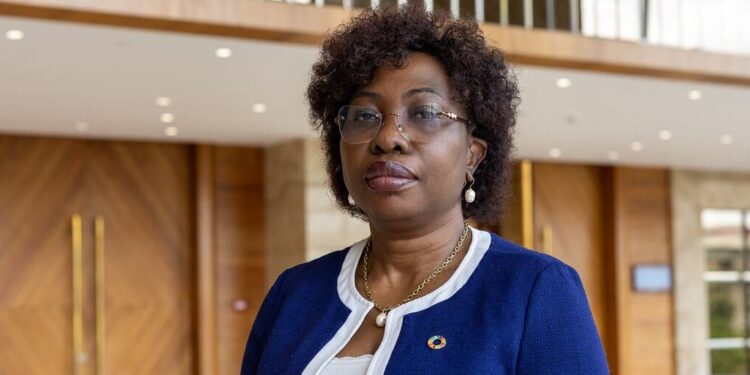
The chief executive of Japan’s Mitsui OSK Lines, a shipping giant with a fleet of more than 900 vessels including tankers, told the Financial Times shipowners would not sail through the Strait of Hormuz until they were confident the US-Iran deal was “material”.
“Given the experiences in the last couple of months, I think it’s reasonable to assume that it may take at least a couple of weeks or if not a month,” Tamura said.
The fighting between US ally Israel and the Iran-allied Hezbollah militia in Lebanon, which has uprooted 1.2 million people, remains another key sticking point.
Iran has said the deal requires a full cessation of hostilities there, but Netanyahu said Israel would keep its forces in southern Lebanon and would retain the right to respond to Hezbollah attacks.
“Iran wanted us to withdraw from it, but I stood firm,” he said on Monday at a news conference. Israel has not directly participated in the peace talks with Iran.
A US official said an Israeli withdrawal from Lebanon, which it invaded in March after Hezbollah joined the war, was not a condition of the deal.
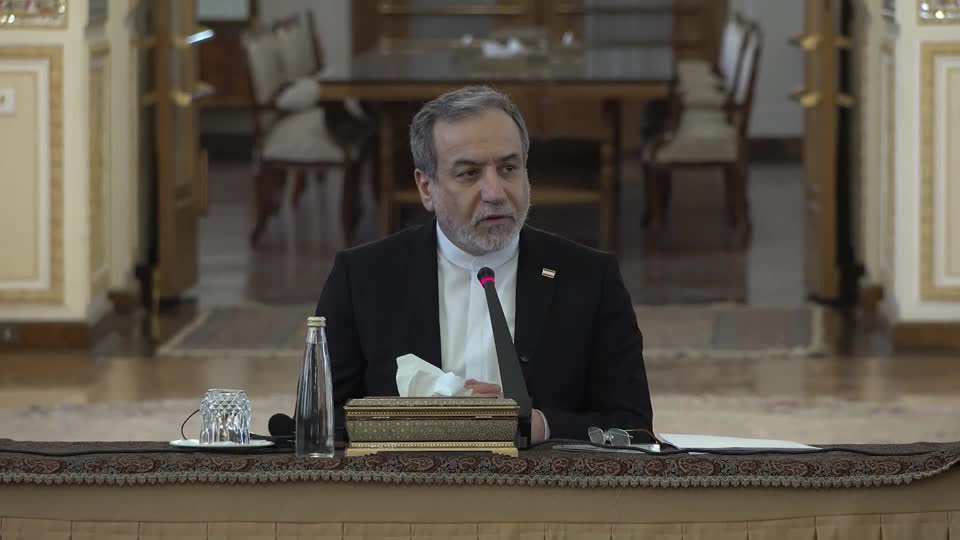
Iranian Foreign Minister Abbas Araghchi said Israeli attacks must stop immediately, or be seen as a violation of the interim agreement with the United States.
“In our view, the two parties to this memorandum are the US and Israel on one side, and Iran and Hezbollah on the other,” he said.