The Caribbean Community (CARICOM) Secretariat is exploring ways to strengthen organ donation and transplantation services across the Region, with Guyana’s emerging programme being discussed as a possible model for wider regional consideration.
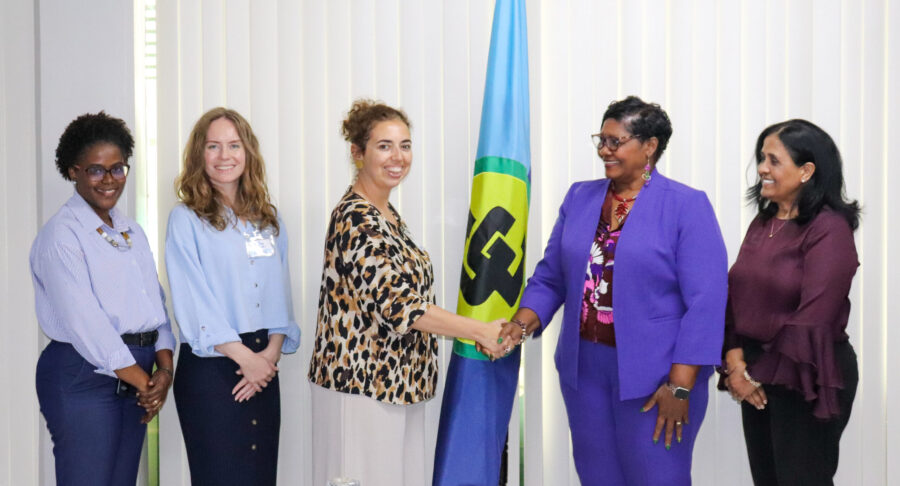
The issue was the focus of a meeting held at the CARICOM Secretariat on June 2, where regional officials met with representatives of the project, “Building a Sustainable Organ Donation and Transplantation Program in Guyana.”
Leading the CARICOM delegation were Ms. Helen Royer, Director of Human Development; Dr. Shanti Singh-Anthony, Chair of the Guyana Human Organ and Tissue Transplant Agency (HOATTA); and Dr. Serena Bender-Pelswijk, Deputy Programme Manager for Health Sector Development.
Representing the project team were Dr. Chloe Balleste, Medical Director of the Donation and Transplantation Institute (DTI) and Project Director, and Ms. Ola Rudak, Project Manager of the DTI Foundation.
According to information released following the engagement, discussions centred on advancing organ donation and transplantation services throughout the Caribbean and examining whether Guyana’s initiative could inform future regional approaches.
Organ transplantation remains one of the most effective treatments for patients suffering from end-stage organ failure involving the kidneys, liver, heart and other vital organs. However, access to transplantation services remains limited in many Caribbean countries due to financial, technical, institutional and human resource constraints.
Against that backdrop, participants discussed the growing public health challenges facing the Region and the increasing need for sustainable organ donation and transplantation systems.
The meeting also examined available economic evidence relating to transplantation programmes and considered opportunities for developing a regional strategy that could be presented to CARICOM Member States for consideration.
Officials further explored avenues for collaboration and knowledge sharing among Caribbean countries, recognizing that many small states face similar challenges in building and maintaining specialized healthcare services.
The discussions come as Caribbean countries continue to grapple with rising rates of non-communicable diseases (NCDs), including diabetes and hypertension—two of the leading causes of chronic kidney disease and kidney failure. According to regional and international health data, NCDs account for the majority of deaths in many CARICOM countries and place growing pressure on already stretched healthcare systems.
For patients suffering from kidney failure, dialysis often becomes the only available treatment. While lifesaving, dialysis is expensive, resource-intensive and can significantly affect a patient’s quality of life. Kidney transplantation, where feasible, is generally considered a more sustainable long-term treatment option.
Guyana has in recent years begun laying the groundwork for a more structured organ donation and transplantation framework through the establishment of the Human Organ and Tissue Transplant Agency. The agency was created to oversee the ethical, legal and medical aspects of organ and tissue donation and transplantation while promoting public awareness and confidence in the process.
Guyana’s efforts are underpinned by the Human Organ and Tissue Transplant Act of 2022, which established the Human Organ and Tissue Transplant Agency (HOATTA) and created the country’s first comprehensive legal framework for organ donation and transplantation. The legislation operates on an opt-in basis, requiring voluntary consent from donors or authorisation from next of kin, while establishing a National Donor and Transplant Registry. It also prohibits organ trafficking and the commercial sale of organs and tissues, creating safeguards aimed at ensuring ethical and transparent transplantation practices.
The legislation was introduced as Guyana sought to strengthen its capacity to address growing rates of chronic illnesses, including kidney disease, and to provide a regulated framework for life-saving transplant procedures.
The CARICOM engagement signals growing regional interest in whether Guyana’s experience can contribute to broader policy development throughout the Caribbean.
The meeting also explored potential partnerships and financing opportunities that could support future initiatives. Among the possibilities discussed were collaboration with the European Union, the World Bank and other international development partners.
While no regional policy decisions were announced, the discussions reflect increasing recognition that organ donation and transplantation may become an important component of future healthcare planning in the Caribbean.
For many countries in the Region, however, significant challenges remain. Successful transplantation programmes require not only medical expertise and infrastructure but also strong legal frameworks, public education campaigns, ethical oversight mechanisms and systems capable of ensuring transparency and public trust.
As CARICOM examines options for regional cooperation, officials appear to be taking a long-term view of how small developing states can work together to improve access to specialized healthcare services that would otherwise be difficult and costly for individual countries to establish on their own.
The dialogue marks another step in ongoing efforts to strengthen regional health systems and expand treatment options for patients facing life-threatening organ failure, while exploring whether collaboration at the CARICOM level can help make transplantation services more accessible and sustainable across the Caribbean.