Guyana made global medical history on Tuesday, the day the nation celebrated its Diamond Jubilee Independence anniversary, by performing the world’s longest-distance telesurgery and with that, the country took a bold step toward becoming a regional hub for advanced healthcare.
In a groundbreaking procedure, a cardiac surgeon based at the Georgetown Public Hospital Corporation (GPHC) successfully carried out heart surgery on a patient in India – nearly 20,000 kilometres away – setting a new global benchmark for remote surgery.
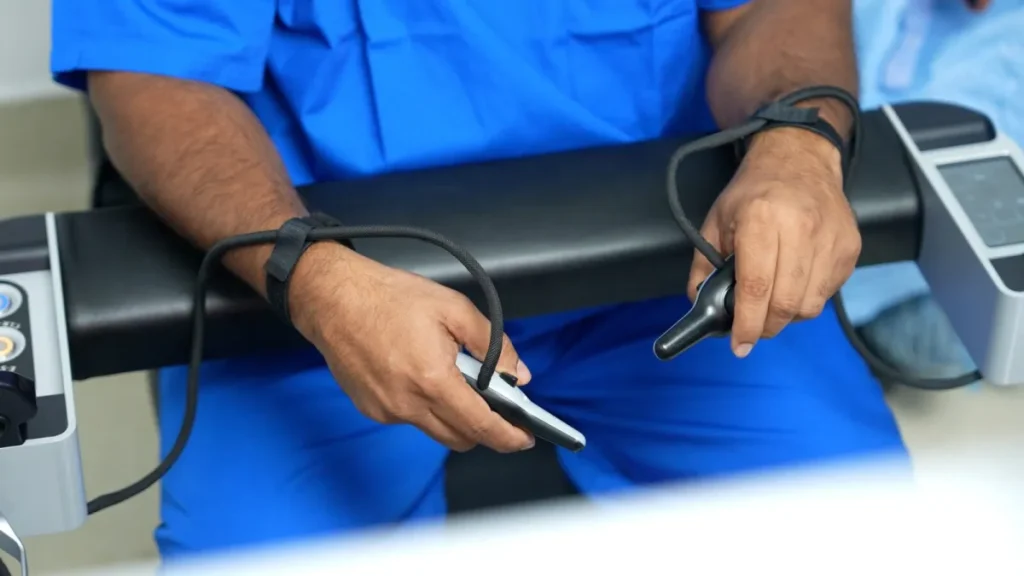
The procedure, Coronary Artery Bypass Graft, was executed at 6:00 AM using the state-of-the-art SSI Mantra 3 robotic surgical system, with internationally acclaimed cardiac surgeon Dr Sudhir Srivastava operating from Georgetown. On-site support in India was provided by Dr Lalit Malik and Dr Mohit Bhandari.
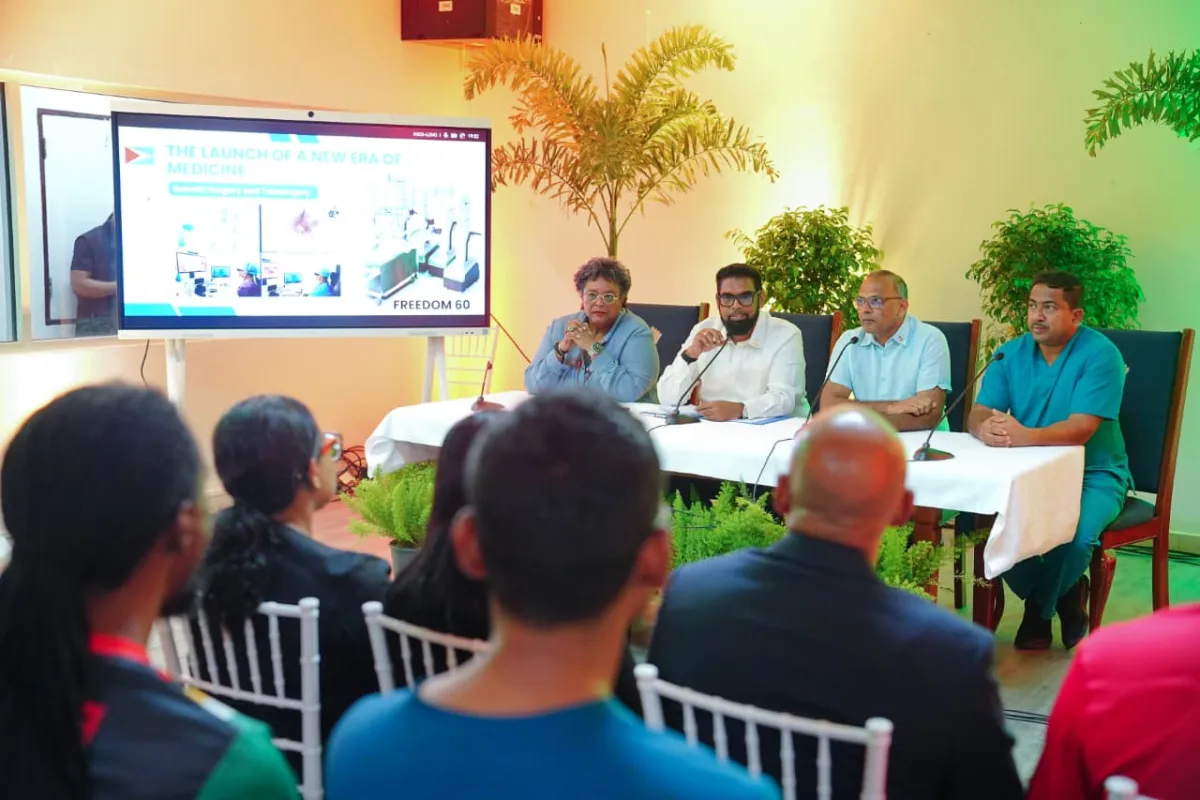
President Dr Mohamed Irfaan Ali, addressing a news conference Tuesday evening at the Guyana National Stadium, described the achievement as a defining moment in Guyana’s healthcare transformation. In honour of the country’s 60th Independence Anniversary, he also announced the renaming of the system to “Mantra Freedom 60.”
“From today, our surgeon is called Freedom 60,” the president declared, adding, “Whether you do your cardiac surgery or surgery in urology or gynaecology, surgeon Freedom 60 will be at your side. Don’t be afraid.”
But beyond the historic surgery, President Ali made clear that Guyana’s ambition goes further than a single milestone.
“When we made the investment, we did not just make an investment to be part of history,” the president said. “We made an investment, and we bought the entire training module.”
That investment will now anchor the establishment of an international robotic surgery training hub at GPHC. Through a partnership with the SSI Mantra ecosystem, Guyana will train not only its own medical professionals but also healthcare teams from across the Caribbean, positioning the country as a centre of excellence in advanced surgical care.
“Everything that they experienced in the most advanced facility in India… will be available here in Guyana for the rest of the region as we build out the hub for robotics, surgery, and care from Guyana,” the president said. “We will provide this training mechanism for all of the teams across the region.”
Tuesday’s procedures were performed on Guyana’s Diamond Jubilee, the 60th anniversary of the country’s independence, a date the president said was not a coincidence.
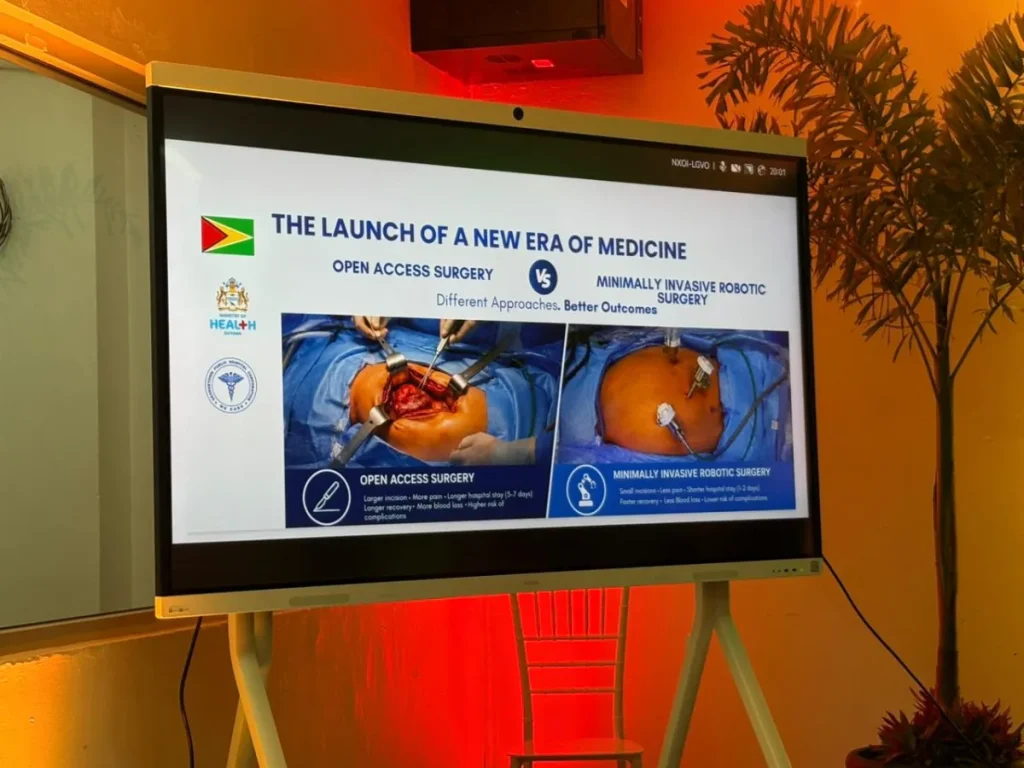
Later that same morning, a Guyanese surgical team, Dr Hemraj Ramcharran, Dr Bibi Hussain, and Dr Jagnanand Ramnarine, performed a robotic inguinal hernia repair at GPHC, marking the first locally executed robotic surgery in the country’s history. The team had previously undergone specialised robotic surgery training in India.
Dr Srivastava later completed a third procedure for the day – an atrial septal defect repair on a Guyanese patient – further underscoring the versatility and potential of the technology now available in-country.
The milestone represents the rapid fulfilment of a vision outlined just months ago. In December 2025, President Ali first announced plans to introduce robotic surgery. By February, he had challenged his team to achieve a transatlantic procedure.
Within five months, that ambition has not only been realised but exceeded.
The record-breaking telesurgery, Guyana’s first locally performed robotic operation, and the launch of a regional training hub together mark a decisive step toward building a world-class healthcare ecosystem – one that positions Guyana not just as a participant, but as a leader in the future of medicine in the Caribbean.
DPI