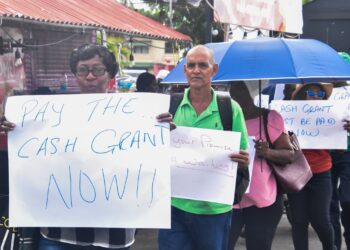
The Guyana Trades Union Congress (GTUC) has welcomed a landmark advisory opinion from the United Nations’ highest court affirming that workers’ right to strike is protected under international labour law, describing the decision as a major victory for trade unions and workers worldwide and a vindication of constitutional protections in Guyana.
In a statement issued Monday, the umbrella labour body said the advisory opinion delivered by the United Nations’ International Court of Justice (ICJ) on May 21 confirmed that the right to strike is protected under the International Labour Organisation’s (ILO) Convention No. 87 on Freedom of Association and Protection of the Right to Organise.
“The Court’s opinion brings long-awaited clarity and finality to a decades-old dispute regarding the scope of Convention No. 87 and stands as a resounding victory for workers and trade unions worldwide,” the GTUC stated.
According to the Congress, the ICJ’s ruling recognises that the right to strike is “intrinsic to freedom of association,” reaffirming “a fundamental principle of democratic society—that workers must be free to organise and collectively defend their economic and social interests without undue interference.”
The advisory opinion follows years of debate within international labour circles over whether Convention No. 87 explicitly protects the right to strike. Trade unions and the ILO’s supervisory bodies have long maintained that the right is inseparable from freedom of association, while some governments and employers’ groups have challenged that interpretation.
The GTUC said the ruling carries particular significance for Guyana as the country marks its 60th anniversary of Independence and reflects on the historic role played by organised labour in securing democratic rights.
“This year marks the nation’s 60th Anniversary of Independence and coincides with the centenary of the modern trade union movement’s struggle for political and social advancement,” the Congress noted.
It argued that trade unions were central to the fight for universal adult suffrage, internal self-government, improved working conditions and national self-determination long before independence was achieved in 1966.
“The freedoms Guyanese enjoy today are deeply rooted in the sacrifices made by generations of workers who understood that economic justice and political freedom are inseparable,” the statement said.
The labour body also linked the ICJ opinion to a major domestic legal battle between the Guyana Teachers’ Union (GTU) and the Ministry of Education.
In a landmark 2024 ruling arising from litigation between the Guyana Teachers’ Union (GTU) and the Ministry of Education following a nationwide teachers’ strike, Justice Justice Sandil Kissoon affirmed that the right to strike enjoys constitutional protection in Guyana.
The court held that Article 147(2) of the Constitution expressly protects workers from being hindered in the exercise of their freedom to strike, reinforcing strike action as a fundamental component of freedom of association. Widely regarded as a significant victory for organised labour, the judgment strengthened the legal protections available to workers and trade unions engaged in collective bargaining and industrial action.
“The ICJ’s opinion also vindicates the landmark 2024 decision of Justice Sandil Kissoon in the matter involving the Guyana Teachers Union and the Ministry of Education,” the GTUC stated.
The Congress noted that Justice Kissoon’s ruling gave practical effect to Article 147 of the Constitution, which protects freedom of assembly, association and demonstration. It highlighted Article 147(2), which states: “Except with his or her own consent no person shall be hindered in the enjoyment of his or her freedom to strike.”
“The right to strike is not a privilege to be granted or withheld by employers or governments; it is a protected constitutional freedom and an internationally recognised labour right,” the GTUC asserted, adding that the ICJ’s pronouncement confirms that Guyana’s constitutional protections are consistent with international labour standards.
The Congress also commended the ILO for seeking legal clarification on Convention No. 87, saying the organisation’s efforts had produced “an authoritative interpretation” that would strengthen freedom of association and collective bargaining rights globally.
At the same time, GTUC cautioned that legal rights remain vulnerable if workers fail to defend them.
“History teaches that rights can be weakened or eroded when citizens become complacent. The freedoms secured by previous generations were won through organisation, sacrifice, courage and persistence. Like liberty itself, workers’ rights require eternal vigilance,” the statement said.
The labour body urged workers, trade unions, employers and policymakers to view the ICJ ruling as an opportunity to improve industrial relations and strengthen democratic governance.
“As Guyana celebrates sixty years as an independent nation and reflects on the century-long contribution of the trade union movement to democracy and nation-building, the ICJ’s opinion serves as a powerful reminder that the struggle for justice, dignity and freedom remains ongoing,” the GTUC said.
“The right to strike is not merely a labour issue; it is a cornerstone of democratic participation and human dignity.”