Monday, October 12, 2026
Village Voice News
ADVERTISEMENT
  • Home
  • News
  • Sports
  • Editorial
  • Letters
  • Global
  • Columns
    • Eye On Guyana
    • Hindsight
    • Lincoln Lewis Speaks
    • Future Notes
    • Blackout
    • From The Desk of Roysdale Forde SC
    • Diplomatic Speak
    • Mark’s Take
    • In the village
    • Mind Your Business
    • Bad & Bold
    • The Voice of Labour
    • The Herbal Section
    • Politics 101 with Dr. David Hinds
    • Talking Dollars & Making Sense
    • Book Review 
  • Education & Technology
  • E-Paper
  • Contact Us
No Result
View All Result
  • Home
  • News
  • Sports
  • Editorial
  • Letters
  • Global
  • Columns
    • Eye On Guyana
    • Hindsight
    • Lincoln Lewis Speaks
    • Future Notes
    • Blackout
    • From The Desk of Roysdale Forde SC
    • Diplomatic Speak
    • Mark’s Take
    • In the village
    • Mind Your Business
    • Bad & Bold
    • The Voice of Labour
    • The Herbal Section
    • Politics 101 with Dr. David Hinds
    • Talking Dollars & Making Sense
    • Book Review 
  • Education & Technology
  • E-Paper
  • Contact Us
No Result
View All Result
Village Voice News
No Result
View All Result
Home News

Burnham Did Not Unilaterally Choose Guyana’s Independence Date

Admin by Admin
May 17, 2026
in News
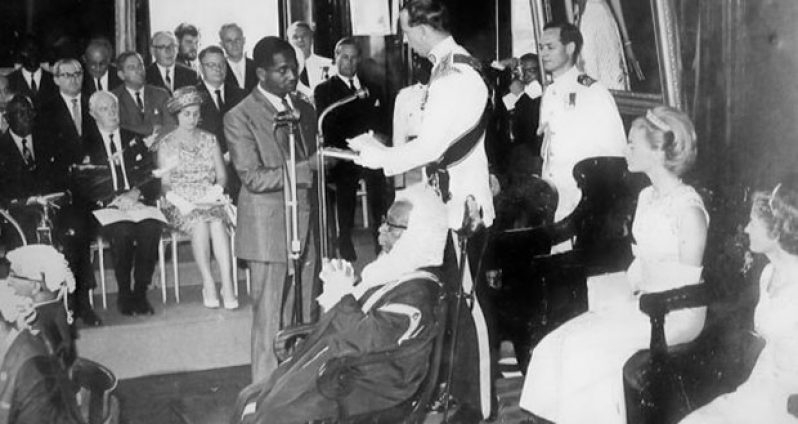
The Duke of Kent handing over the Independence constitutional documents to Prime Minister Burnham

The Duke of Kent handing over the Independence constitutional documents to Prime Minister Burnham

0
SHARES
0
VIEWS
Share on FacebookShare on Twitter
The persistent claim in some sections of Guyanese society that then Premier Forbes Burnham deliberately selected May 26 as Guyana’s Independence Day to mock Indo-Guyanese over the May 1964 Wismar/Linden violence does not withstand serious historical scrutiny. The allegation, echoed over the years through political rhetoric and references to Cheddi Jagan’s writings, ignores the documented constitutional process through which the date was actually determined.

Historical records show that May 26, 1966 was settled during the British Guiana Independence Conference held in London, which concluded on November 19, 1965 with agreement that May 26, 1966 would be the date on which the new state of Guyana would attain independence.

The conference involved:

READ ALSO

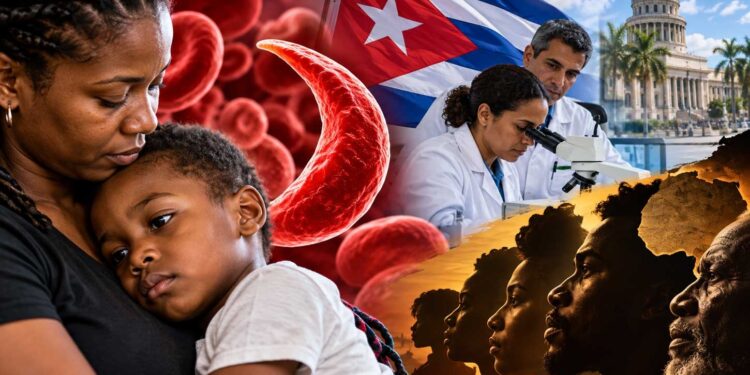
CARIBBEAN | The Cure They Can’t Reach: Sickle Cell, Race and the US$2.2 Million Question

Guyana stresses global action to protect women from digital violence

  • The British Government
  • The British Colonial Office
  • Representatives of the British Guiana Government
  • Opposition political representatives

The independence date formed part of wider constitutional negotiations governing Guyana’s transition from colony to independent state. Official records from both the British and United States governments confirm that the date was agreed upon during those constitutional talks, not through unilateral action by Forbes Burnham.

At the conference, agreement was reached not only on the independence date, but also on:

  • Guyana’s Independence Constitution
  • The parliamentary structure
  • Commonwealth membership
  • Transitional governance arrangements

The British Parliament subsequently passed the Guyana Independence Act 1966, which legally brought Guyana’s independence into effect on May 26, 1966. British Governor Sir Richard Luyt remained in office until independence and then transitioned into the post-independence constitutional structure.

Winifred Gaskin with Forbes Burnham (fourth from left) – Delegation to Pre-Independence Negotiations – London – United Kingdom – 1965-1966
Photo Credit: People’s National Congress Reform (PNCR)

There is therefore no documented evidence showing Burnham alone selected the date as a symbolic act against Indo-Guyanese.

The Wismar/Linden violence of May 1964 remains one of the darkest and most painful episodes in Guyana’s history, involving attacks, displacement, destruction of property, and loss of life among Indo-Guyanese residents.

But acknowledging the horror and trauma of Wismar does not automatically validate the claim that Independence Day itself was selected as an ethnic insult.

The disturbances unfolded within a wider context that included:

  • Cold War tensions
  • British colonial intervention
  • Political instability
  • Ethnic polarisation
  • Ideological conflict between socialism/communism and Western parliamentary democracy

Historical evidence shows Guyana’s independence timetable was shaped through constitutional negotiations and British decolonisation procedures, not through personal symbolism or unilateral political decision-making by Burnham.

Turning political interpretation into unquestioned historical “fact” risks deepening ethnic division while obscuring the actual constitutional and diplomatic process that led to independence.

The tragedy of Wismar deserves honest remembrance, national reflection, and historical accuracy. But mature engagement with Guyana’s history requires distinguishing between documented evidence and narratives shaped by political grievance, hate and repetition over time. Independence Day emerged from negotiations involving Britain and Guyanese political representatives within the formal decolonisation process. To suggest otherwise without evidence risks replacing history with mythology while further entrenching suspicion and division in a society that continues to grapple with the wounds of its past.
ShareTweetSendShareSend

Related Posts

The sickle cell trait evolved as protection against malaria in West and Central Africa; the populations forcibly transported to the Caribbean carried the gene with them. Today, about one in every 150 Jamaican babies is born with sickle cell disease, and roughly one in ten Jamaicans carries the trait.
News

CARIBBEAN | The Cure They Can’t Reach: Sickle Cell, Race and the US$2.2 Million Question

by Admin
October 12, 2026

A disease born of slavery’s genetic legacy now has a functional cure — at US$2.2 million per patient, available almost...

Read moreDetails
Minister of Human Services and Social Security Dr. Vindhya Persaud
News

Guyana stresses global action to protect women from digital violence

by Admin
October 12, 2026

Guyana is calling for stronger international action to combat digital violence against women, with Minister of Human Services and Social...

Read moreDetails
News

Caricom Rice Mills Addresses Social Media Claims Regarding Somerset and Berks Lands

by Admin
October 12, 2026

Caricom Rice Mills wishes to address recent public statements made on social media concerning specific parcels of land in the...

Read moreDetails
Next Post

WORD OF THE DAY: VINDICATE


EDITOR'S PICK

Mr. Patrick Yarde, President/CEO 
Guyana Public Service Union

Message for International Workers’ Day 2026 – Patrick Yarde

May 1, 2026

Duo arrested, stolen items recovered following armed robbery of 19-year old

January 13, 2021
Archbishop of Canterbury Justin Welby reiterated his commitment to addressing the enduring and damaging legacies of transatlantic slavery.

BRITAIN | Anglican Leader’s Slavery Past Intensifies UK Reparations Debate

October 27, 2024
U.S President Donald Trump

Trump threatens Chicago with apocalyptic force and Pritzker calls him a ‘wannabe dictator’

September 7, 2025

© 2024 Village Voice

No Result
View All Result
  • Home
  • News
  • Sports
  • Editorial
  • Letters
  • Global
  • Columns
    • Eye On Guyana
    • Hindsight
    • Lincoln Lewis Speaks
    • Future Notes
    • Blackout
    • From The Desk of Roysdale Forde SC
    • Diplomatic Speak
    • Mark’s Take
    • In the village
    • Mind Your Business
    • Bad & Bold
    • The Voice of Labour
    • The Herbal Section
    • Politics 101 with Dr. David Hinds
    • Talking Dollars & Making Sense
    • Book Review 
  • Education & Technology
  • E-Paper
  • Contact Us

© 2024 Village Voice