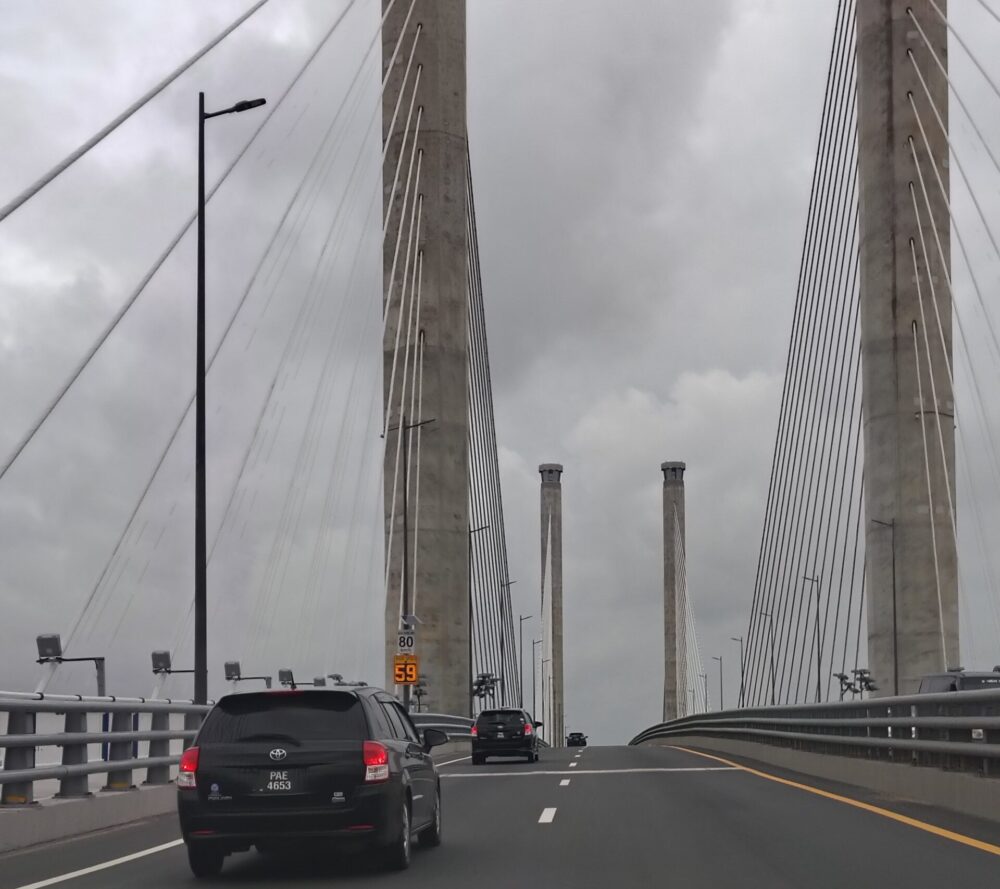
The US$261 million Bharrat Jagdeo Demerara River Bridge is, at its core, an ordinary bridge elevated more by political branding and state propaganda than by engineering distinction, historical significance, or national legacy. The Bridge was opened on October 5, 2025
Unlike the original Demerara Harbour Bridge — a globally recognised structure that once held the distinction of being the longest floating bridge in the world — this replacement project carries little of the innovation, symbolism, or ingenuity that made the original a landmark of post-Independence Guyanese achievement.
Any assessment of the Jagdeo Demerara River Bridge should not be viewed as an indictment of the engineers, contractors, or technical personnel who executed the work. Those responsible for implementation would have operated within specifications, directives, approvals, and oversight explicitly sanctioned by the government at every stage of the project.
Whereas the Demerara Harbour Bridge reflected vision, practicality, and nation-building ambition, the Jagdeo Demerara River Bridge increasingly appears to embody spectacle over substance.
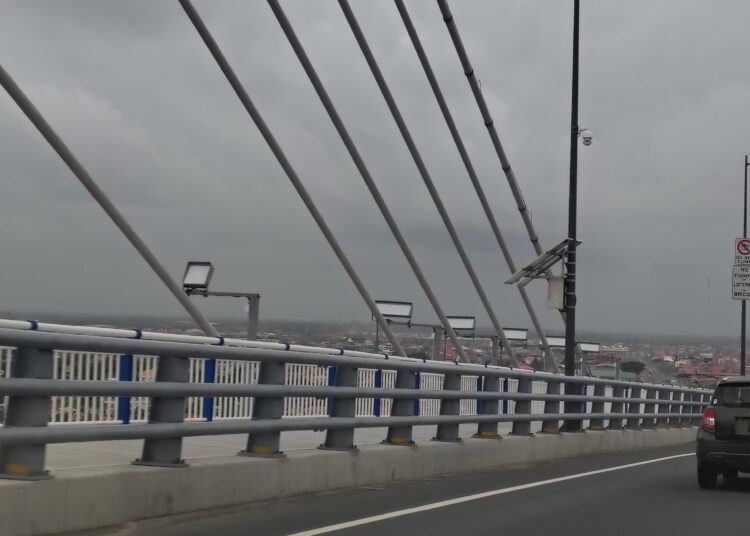
Even more troubling is that the replacement seems to be sacrificing a piece of Guyana’s engineering heritage without delivering excellence in return. In a country blessed with abundant sunshine year-round, several of the bridge’s solar-powered lights reportedly malfunctioned within months, raising serious questions about quality, maintenance standards, procurement practices, and long-term durability.
The bridge’s illuminated main pillars also went dark for a period, only returning intermittently — a symbolic reflection, many say, of a project already showing signs of weakness beneath the glittering public relations campaign surrounding it.
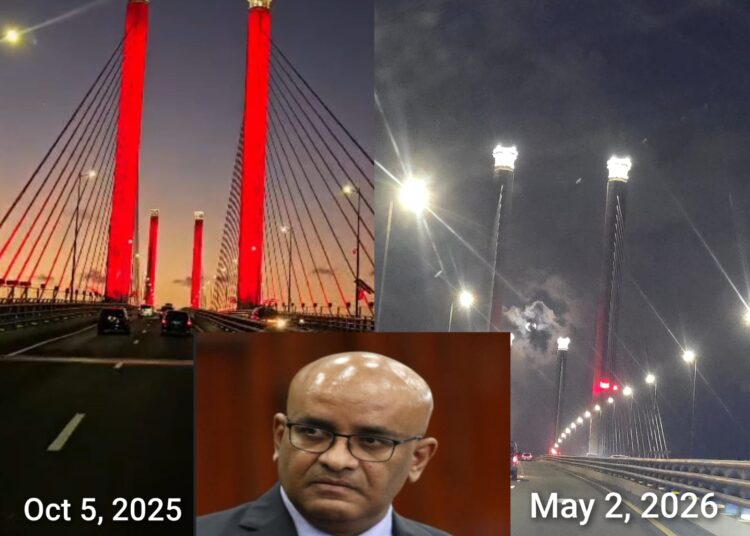
Beyond decorative lighting and four oversized concrete pillars held together by exposed pipe structures, many Guyanese struggle to identify what exactly makes the bridge exceptional or worthy of the political glorification attached to it. Public unease is also growing over visible signs of wear and deterioration on infrastructure that is barely months old, with sections already drawing comparisons to structures weathered by decades of neglect.
There are also mounting concerns that aspects of the bridge’s design and operational limitations could ultimately hinder, rather than enhance, river traffic at a time when Guyana should be aggressively expanding maritime commerce and economic activity through its waterways. Unlike the original harbour bridge, which was ingeniously designed with retractable capabilities to facilitate the uninterrupted movement of ships and commercial vessels, the new bridge appears less connected to a long-term vision of integrated commerce and national development.
To many observers, the project increasingly symbolises a government more consumed by spectacle, political naming rights, image-building, and monumental optics than by constructing infrastructure of enduring quality, strategic foresight, and historical value.
For others, the bridge has become emblematic of something even deeper: the gradual replacement of authentic national achievements with politically manufactured symbols designed to glorify personalities rather than preserve Guyana’s true developmental legacy.